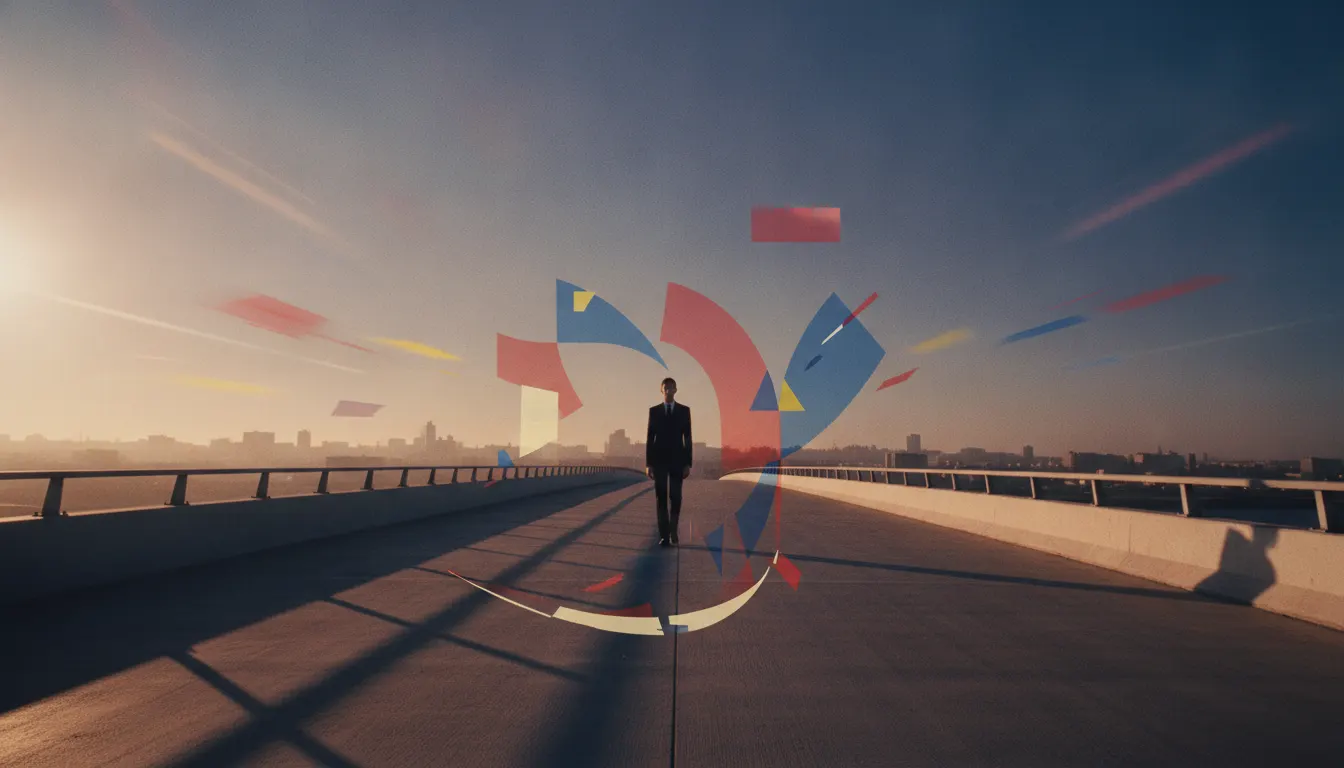
MAGAZINE PRINT DESIGN · 1960S · USA
Modernist Magazine Spread
Modernist American magazine spread. Alexey Brodovitch Harpers Bazaar, Henry Wolf Show, kinetic typography, full-bleed photo, sophisticated rhythm.
modernist-printeditorialkineticsophisticated
LUT modernist-editorial-bw
WHEN TO USE
- Premium editorial layouts for magazines, newspapers, long-form online publications, or brand publications
- Fashion, culture, or arts content where sophisticated image-text integration signals editorial authority
- Photography-driven content where layout design frames and amplifies strong photographic work
- Annual reports, premium brand publications, or luxury catalogs where page design is a quality signal
- Motion graphics or video essay title sequences drawing on the tradition of the well-designed editorial spread
- Book covers or interior layouts for literary or intellectual publishing where the Bodoni/Didot tradition carries weight
WHEN NOT TO USE
- Digital content in fast-scroll contexts where the subtle compositional decisions of editorial layout are invisible
- Mass-market or youth content where the formal sophistication reads as inaccessible
- Content without strong photographic or illustrative assets - the format depends on image quality
SIGNATURE TECHNIQUES
How the look is made.
The moves a human crew would use to get here. Cue applies them for you, and knowing their names is how you ask for a change.
- 01Full
bleed photography: images extending to all four page edges without margin interruption
- 02Extreme scale contrasts
a single word set at 120pt against body text at 10pt on the same spread
- 03Bodoni or Didot display type
high-contrast serif with hairline thins and heavy strokes creating graphic tension
- 04Asymmetric layouts
dominant images placed off-center with text in unexpected positions
- 05White space as positive compositional weight
large open areas around key images
- 06Film
strip or sequential photography: multiple frames from a shoot arranged in rhythmic series
- 07Text running into or over photography
captions and headlines integrated with images rather than separated
HISTORY & CONTEXT
Where it comes from.
Modernist Magazine Spread
The modernist magazine spread is the editorial design tradition that transformed the printed page from a typeset container for text into a dynamic visual composition. Its founding figures - Alexey Brodovitch at Harper's Bazaar, Alexander Liberman at Vogue, and Henry Wolf at Esquire - established visual journalism as a design discipline and created a visual vocabulary still operative in serious editorial design today.
Alexey Brodovitch at Harper's Bazaar
Alexey Brodovitch (1898-1971) became art director at Harper's Bazaar in 1934 and held the position until 1958. A Russian emigre who had trained in Paris under Diaghilev's Ballets Russes, Brodovitch brought a performance sensibility to the page - each spread in sequence was a movement in a larger composition. He commissioned Richard Avedon, Henri Cartier-Bresson, and Man Ray, positioning fashion photography as fine art. His layouts used extreme scale contrasts, unexpected cropping, photographs bleeding to page edges, and white space as a compositional element equal in weight to images and type. He introduced film-strip sequential photographic montage to magazine design.
Typographic Principles
Brodovitch used Bodoni and Didot serifs for display headlines - their extreme contrast between thick and thin strokes creating graphic tension at large sizes. Text columns were set with generous leading and relatively tight letter-spacing, creating a textural density that read as sophisticated rather than cramped. Headlines were often set across the full page width and bled into or floated above photographs. The grid was implicit rather than explicit - Brodovitch felt a detectable grid was a design failure.
Alexey Liberman and the Vogue System
Alexander Liberman (1912-1999) art directed Vogue from 1943 to 1994 and developed a parallel but distinct tradition: more geometric, more classical in its use of Bodoni display type, and increasingly integrated with the photography of Irving Penn, Richard Avedon (who also worked with Vogue after Bazaar), and Helmut Newton. Liberman commissioned Penn's studio still-life photography and established the high-contrast white-background fashion photography format that remains standard.
Henry Wolf and Esquire / Show
Henry Wolf (1925-2005) brought a cooler, more conceptual approach to magazine design during his time at Esquire (1952-1958) and Show magazine (1961-1964). His covers for Show used photographic montage and fine art references with a wry intelligence that anticipated conceptual editorial design.
NOTABLE WORKS
Where you have seen it.
Alexey Brodovitch
1950
Portfolio magazine : the purest expression of his design philosophy
Vogue under Alexander Liberman (1943-1994): Irving Penn and Richard Avedon editorial series
Esquire under Henry Wolf (1952-1958)
Show magazine under Henry Wolf (1961-1964)
Harper's Bazaar Richard Avedon collaboration (1945-1965)
THE RECIPE
The exact knobs
the renderer turns.
A Look is not a filter. It is a set of stored decisions the pipeline reads before it makes a single frame, so two videos in the same Look actually match.
SettingValue
GradeColour LUT applied to every frame
modernist-editorial-bwTransitionHow one shot becomes the next
soft cuts · 260ms · ease-in-outKen BurnsCamera move applied to stills
Slow push · 0.02 · centerTypographyDisplay / body / mono pairing
Didot · Lora · CourierMusic moodWhat the bed under the voice sounds like
cool-jazz · bossa-novaPrompt suffixAppended to every shot prompt in this Look
Modernist American magazine spread, Alexey Brodovitch Harpers Bazaar, Henry Wolf Show, kinetic typography, full-bleed photo, sophisticated rhythmPALETTE
Primary
#1A1A1A
Secondary
#F5F0E5
Accent
#A85A3E
Text/Light
#0A0A0A
Text/Dark
#F2E8DC
BG 900
#0A0A0A
BG 800
#1A1A1A
RELATED LOOKS
Next to it on the shelf.

Your first cut
is on us.
+ New videoFree plan · no card · 1080p export