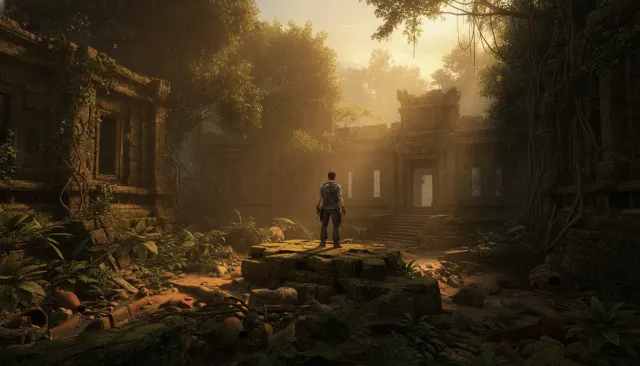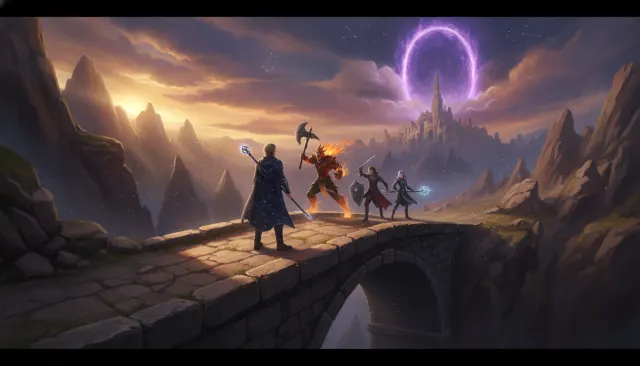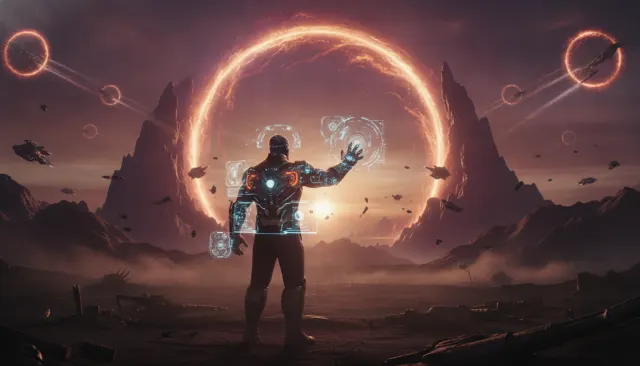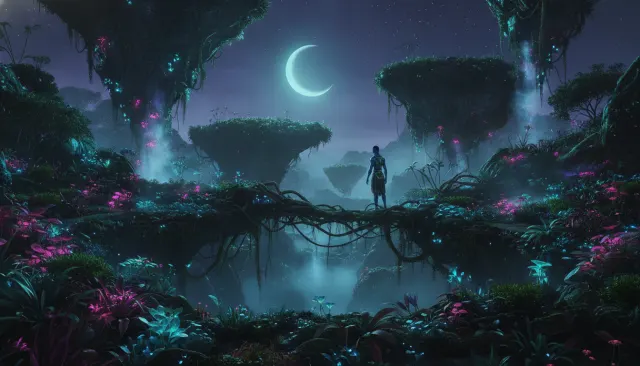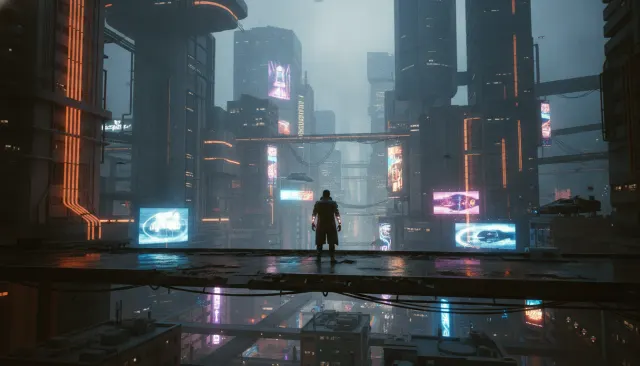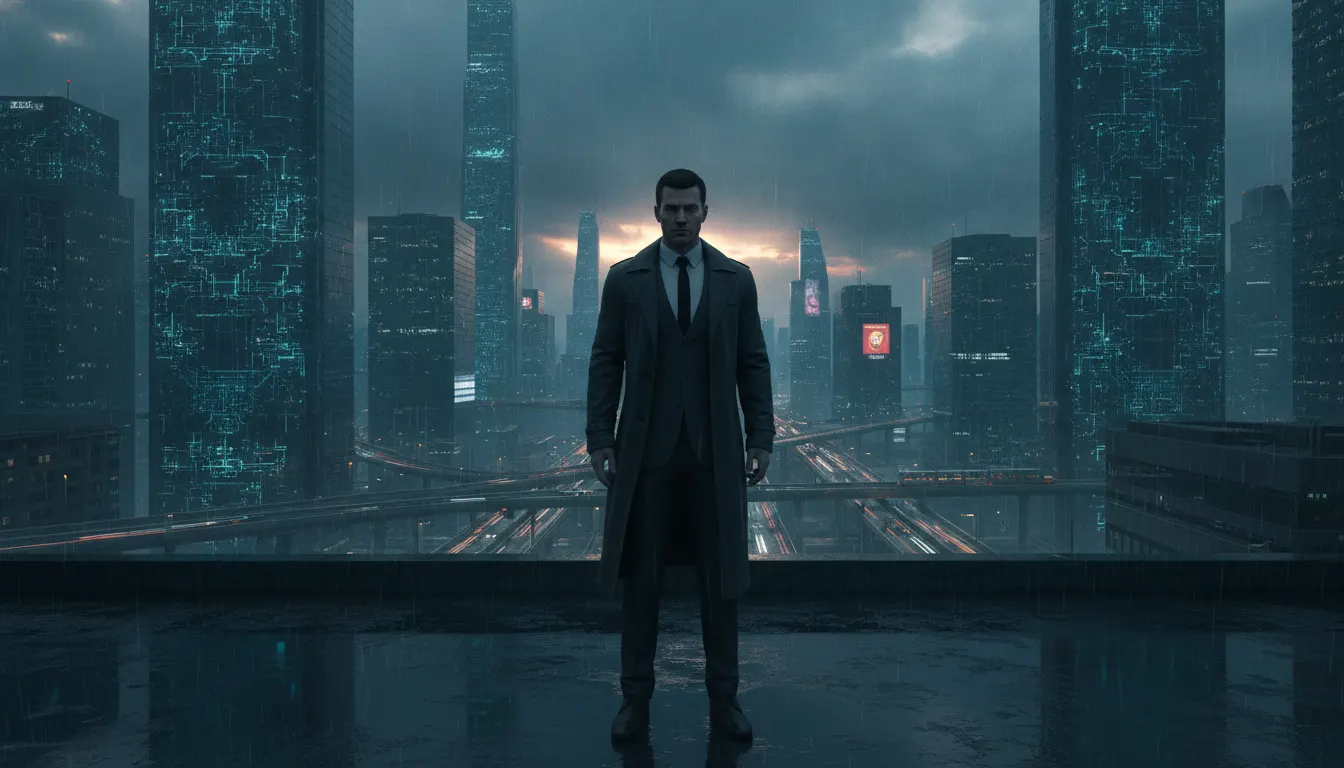
The Matrix Awakens: UE5 Experience
2021
Epic/Digital Domain; Nanite/Lumen showcase
Unreal Engine 5 Nanite-Lumen realtime. Matrix Awakens demo fidelity, photoreal MetaHuman characters, virtualized geometry detail.
The moves a human crew would use to get here. Cue applies them for you, and knowing their names is how you ask for a change.
quality polygon density in realtime scenes
standard digital human rendering with hair, skin, and eye fidelity
native image quality at lower render costs
Unreal Engine 5, released by Epic Games in April 2022 following a preview period dating to 2020, fundamentally changed what 'realtime' means as an aesthetic descriptor. Its Nanite virtualized geometry system and Lumen global illumination engine allow scenes of film-quality visual complexity to be rendered in real-time, dissolving the traditional boundary between pre-rendered CG and interactive content.
Nanite allows artists to import film-resolution photogrammetry assets and ZBrush sculpts - assets that previously required extensive retopology and LOD management before they could appear in interactive scenes - directly into realtime rendering. A rock face scanned at 100 million polygons can be used without simplification; Nanite handles the streaming and micropolygon rasterization at render time. The visible consequence is an end to 'game geometry' as a recognizable aesthetic category: surfaces in UE5 scenes carry the same micro-detail density as film VFX environments.
Lumen provides fully dynamic indirect lighting, soft area shadows, and sky light propagation without pre-baked lightmaps. Light bounces off surfaces and illuminates adjacent geometry in real time, responding to day-night cycles, moving light sources, and environmental changes. The visual signature is warm indirect fill on shaded faces, color bleed between adjacent colored surfaces, and ambient occlusion that updates dynamically rather than baking in at scene build time.
Early showcase work - Epic's The Matrix Awakens: An Unreal Engine 5 Experience (2021, Digital Domain), Fortnite Chapter 4 (2022), and Senua's Saga: Hellblade II (Ninja Theory, 2024) - established the aesthetic signature: photogrammetry-heavy environments with physically dense surfaces, dynamic lighting that mimics cinematographer-level control, and character rendering using Epic's MetaHuman Creator standard for digital human fidelity. The look is simultaneously cutting-edge and documentary-adjacent, because photogrammetry captures real-world objects and reinserts them into virtual scenes.
UE5's influence extends beyond games into film and television virtual production. The LED volume pipeline (developed for The Mandalorian, Lucasfilm/ILM StageCraft, 2019-2023, which used earlier Unreal versions) receives real-time environments from Unreal Engine on LED walls surrounding on-set actors, replacing greenscreen with a live-rendered backdrop that responds to camera movement. UE5's Nanite and Lumen capabilities directly improve this pipeline: environments can be rendered at higher fidelity with lower optimization effort than their UE4 predecessors. Productions including The Batman (2022), Obi-Wan Kenobi (2022), and multiple Marvel Disney+ series have used UE-driven virtual production stages.
2021
Epic/Digital Domain; Nanite/Lumen showcase
2022
Epic Games; first mass-market UE5 environment deployment
2024
Ninja Theory; character and environment UE5 realism
2023
Avalanche Software; large-scale UE5 open world
2024
Game Science; UE5 Chinese mythology environments
ILM StageCraft; virtual production UE predecessor pipeline
2023
Hexworks; dual-world UE5 atmospheric rendering
A Look is not a filter. It is a set of stored decisions the pipeline reads before it makes a single frame, so two videos in the same Look actually match.