Uncharted: Drake's Fortune
2007
Naughty Dog/Sony; series debut PS3 visual standard
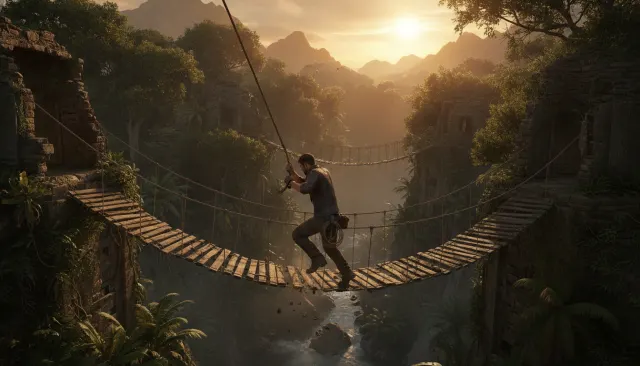
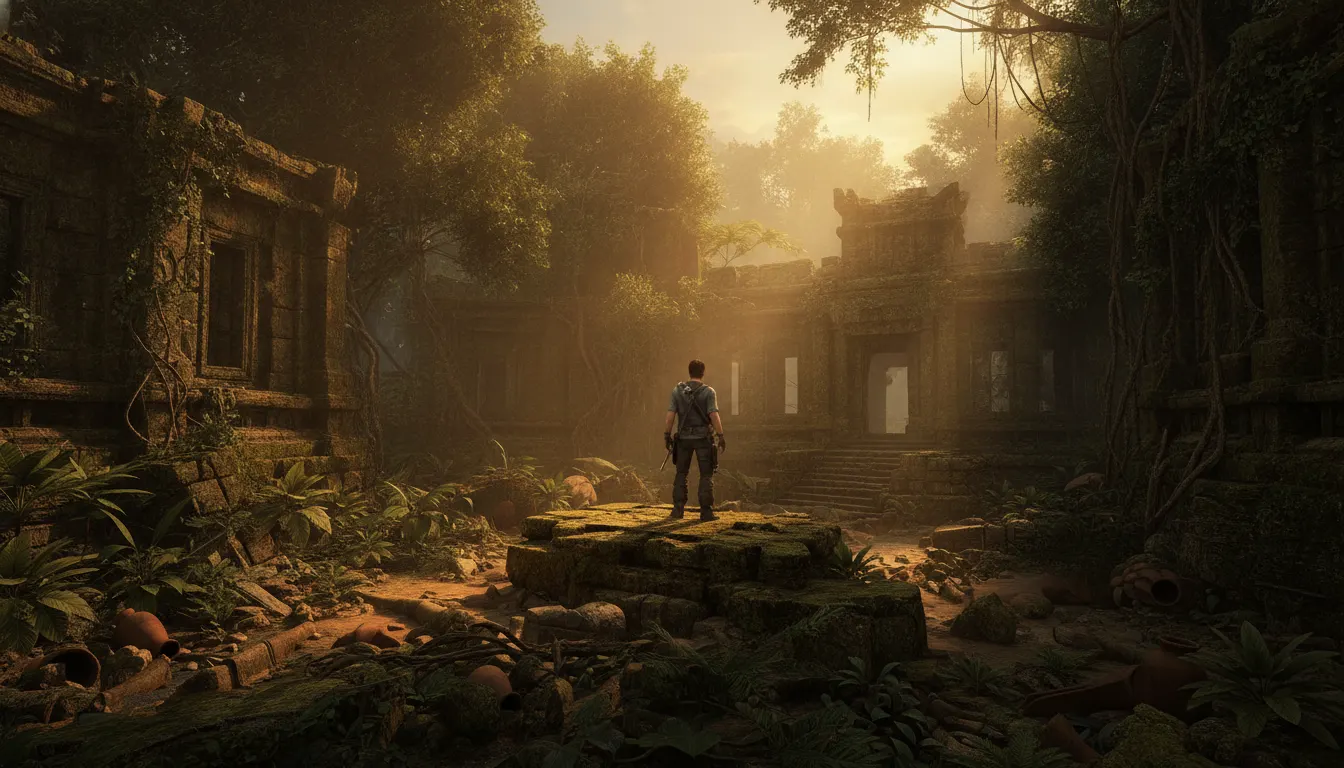
PlayStation 3 realistic era. Uncharted Drakes Fortune, Last of Us original, normal-mapped textures, HDR lighting attempt.
The moves a human crew would use to get here. Cue applies them for you, and knowing their names is how you ask for a change.
scene sources with warm-cool complementary contrast
snow accumulation, water surface response, cloth and debris physics
captured character performance blended with procedural physical reaction animation
of-field cinematography applied to action sequences and dialogue close-ups
specific material rendering: jungle moss, wet stone, snow pack, sand displacement
The Uncharted series, developed by Naughty Dog and published by Sony from 2007, redefined expectations for narrative game photorealism on PS3 hardware. Uncharted: Drake's Fortune (2007), Among Thieves (2009), and Drake's Deception (2011) represent a progressive visual achievement that made the PS3 generation's capabilities visible to mainstream audiences.
Naughty Dog developed specialized rendering techniques for the PS3's Cell Broadband Engine - an unusual architecture with one main processor and seven Synergistic Processing Units (SPUs) that most developers found difficult to exploit. Naughty Dog built custom tooling around the SPUs, using them for physics, animation blending, and rendering passes that enabled visual quality competitors couldn't match on the same hardware.
Uncharted 2: Among Thieves (2009) is frequently cited as the game that established the PS3 generation's visual benchmark. The Tibetan village and train sequences demonstrated dynamic environment rendering - snow accumulating on surfaces, dynamic lighting in interior sequences, and motion-captured character animation blended with procedural physical response - at a quality that invited direct comparison to blockbuster film CG.
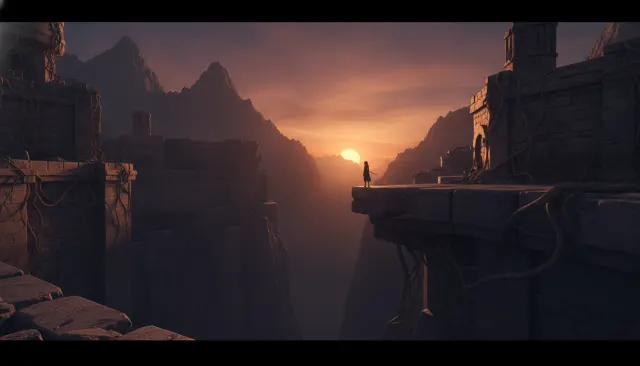
Creative director Amy Hennig and art director Robh Ruppel developed a visual philosophy for Uncharted that drew on action-adventure film cinematography: sweeping establishing shots, tight character close-ups during dialogue, and staging designed to communicate both geography and character relationship. The game's lighting borrowed from film production - motivated by practical sources, warm-cool complementary contrasts, and the slightly romanticized quality of adventure film photography.
Each Uncharted game introduced distinct environment types that showcased different rendering capabilities: the overgrown jungle ruins of Drake's Fortune, the Himalayan snow environments and Asian urban settings of Among Thieves, and the Arabian desert and European architecture of Drake's Deception. This diversity served both narrative and technical purposes - each environment was a demonstration of Naughty Dog's expanding rendering capabilities.
Naughty Dog's PS3 visual achievement is inseparable from the hardware challenge they overcame. The PS3's Cell architecture was notoriously difficult to program: its SPUs required low-level assembly-adjacent programming and a fundamentally different approach to parallelism than the x86 architecture most developers were familiar with. Other studios' PS3 outputs looked noticeably inferior to their Xbox 360 versions of the same games during the early PS3 years, while Naughty Dog's exclusive PS3 work consistently exceeded what multiplatform developers achieved. This created a direct correlation between technical mastery and visual quality that defined Naughty Dog's reputation - and explains why the studio became the primary benchmark studio for narrative game production values.
2007
Naughty Dog/Sony; series debut PS3 visual standard
2009
Naughty Dog/Sony; PS3 generation benchmark
2011
Naughty Dog/Sony; desert and European environment peak
2013
Naughty Dog/Sony; PS3 narrative realism culmination
2009
Guerrilla Games/Sony; parallel PS3 technical benchmark
2010
Santa Monica Studio/Sony; PS3 scale and spectacle achievement
A Look is not a filter. It is a set of stored decisions the pipeline reads before it makes a single frame, so two videos in the same Look actually match.