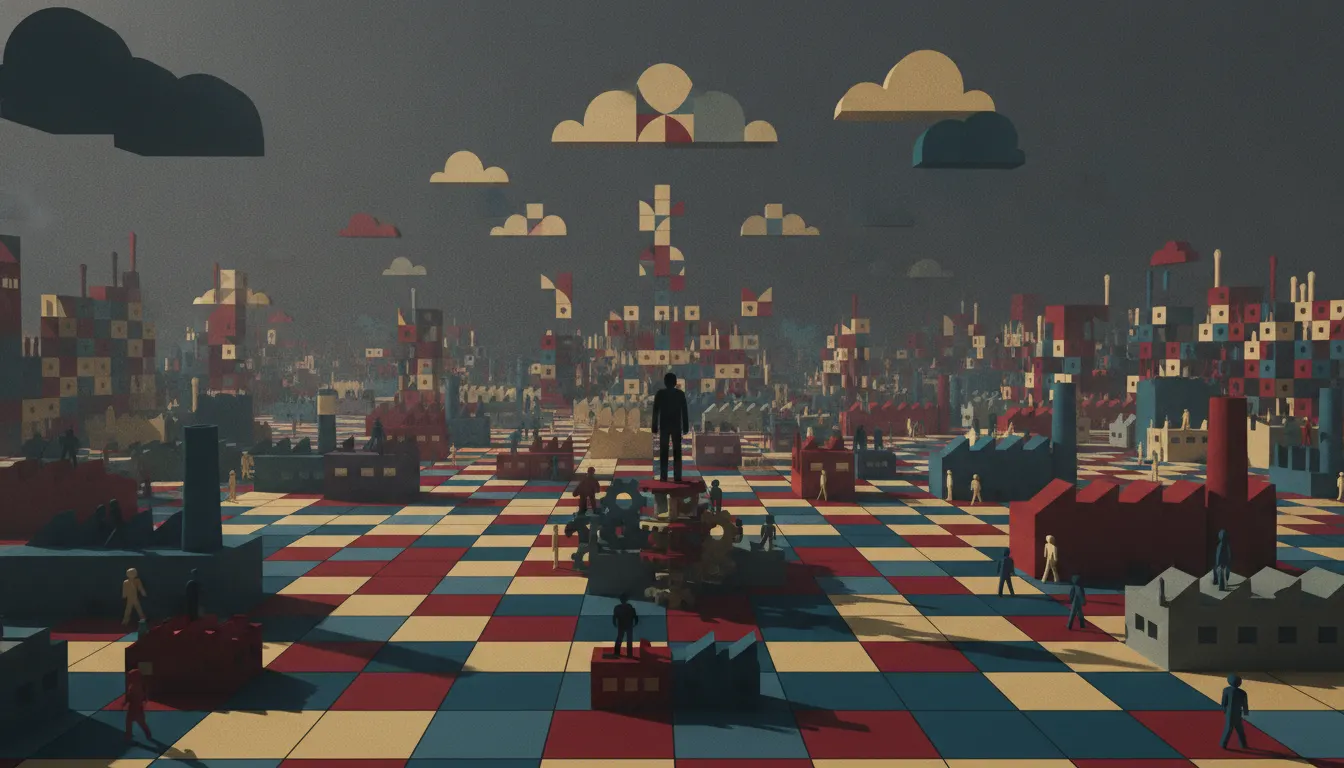
Gerd Arntz
ISOTYPE symbol library (1928-1945, 4,000+ linocut icons)
Modern Isotype pictogram system. Otto Neurath lineage, unit-charts using repeated human silhouettes, flat geometric icons, scientific Vienna method.
The moves a human crew would use to get here. Cue applies them for you, and knowing their names is how you ask for a change.
stroke outline construction from geometric primitives only
all icons designed on the same unit grid (typically 24x24 or 48x48)
black or brand-color icons on white or reversed
icons redrawn at small sizes rather than mechanically reduced
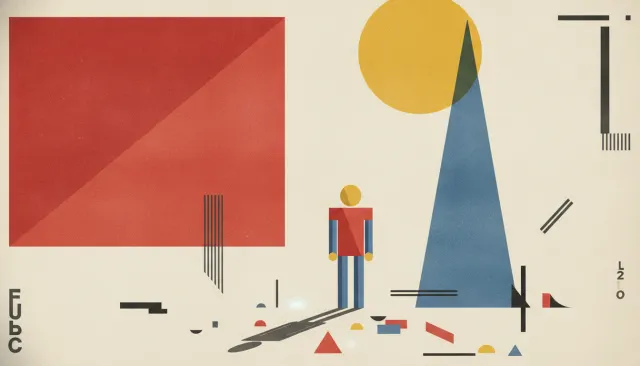
oval head on geometric body as the basis for all person-type icons
Isotype - the International System of TYpographic Picture Education - was developed by Austrian social scientist Otto Neurath and graphic artist Gerd Arntz in Vienna in the 1920s and 1930s. Its descendants include every pictogram system in modern wayfinding, interface design, and information graphics. The modern isotype pictogram is a coherent visual language: simple, flat, consistent, and universal.
Otto Neurath (1882-1945) developed ISOTYPE at the Social and Economic Museum of Vienna (Gesellschafts- und Wirtschaftsmuseum) from 1925 onward. His goal was to make statistical and social data about population, industry, and health accessible to working-class audiences who might not read fluently. The key principle: quantities are shown by repeating a symbol rather than varying its size. Ten worker icons means ten workers; one icon at double size was explicitly rejected as misleading.
Gerd Arntz (1900-1988), a German Constructivist artist, joined Neurath in Vienna in 1928 and became the primary symbol designer. Arntz eventually designed over 4,000 icons for the ISOTYPE system, cutting them as linocuts with a visual economy that made each symbol readable at postage-stamp size. His icons used flat solid black silhouettes with precise geometric construction - a person is an oval head on a rectangular body, a factory is a rectangle with a chimney.
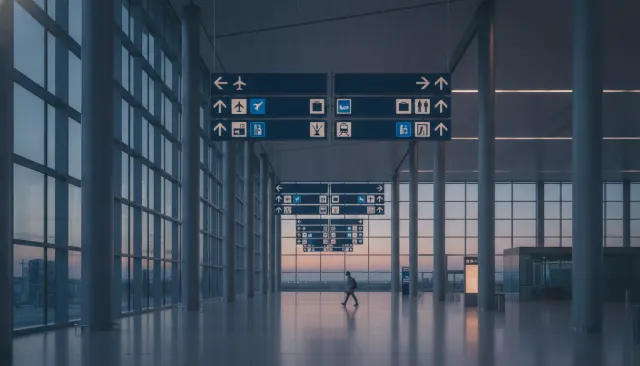
When Neurath fled to England in 1940 (and died in Oxford in 1945), his wife Marie Neurath continued the ISOTYPE Institute until 1971. Meanwhile, ISOTYPE's principles spread through three channels: airport and transit wayfinding systems (the DOT and AIGA commissioned the 50-symbol transportation pictogram set in 1974), Olympic Games identity programmes (Mexico 1968, Munich 1972, Montreal 1976), and emerging corporate identity practice.
The modern isotype pictogram is defined by: flat solid fill or outline-only treatment, consistent stroke weights and grid proportions, universal legibility at small sizes (16px to 24px), and systematic consistency across a family. Google Material icons, Apple SF Symbols, and the Noun Project's two million+ icon library all descend from this tradition. The Olympic pictogram tradition, designed for each Games by a different studio, continues to be a high-visibility showcase for the form.
ISOTYPE symbol library (1928-1945, 4,000+ linocut icons)
DOT/AIGA Transportation Pictogram System (1974, 50 symbols)
Mexico City 1968 Olympic pictograms
Munich 1972 Olympic pictograms and identity
Material Design icon set (2014, 2,500+ icons)
crowd-sourced icon library (2010-present, 2M+ icons)
A Look is not a filter. It is a set of stored decisions the pipeline reads before it makes a single frame, so two videos in the same Look actually match.