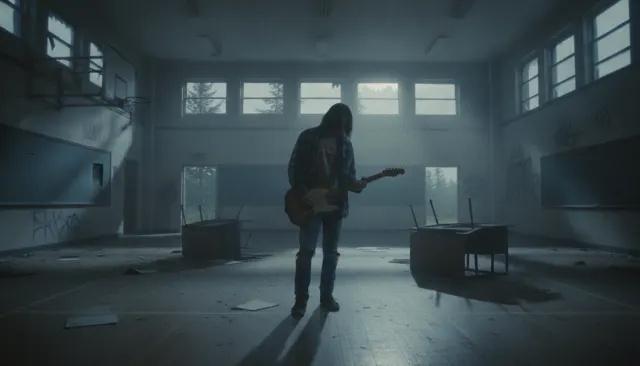
Metallica, 'Nothing Else Matters' dir. Adam Dubin
1992
desolate landscape video template
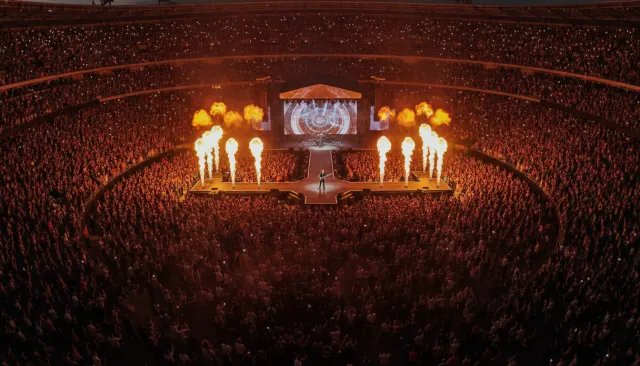
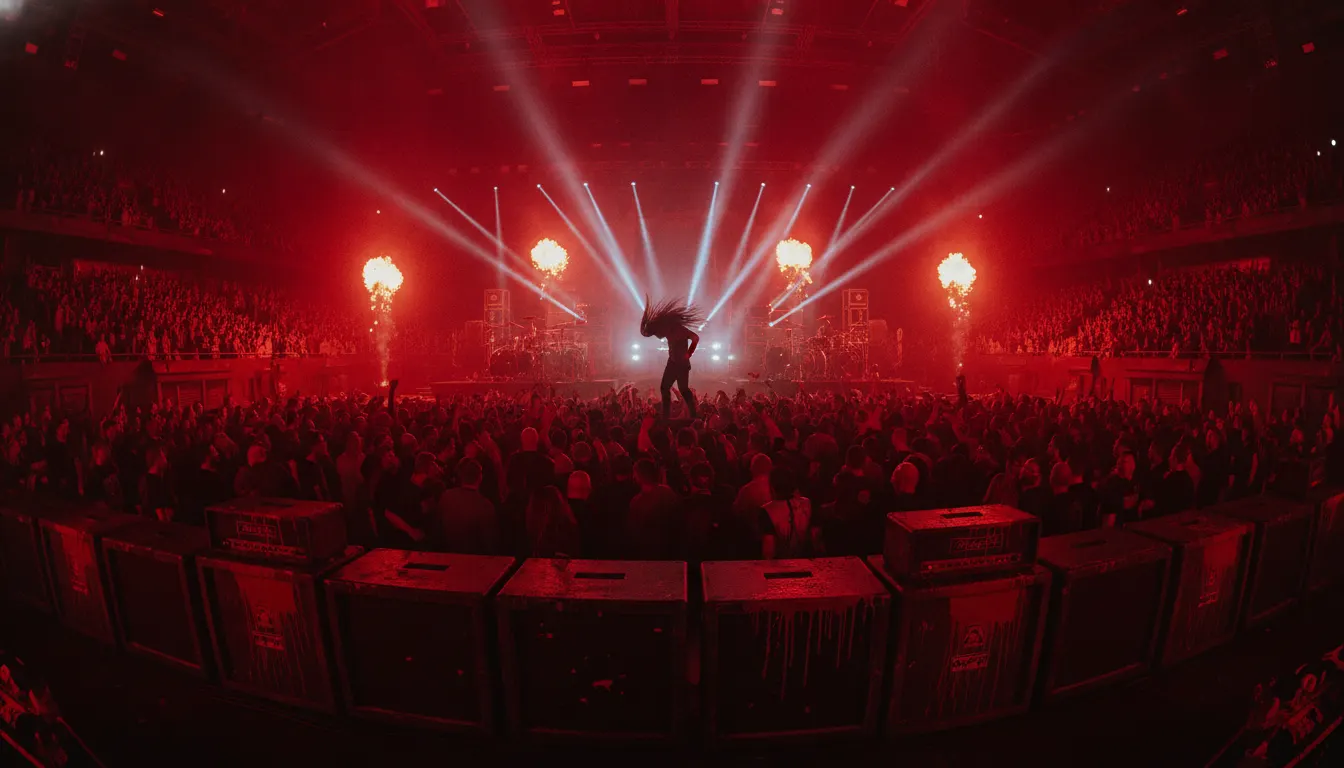
Metal arena strobe MV. Metallica and Slipknot pit, blast-beat headbang, blood-on-amp aesthetic, deep-red wash, low-angle pyro silhouette.
The moves a human crew would use to get here. Cue applies them for you, and knowing their names is how you ask for a change.
downbeat columns, blast beat fragmentation
propane or natural gas-fed 10-20 foot fire columns triggered to music cues
fog events synchronized to impacts or drops
hazer or fog machine creating particulate for light to scatter through
240fps) capturing hair physics and physical commitment
the performer as elemental force in desolate environment
the performer as shadow within the spectacle
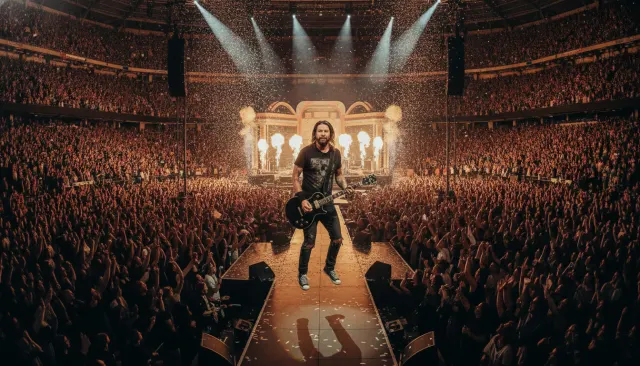
The heavy metal arena aesthetic is defined by the logic of escalation - more pyrotechnics, more lighting rigs, more volume, more stage set than any genre before or after attempted. It is a visual aesthetic built on the premise that spectacle itself is a form of sincerity: if you light 20,000 people on fire with a pyrotechnic wall, you are telling them the truth about how seriously you take the music.
Heavy metal's visual language emerged from Alice Cooper's theatrical horror shows of the early 1970s, was systematized by Black Sabbath and Led Zeppelin's stadium productions, and reached its architectural apex with Iron Maiden's World Slavery Tour (1984-1985) and Somewhere Back in Time World Tour (2008), which deployed a Boeing 747 (Ed Force One) as a touring logistics base and built stages that included a 20-foot Eddie mascot puppet, pyrotechnic walls, and a lighting rig that could recreate daylight over a 60,000-capacity stadium.
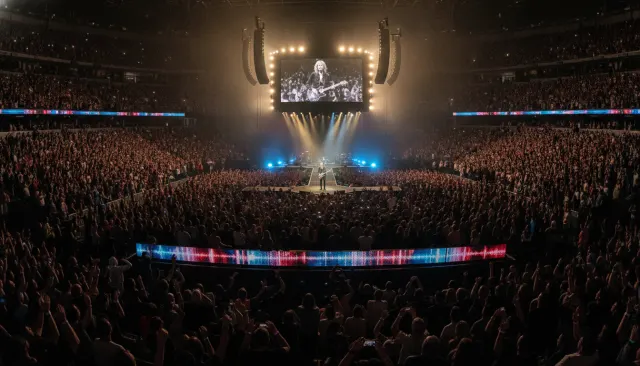
Metallica's stage design evolved from the raw power of their Justice for All period (1988-1989) through the elaborate Snake Pit productions of the Black Album tour (1991-1993) to the infamous custom round stage of their Death Magnetic era. The central staging challenge in Metallica's design is the same as in all metal: how to distribute visual energy across a 360-degree audience arrangement while keeping the pyrotechnic and lighting cues synchronized to specific moments in the music.
The strobe light is the defining lighting instrument of the metal aesthetic - used not at the moderate rates of club environments but at rates approaching and occasionally exceeding 10Hz, creating a staccato fragmentation of movement that matches thrash metal's pickup patterns. The blast of a strobe during a double-kick drum passage is a synaesthetic translation of the rhythm into light: you see the beat.
Fire is the other essential element: pyrotechnic columns triggered to the downbeat, CO2 cannons on the chorus, and the floor-mounted 20-foot flame columns that became Metallica's signature in the post-Woodstock era. The color palette of these effects is fixed - the orange-red of propane flame against deep smoke, white strobe against near-darkness, the green of CO2 against black.
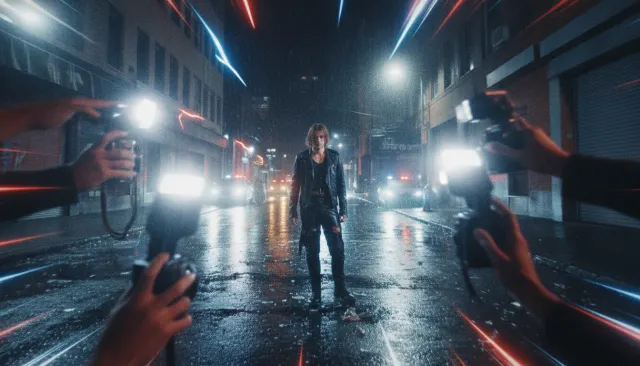
Metal music videos in the 1980s peak era used two registers: the performance-in-a-desolate-environment (Metallica's "Nothing Else Matters" 1992, dir. Adam Dubin) and the narrative-horror-concept (Maiden's "Aces High," Ozzy Osbourne's "Bark at the Moon"). The desolate environment video positioned the band against landscape - desert, industrial ruin, fog-filled forest - using the emptiness as a scale-reversal that made the band appear as elemental forces rather than musicians.
1992
desolate landscape video template
the pinnacle of theatrical metal stage design
pyrotechnic audience interaction
minimalist brutalist stage
1993
early 1990s metal video aesthetic
2001
face-mounted propane breathing
2009
veteran arena metal production
1991
the canonical metal video
A Look is not a filter. It is a set of stored decisions the pipeline reads before it makes a single frame, so two videos in the same Look actually match.