Where the Wild Things Are
1963
Harper & Row; Caldecott Medal 1964
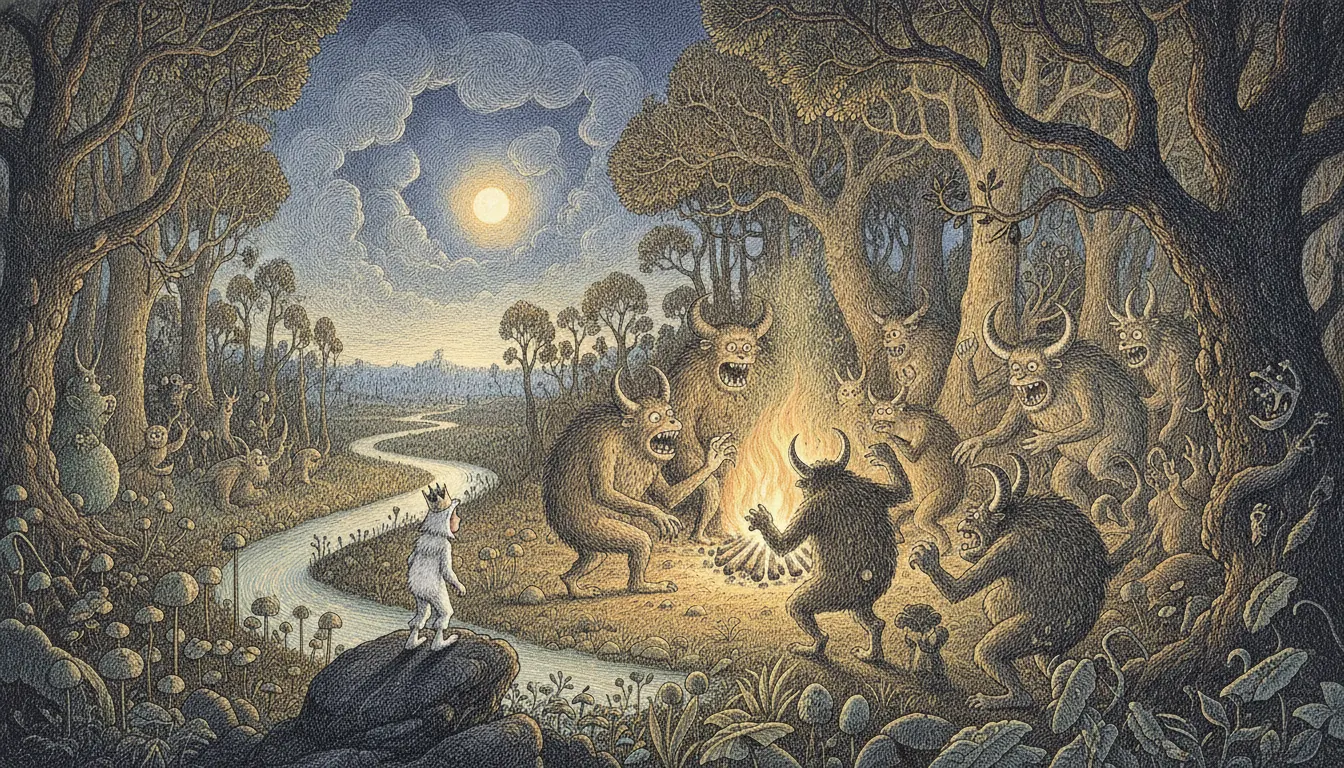
Maurice Sendak Where the Wild Things Are crosshatch. Furry horned wild monsters, ink crosshatch shading, dreamlike forest crown.
The moves a human crew would use to get here. Cue applies them for you, and knowing their names is how you ask for a change.
and-ink crosshatching built up over watercolor wash for rich, textured tonal range
monsters with expressive, emotionally complex faces
illustrations growing from small vignette to full bleed as narrative intensity increases
entire page sequences where story is carried entirely by illustration
tone palette: deep greens, purples, golds, and ochres rather than primary brightness
night cities, towers, ovens, and domestic spaces at uncanny scale
Maurice Sendak (1928-2012) is widely considered the most important American picture book illustrator and author of the twentieth century. His work challenged the prevailing consensus that children's books should be comforting and sanitized, insisting instead that children experience the full spectrum of emotion - rage, terror, desire, loneliness - and that picture books should honor that reality.
Published by Harper & Row in 1963, Where the Wild Things Are tells the story of Max, sent to bed without supper after a tantrum, who imagines sailing to a land of monsters, becomes their king, and eventually returns home to find his supper still warm. The book was initially rejected by several publishers and criticized by child psychologists upon publication for being potentially frightening to young readers. It won the Caldecott Medal in 1964 and has never been out of print.
Sendak's visual approach in Wild Things is fundamentally sequential: the illustrations begin as small vignettes surrounded by white border and expand across the spread as Max's fantasy intensifies, until the three-page "wild rumpus" wordless sequence fills the entire spread with no text at all. The monsters are simultaneously terrifying and lovable - hairy, horned, clawed, yellow-eyed, but with the slightly confused expressions of large animals who don't quite know what to do with themselves.
The artwork is pen-and-ink crosshatching over watercolor wash. Every page is rendered in dense hatched line building up to rich dark values, with a warm but slightly alien palette - deep greens, purples, golden yellows under forest canopies.
Sendak's follow-up, In the Night Kitchen, is still more psychologically complex: a young boy named Mickey falls naked through the night into a giant Art Deco baking city operated by identical Oliver Hardy cooks. The book's nudity, surreal logic, and Freudian undertones have landed it on banned-books lists in several American school districts - which Sendak considered absurd. The artwork here shifts from hatching to a warmer, rounder line influenced by Winsor McCay's Little Nemo comic strip and 1930s advertising illustration.
Sendak illustrated more than eighty books by other authors, including his beloved 1962 illustrations for the Nutshell Library series, before his death in 2012. Spike Jonze's 2009 live-action/puppet film adaptation of Wild Things is an important contemporary extension of the visual world.
1963
Harper & Row; Caldecott Medal 1964
1970
Harper & Row
1981
Harper & Row
1962
Harper & Row; includes Chicken Soup with Rice, Alligators All Around
1956
Sendak's first self-authored and illustrated book
1957
Harper
directed by Spike Jonze; production design extension of Sendak's world
1967
A Look is not a filter. It is a set of stored decisions the pipeline reads before it makes a single frame, so two videos in the same Look actually match.
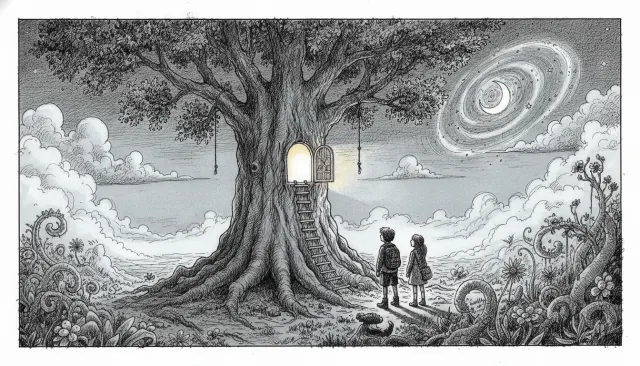 Book Traditions ExtendedMagic Tree House Childrens Pen Ink
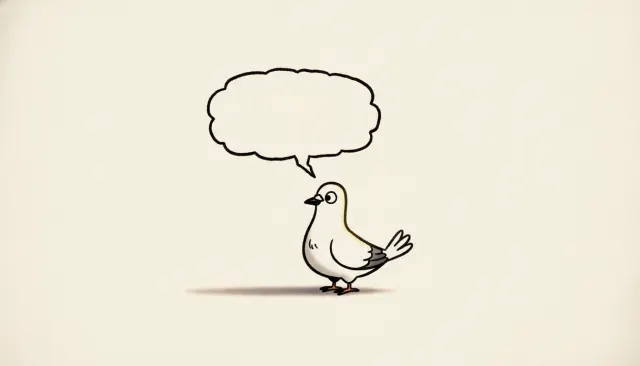 Childrens BookMo Willems Pigeon Simple
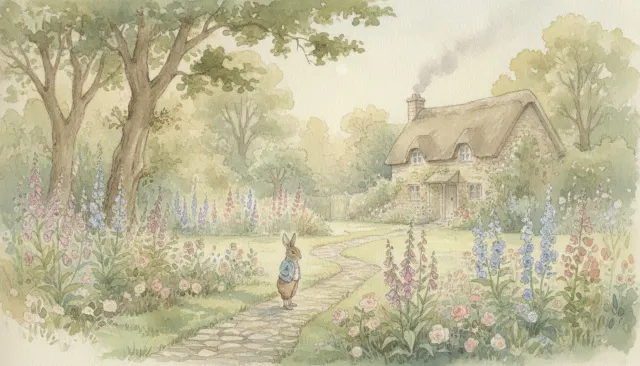 Childrens BookBeatrix Potter Watercolor Storybook
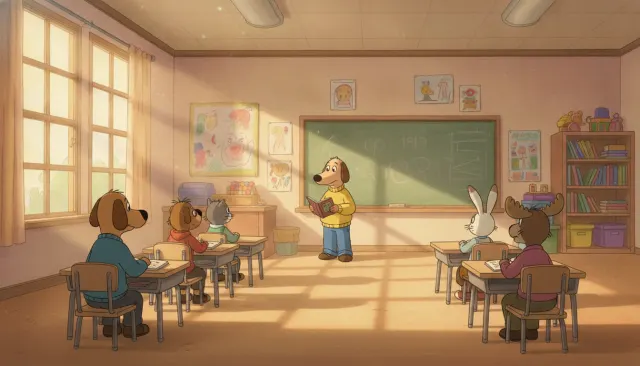 Pbs Kids EducationalArthur PBS Warm Watercolor
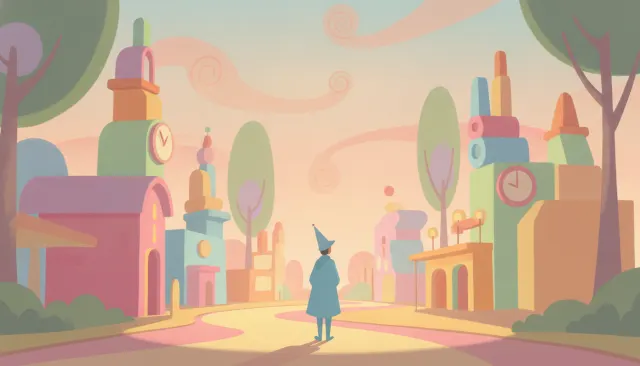 Illustrators NamedMary Blair Disney Concept Pastel
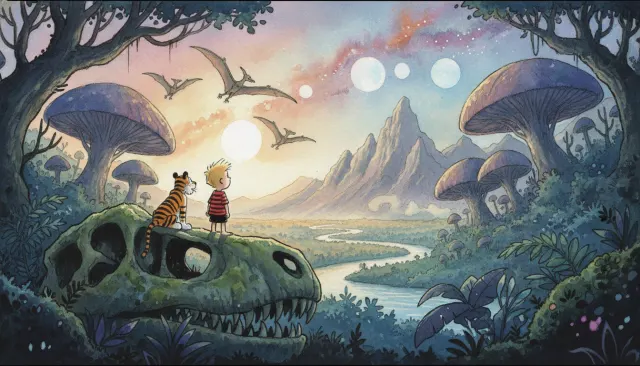 Illustrators ExtendedBill Watterson Calvin Hobbes Painted Sunday