Sal Murdocca
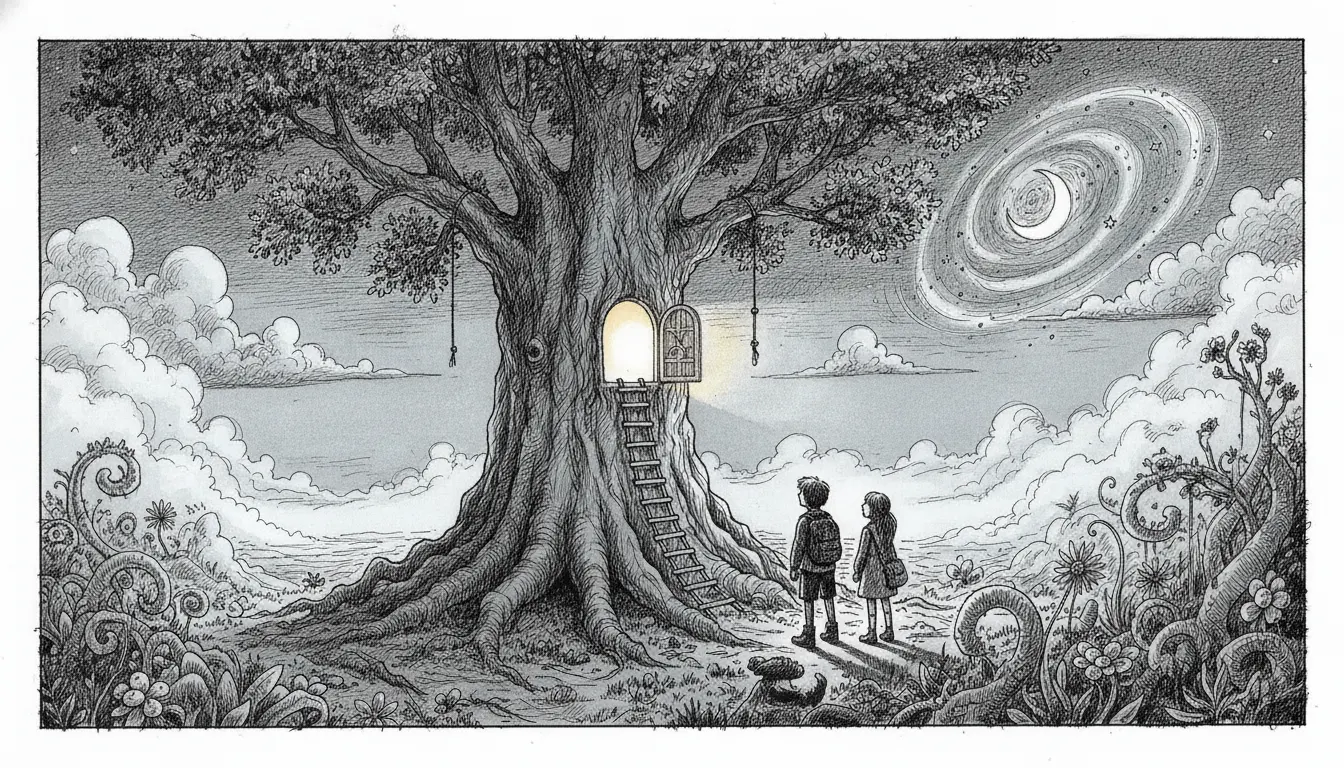
Magic Tree House series interior illustrations (1992-present)
Magic Tree House chapter book Sal Murdocca pen-and-ink interior illustration. Loose cross-hatch line, Jack and Annie time-travel scene, friendly chapter-book vignette.
The moves a human crew would use to get here. Cue applies them for you, and knowing their names is how you ask for a change.
the tool visible in the stroke
parallel lines rather than painted tones
exaggerated eyes, noses, and mouths
illustrations that fade into white rather than filling a hard rectangular border
appropriate costume and prop detail balanced against simplified anatomy
The Magic Tree House series, written by Mary Pope Osborne beginning with the first volume in 1992, established a template for illustrated chapter-book fiction that would dominate the middle-grade market through the 2000s. The original interior illustrations by Sal Murdocca - pen-and-ink drawings with light crosshatching and expressive, slightly cartoon-exaggerated faces - represent a direct continuation of a tradition rooted in mid-century American children's book illustration.
Before color printing became economically practical for mass-market children's books, pen-and-ink was the default medium for illustrated fiction. The tradition runs from Ernest Shepard's illustrations for A.A. Milne's Winnie-the-Pooh (1926) and Kenneth Grahame's The Wind in the Willows (1908) through Garth Williams's work for the Little House on the Prairie series (1953) and E.B. White's Charlotte's Web (1952) and Stuart Little (1945), to Louis Darling's original Ramona the Pest illustrations (1968) and Quentin Blake's work for Roald Dahl in the 1970s-80s.
The shared visual grammar: a clean but slightly scratchy line suggesting hand-drawn spontaneity, crosshatching for shadow and volume without photographic tonal range, simplified but expressive character faces, and environmental backgrounds reduced to essential landmarks rather than exhaustive detail. The drawings exist to trigger the imagination, not replace it.
Murdocca's illustrations for the Magic Tree House books work within this tradition while adapting to the chapter-book format: small, vignette-style images placed at chapter openings rather than full-page spreads, rendering historical settings (ancient Egypt, the Cretaceous period, feudal Japan) in a simplified style that makes them immediately recognizable to eight-year-old readers without historical expertise. Characters Jack and Annie maintain consistent proportions and expressions across more than fifty volumes.
Pen-and-ink chapter-book illustration persists because it is economical to print, scales well to small reproduction sizes, and creates a visual contract with young readers: this is a world built by imagination, and you are invited to complete it.
Magic Tree House series interior illustrations (1992-present)
1926
Winnie-the-Pooh illustrations , Methuen
1952
Charlotte's Web illustrations , Harper & Brothers
Little House on the Prairie series (1953 revisions), Harper
1968
Ramona the Pest , William Morrow
1982
The BFG , Jonathan Cape
1988
Matilda , Jonathan Cape
1936
Little Tim and the Brave Sea Captain
A Look is not a filter. It is a set of stored decisions the pipeline reads before it makes a single frame, so two videos in the same Look actually match.