Johannes Vermeer
Girl with a Pearl Earring (c. 1665), Mauritshuis, The Hague
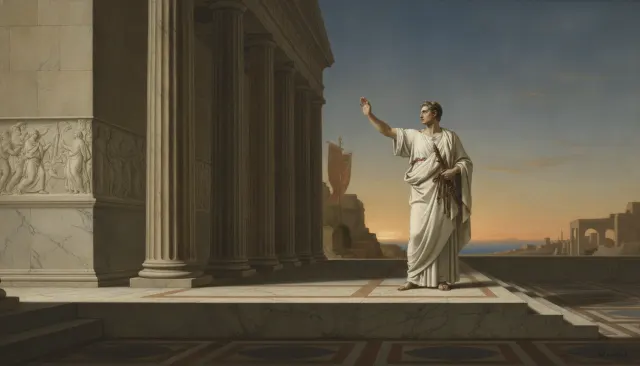
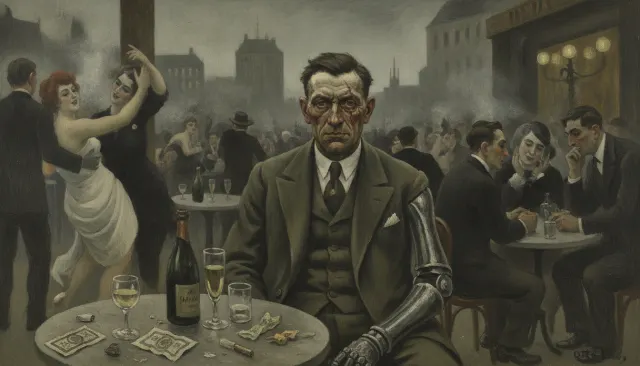
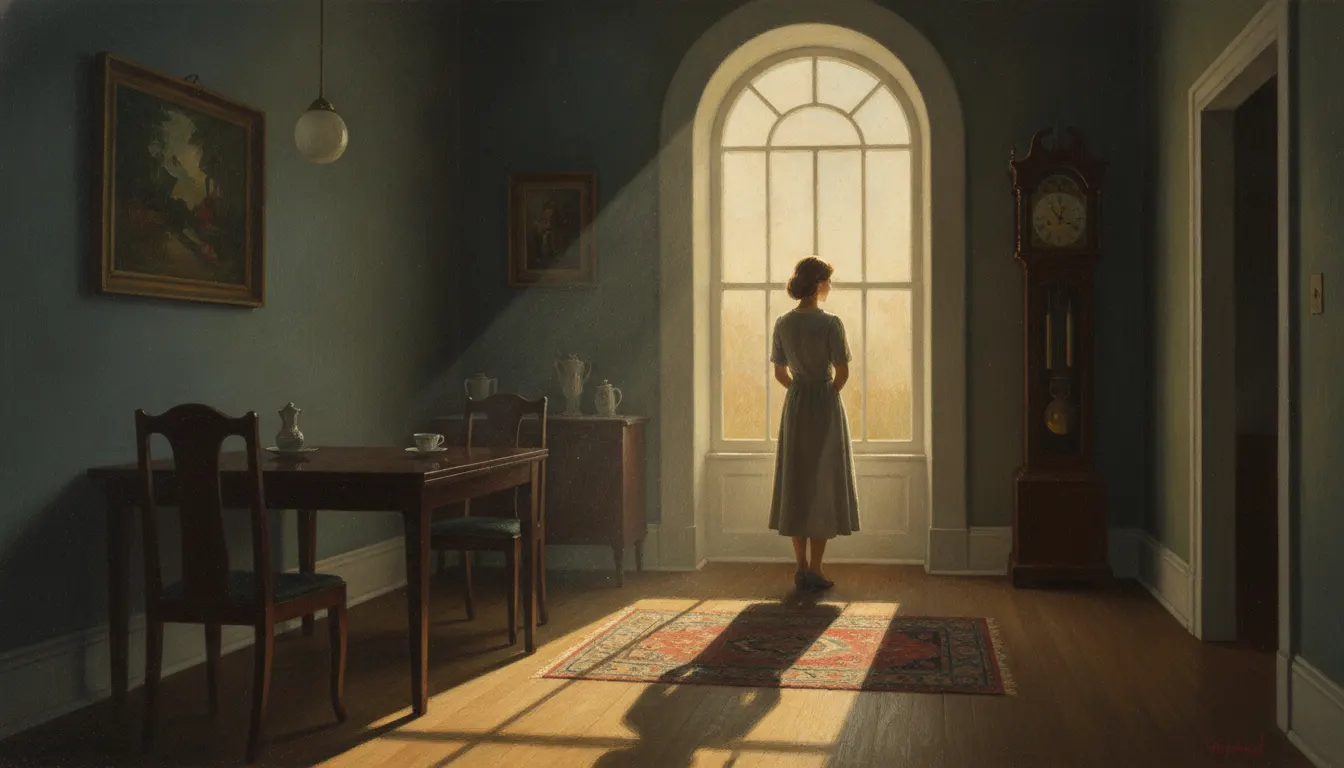
Magic Realism painting tradition, Edward Hopper and Vermeer-modern crossover. Quiet uncanny domestic interior, window light, isolated figure, hyper-still mood.
The moves a human crew would use to get here. Cue applies them for you, and knowing their names is how you ask for a change.
ochres, grays, dusty blues - that reads as memory rather than present reality
walls, floors, window frames rendered with exact geometry and perspective
bright illuminated zones against very dark shadows, as if stage-lit
no motion blur, no implied movement - everything caught in suspension
foreground textures rendered crisply, distant elements softened into near-abstraction
Magic realism in visual art describes a strand of painting in which the world is rendered with painstaking photographic precision but charged with a quality of strangeness - as if time has stopped, as if the subject is aware of something invisible, as if the ordinary room is about to become extraordinary. The term migrated from German art criticism ("Magischer Realismus," coined by Franz Roh in 1925 to describe post-Expressionist figurative painters) before finding its most common use in literature, but the pictorial tradition runs from Vermeer's seventeenth-century domestic interiors through Edward Hopper's mid-twentieth-century American scenes to a generation of contemporary hyperrealist painters.
Johannes Vermeer (1632-1675) painted fewer than forty surviving works, almost all set in a single corner of a Delft room with a leaded window on the left. His subjects - Girl with a Pearl Earring (c. 1665), The Milkmaid (c. 1660), Woman Reading a Letter (c. 1663) - are ordinary people performing ordinary tasks, but the quality of diffused northern light falling across their faces and the objects around them transforms the quotidian into the metaphysical. Vermeer almost certainly used a camera obscura as an optical aid, which accounts for the soft focus gradients in distant objects and the precise foreshortening.
Edward Hopper (1882-1967) painted the loneliness of the American built environment with a precision that has become the dominant visual shorthand for twentieth-century existential isolation. Nighthawks (1942, Art Institute of Chicago) - a diner counter at night, four figures who do not speak - distills his sensibility: architectural clarity, theatrical artificial light, and human figures who seem sealed inside their own consciousness. Other canonical works include Automat (1927), Gas (1940), Room in New York (1932), and New York Movie (1939). Hopper worked in oil and in watercolor, often spending months on a single composition after years of preparatory sketches.
Painters like Eric Fischl, Bo Bartlett, and Andrew Wyeth (whose Christina's World, 1948, is a touchstone) carry the tradition forward. Wyeth's tempera works in particular - painted with tiny brushes in dry pigment that produces a matte, dusty surface quite unlike oil - achieve an extreme of painstaking realism that simultaneously feels prehistoric and dreamlike.
Girl with a Pearl Earring (c. 1665), Mauritshuis, The Hague
The Milkmaid (c. 1660), Rijksmuseum, Amsterdam
1942
Nighthawks , Art Institute of Chicago
1940
Gas , MoMA, New York
1939
New York Movie , MoMA, New York
1948
Christina's World , MoMA, New York
1947
Wind from the Sea , National Gallery of Art
1979
Sleepwalker , private collection
A Look is not a filter. It is a set of stored decisions the pipeline reads before it makes a single frame, so two videos in the same Look actually match.