Death Note
Madhouse / Tetsuro Araki / Tsugumi Ohba · 2006
Psychological cat-and-mouse thriller with the studio's most refined chiaroscuro character staging
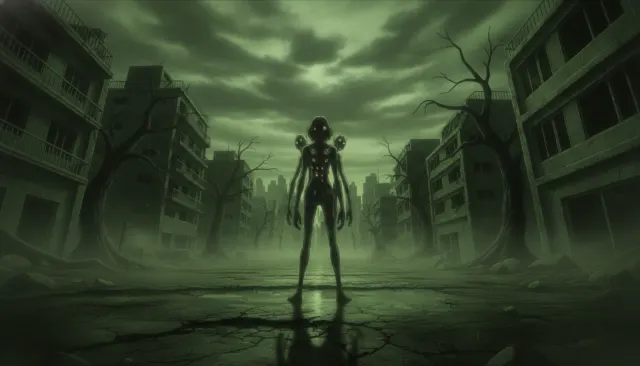
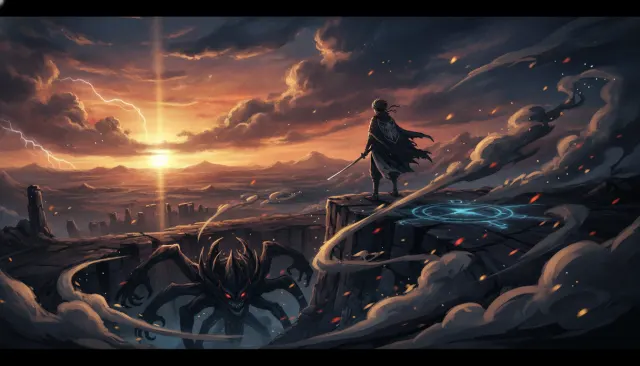
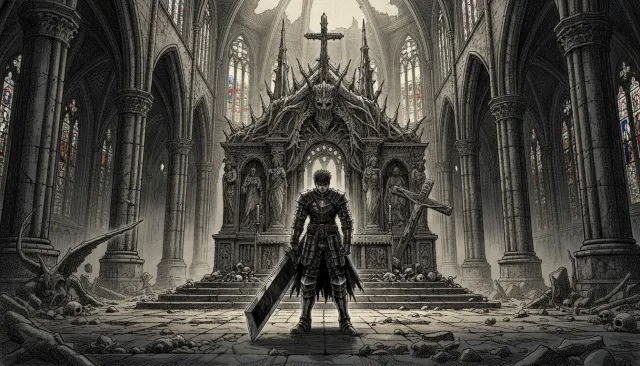
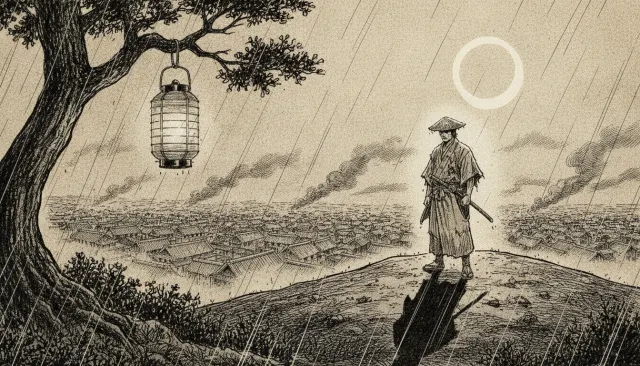
Madhouse studio dark register (Death Note, Monster, Devilman Crybaby). Heavy ink, moody shadows, psychological tension, expressive character distortion.
The moves a human crew would use to get here. Cue applies them for you, and knowing their names is how you ask for a change.
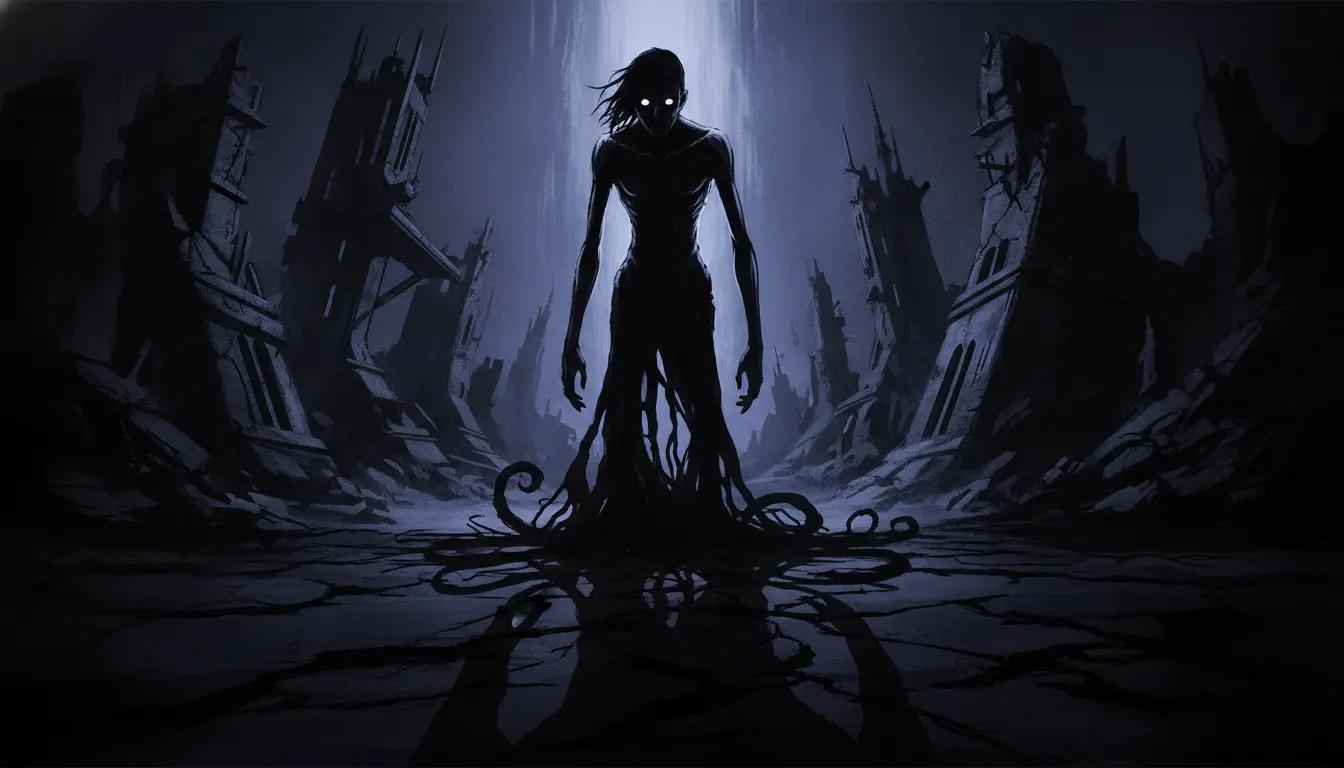
Large areas of near-black shadow with hard edges, derived from Dutch golden age chiaroscuro, applied to interiors and character close-ups to signal psychological weight
Character designs built on strong angular geometry -- sharp jaws, elongated features, high cheekbones -- that signal adult danger and distinguish from rounded accessible anime conventions
Low camera angles that become increasingly exaggerated as a character's power or delusion escalates -- a visual grammar for depicting narcissism and corruption
Primary palette limited to gray-black-brown with a single high-saturation hue (Death Note's red, Monster's amber) deployed for maximum emotional impact when it appears
Animation quality invested in faces during dialogue rather than distributed evenly -- prioritizing psychological expressiveness over kinetic spectacle
One Punch Man's technique of extending and escalating action quality through concentrated animator talent deployment, followed by comedic deflation of the preceding excess
Madhouse, founded in 1972 by Osamu Dezaki and Rintaro after they left Mushi Production, became the studio most associated with prestige dark anime. Over five decades, it accumulated a catalogue that reads as a greatest-hits of anime's most ambitious and disturbing works: Akira (co-production, 1988), Perfect Blue (1997), Cardcaptor Sakura (1998), Monster (2004), Death Note (2006), One Punch Man Season 1 (2015), and Devilman Crybaby (2018).
Madhouse's dark fantasy aesthetic is characterized by high-contrast color work with deep shadow regions, detailed architectural rendering in settings (Gothic European for Monster, Art Deco Tokyo for Death Note), and character designs with strong geometry -- angular jaws, sharp cheekbones, elongated limbs -- that signal adult danger rather than adolescent accessibility. The studio is willing to hold long on uncomfortable images in a way that television anime's pacing conventions discourage.
Death Note (2006-2007, directed by Tetsuro Araki) exemplifies Madhouse's approach to psychological thriller: deep shadow compositions derived from Dutch golden age painting, an antagonist (Light Yagami) shot from low angles with increasingly distorted perspectives as his narcissism escalates, and a restricted gray-black-white palette occasionally punctuated by blood red or L's white wardrobe. The animation quality concentrates resources on facial acting during dialogue-heavy scenes rather than action.
Monzo Urasawa's Monster (2004, 74 episodes) represents the studio's most sustained realistic effort: post-Cold War Eastern Europe rendered with architectural and cultural specificity, characters aging across a decade of narrative, and a palette that drains toward brown-gray as the story's moral center erodes. No supernatural elements exist -- horror is entirely human.
One Punch Man Season 1 (2015, supervised by animator Shingo Natsume) demonstrated Madhouse could produce television-era best-in-class action animation when resourced for it: Saitama's fights deploy full-sakuga production with crowd-sourced animator talent, fluid physics-free impact animation, and comedic deflation after each excessive peak.
Madhouse / Tetsuro Araki / Tsugumi Ohba · 2006
Psychological cat-and-mouse thriller with the studio's most refined chiaroscuro character staging
Madhouse / Naoki Urasawa · 2004
74-episode European realist thriller, the most ambitious anime adaptation of literary-grade manga material
Madhouse / Shingo Natsume · 2015
Peak TV anime action production, setting the sakuga action quality benchmark for the decade
Madhouse / Satoshi Kon · 1997
Satoshi Kon's debut feature, a psychological horror masterwork about celebrity and identity collapse
Madhouse / Satoshi Kon · 2004
Kon's TV series on collective anxiety, using Madhouse's dark visual grammar for social critique
Science SARU / Masaaki Yuasa · 2018
Go Nagai adaptation produced outside Madhouse but within its dark fantasy lineage
A Look is not a filter. It is a set of stored decisions the pipeline reads before it makes a single frame, so two videos in the same Look actually match.