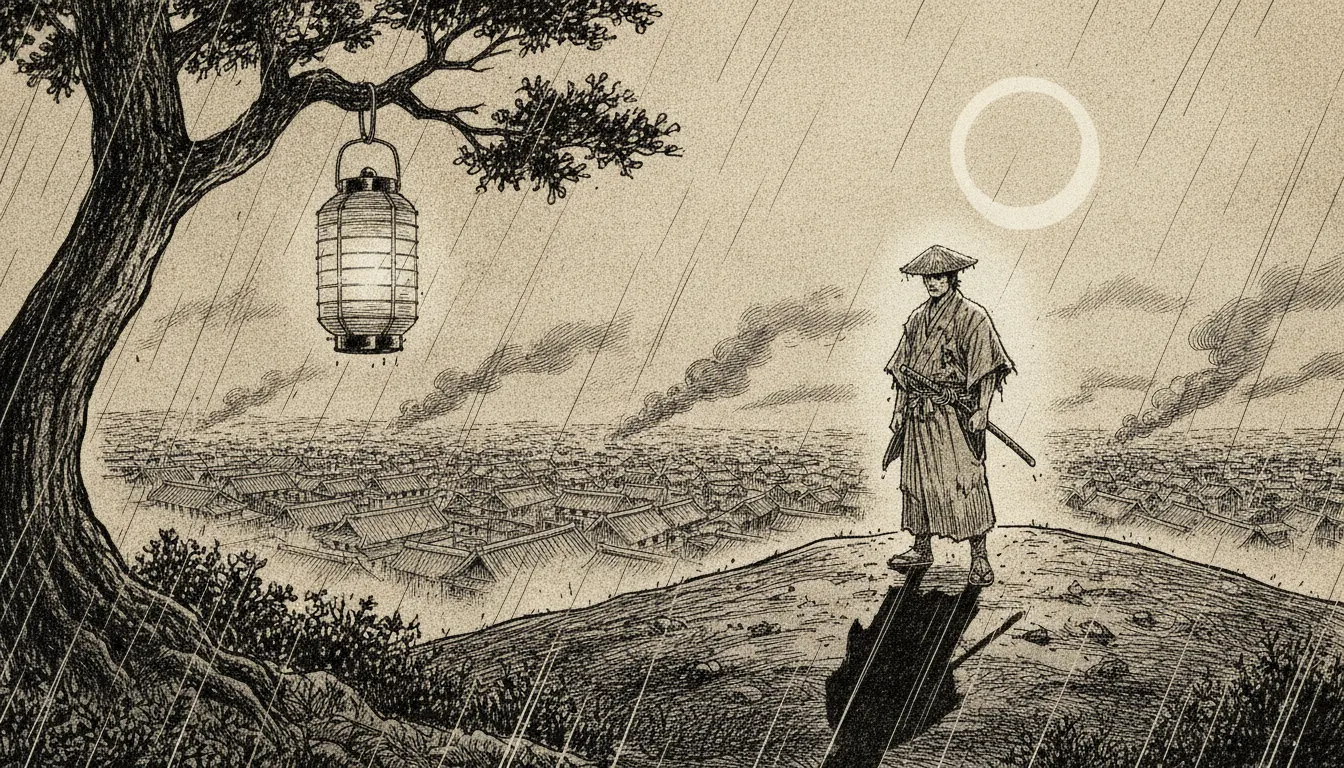
MANGA SUBTYPES · 1960S · JAPAN
Gekiga Noir Manga 1960s Dark
Gekiga (dramatic pictures) noir manga register (Yoshihiro Tatsumi, Lone Wolf and Cub, Golgo 13). Rough scratchy ink, mature realistic linework, hardboiled adult drama, period-accurate detail.
gekiganoirmaturehardboiled
LUT gekiga-noir-ink
WHEN TO USE
- Serious literary comic or graphic novel content where the adult narrative register requires a non-escapist visual system
- Social realism content depicting urban working-class environments with honest visual honesty
- Film noir or crime content where black-and-white shadow work and weary character expression match the tone
- Documentary or editorial content exploring Japanese social history of the 1960s-1970s
- Content targeting art-literate audiences who value manga's literary tradition over entertainment-genre conventions
- Horror content requiring the gekiga-Umezu lineage of everyday-realism-meets-psychological-horror
WHEN NOT TO USE
- Children's or family content where the adult themes, violence, and bleak worldview are inappropriate
- Action or adventure content where the resigned, weighted character energy contradicts the genre's energy
- Optimistic or aspirational content where the visual language of defeat and limitation is fundamentally unsuitable
- Fast-paced commercial content where the contemplative, dense visual language requires sustained engagement
SIGNATURE TECHNIQUES
How the look is made.
The moves a human crew would use to get here. Cue applies them for you, and knowing their names is how you ask for a change.
- 01Small, weary adult eyes contrasting with Tezuka large
eye convention - visual marker of disillusionment
- 02Heavy ink shadow on faces
dramatic lighting from below or side creates psychological weight
- 03Urban claustrophobia
cheap apartments, factory floors, and back alleys rendered with architectural specificity
- 04Angular, tired adult body proportions
no athletic youth idealization
- 05Silent panel sequences
extended wordless sequences where environment and expression carry narrative
- 06Hatching and crosshatch texture on surfaces
walls, floors, clothing rendered with tactile density
- 07Close
up composition on hands as emotional indicator - Tatsumi's characters speak through hand position
HISTORY & CONTEXT
Where it comes from.
Gekiga: 1960s Dark Noir Manga Aesthetic
Gekiga (literally "dramatic pictures") was a movement within manga that emerged in the late 1950s and 1960s as a deliberate reaction against the infantilizing conventions of children's manga dominated by Osamu Tezuka's large-eye character design and adventure-story narratives. Led by Yoshihiro Tatsumi (who coined the term "gekiga" in 1957), Kazuo Umezu, Sanpei Shirato, and Ikki Komagata, gekiga claimed manga as a legitimate medium for adult literary storytelling: crime drama, social realism, labor politics, psychological horror, and sexual content.
Yoshihiro Tatsumi and the Gekiga Manifesto
Tatsumi's short story collections - Push Man and Other Stories (1969-1970), Abandon the Old in Tokyo (1970), and his autobiographical A Drifting Life (2009, covering 1945-1960) - are the canonical gekiga texts. His visual style features: heavily shadowed faces with small, weary eyes in place of Tezuka's luminous large-eyed idealism; angular, tired adult bodies rather than youthful athletic proportions; urban environments rendered with claustrophobic detail - cheap apartment buildings, public baths, factories, back alleys - where Tezuka's characters inhabited schools, spaceships, and fantastic landscapes.
Tatsumi's stories are almost uniformly bleak: urban salarymen, frustrated artists, sex workers, and laborers trapped by economic circumstance, social expectation, or psychological limitation. There is no protagonist empowerment arc, no special power, no romantic redemption. This thematic commitment to unglamorous social realism required a visual system where the human face expresses defeat, resignation, and occasional violent desperation rather than heroic emotion.
Kazuo Umezu and Horror Gekiga
Kazuo Umezu adapted gekiga conventions into horror manga, creating a sub-tradition of psychological and body horror that runs from his early The Drifting Classroom (1972-1974, Shogakukan) to Orochi: Blood (1969) and influences contemporary horror manga including Junji Ito's work. Umezu's visual signature uses the same shadowed realism as Tatsumi but applies it to supernatural scenarios - the everyday environment making horror more immediate by contrast.
Legacy and International Recognition
Gekiga was largely invisible outside Japan until Drawn & Quarterly began publishing Tatsumi's work in English starting in 2005 (with a foreword by Adrian Tomine), catalyzing critical reassessment of manga as literary art. Tatsumi's work appeared in art museums and literary festivals. His influence on North American alternative comics is now well documented: the black-and-white social realism tradition of Chris Ware, Daniel Clowes, and Adrian Tomine shares visual and thematic space with Tatsumi's 1960s-70s output.
NOTABLE WORKS
Where you have seen it.
*Abandon the Old in Tokyo*, Yoshihiro Tatsumi, 1970 (Drawn & Quarterly English ed. 2006)
*A Drifting Life*, Yoshihiro Tatsumi, 2009 (800-page autobiographical manga)
*The Drifting Classroom*, Kazuo Umezu, Shogakukan, 1972-1974
*Orochi: Blood*, Kazuo Umezu, 1969-1970
*Shaolin Cowboy* (Robert Crumb cited gekiga as influence alongside *Zap* Comix underground)
Sanpei Shirato, *The Legend of Kamui*, 1964-1971 (labor-politics samurai gekiga)
THE RECIPE
The exact knobs
the renderer turns.
A Look is not a filter. It is a set of stored decisions the pipeline reads before it makes a single frame, so two videos in the same Look actually match.
SettingValue
GradeColour LUT applied to every frame
gekiga-noir-inkTransitionHow one shot becomes the next
hard cuts · 260ms · linearKen BurnsCamera move applied to stills
Slow push · 0.04 · centerTypographyDisplay / body / mono pairing
Noto Serif JP · Inter · JetBrains MonoMusic moodWhat the bed under the voice sounds like
jazz-noir · shakuhachi-flutePrompt suffixAppended to every shot prompt in this Look
gekiga noir manga, Yoshihiro Tatsumi Lone Wolf and Cub Golgo 13 style, rough scratchy ink, mature realistic linework, hardboiled adult drama, period-accuratePALETTE
Primary
#1A1A1A
Secondary
#E0DACA
Accent
#A33B2A
Text/Light
#0F0F0F
Text/Dark
#E0DACA
BG 900
#0A0A10
BG 800
#15151A
RELATED LOOKS
Next to it on the shelf.
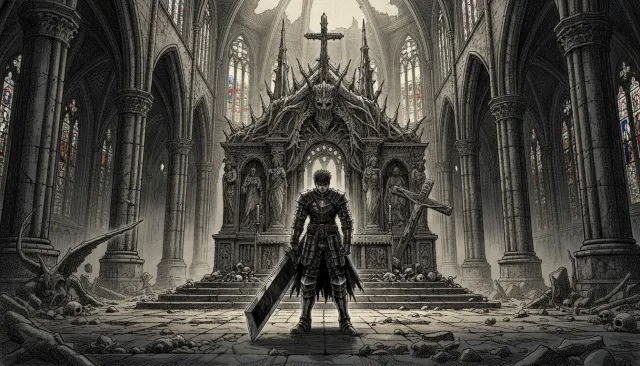 90S Manga AestheticsBerserk Dark Fantasy Ink Detail
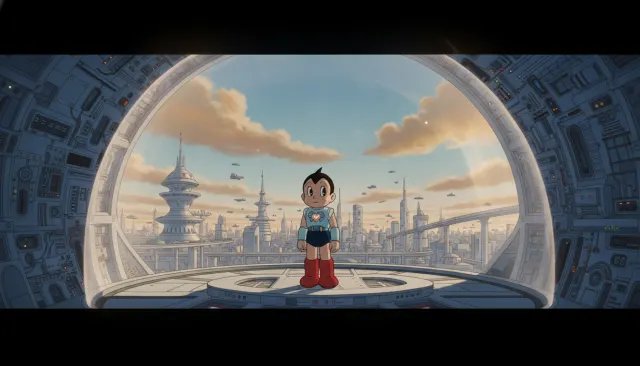 Era Classic Anime Expanded60s Tezuka Astro Boy Detailed
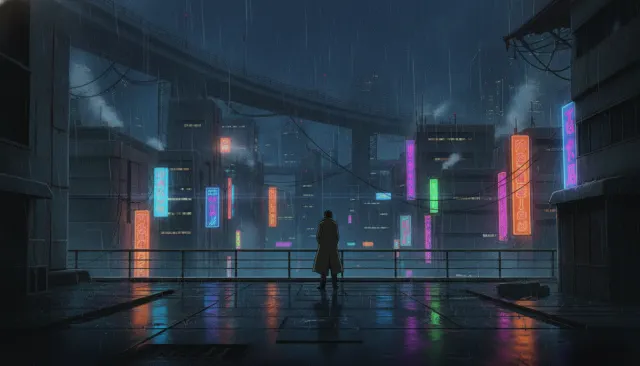 Era Classic AnimeAkira / Bebop 90s OVA Cel
 Subgenre Action DarkerCyberpunk Anime Akira Modern
 Era Classic Anime Expanded70s Lupin III Zenigata Action
 Studio Aesthetic ExpandedGainax Evangelion Mecha Mystical
Your first cut
is on us.
+ New videoFree plan · no card · 1080p export