Perfect Blue
Satoshi Kon / Madhouse · 1997
Psychological horror masterwork using animation's freedom to collapse identity and reality
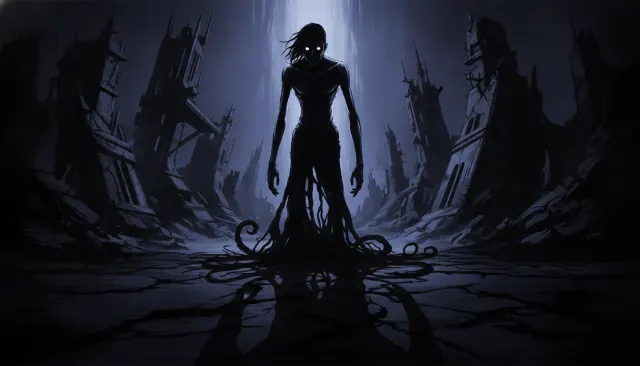
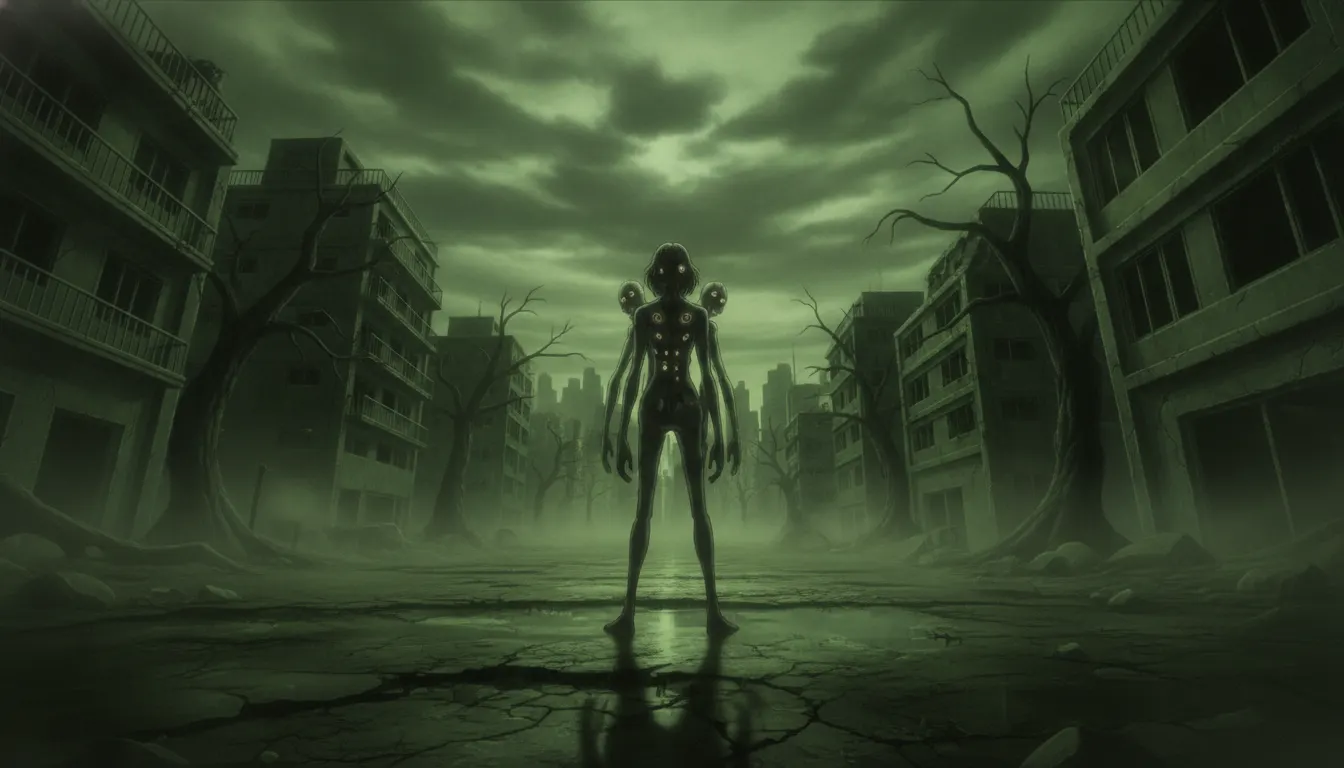
Anime horror register (Paranoia Agent, Higurashi, Junji Ito Collection). Sickly green-yellow palette, distorted character features, J-horror staging, slow ambient dread.
The moves a human crew would use to get here. Cue applies them for you, and knowing their names is how you ask for a change.
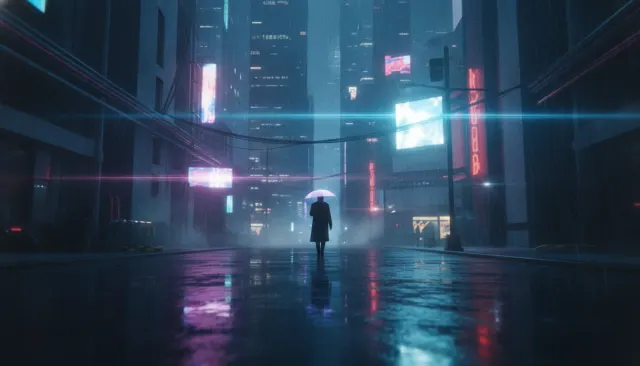
Color palette drains from warm realism to cool sickly tones as psychological tension mounts across a sequence
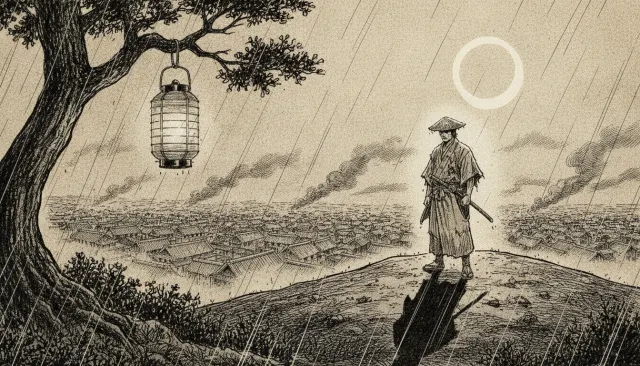
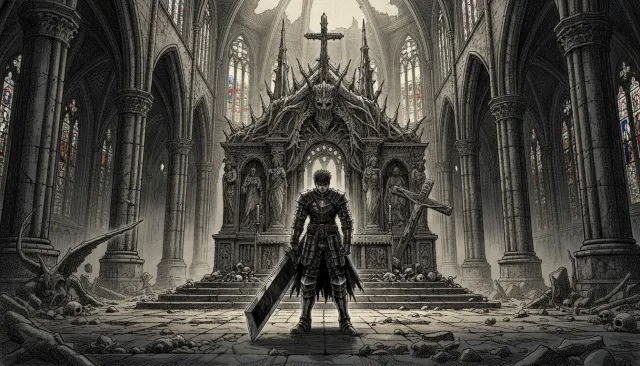
Body horror rendered with clean technical-illustration hatching rather than impressionistic smearing, making impossibilities feel clinically real
Extreme close-ups and narrow framing force the viewer inside the horror, eliminating safe observational distance
Shadow treated as a physical entity with crisp geometric edges, occupying space aggressively rather than softly gradating
Character faces that begin plausibly realistic then incrementally misalign -- jaw drops, eyes shift -- before full deformation
Wet European stone streets, gas lamps, and narrow alleys create a claustrophobic pre-modern urban setting for psychological horror
Vast flat black areas framing tiny figures to communicate existential smallness and cosmic indifference
The horror anime aesthetic draws from a lineage running through manga artist Junji Ito's grotesque body-horror work, the psychological terror of Satoshi Kon's Perfect Blue (1997) and Paprika (2006), and studio Madhouse's darker commissions including Parasyte (2014) and Devilman Crybaby (2018). The Paris Noir qualifier references a French grand guignol influence -- shadows, confined spaces, wet cobblestones -- that distinguishes this from gore-forward splatter styles.
Lines are scratchy and deliberately imprecise, departing from the clean linework of mainstream anime. Character faces distort mid-scene: jaws unhinged, eyes misaligned, proportions subtly wrong before becoming overtly wrong. Negative space is weaponized -- large areas of flat black framing tiny figures communicates existential isolation. Junji Ito's manga-panel compositions, which David Production adapted in 2018, use oppressively tight crop ratios that force the viewer into the horror rather than observing from a safe distance.
Palettes desaturate progressively as tension mounts: opening scenes in warm realistic tones shift toward cool grays, sickly yellows, and deep crimson. Shadow is treated as a physical presence with hard geometric edges rather than soft gradients. Moonlit cobblestone streets, cathedral windows, gas lamp halos -- the Paris Noir thread renders European fin-de-siecle architecture as an ideal backdrop for psychological disintegration.
The aesthetic's most distinctive technique is anatomically precise grotesquerie: spirals (Junji Ito's Uzumaki, 2022 animated by Drive), impossible bone configurations, and faces with too many teeth. These are rendered with the same clean hatching discipline as technical illustration, making them more disturbing than impressionistic smearing would.
The highest-regarded works in this aesthetic prioritize psychological dread over physical gore. Perfect Blue's fragmented identity sequences, Monster's (2004, Madhouse) slow moral erosion, and Paranoia Agent's (2004, Madhouse) collective anxiety all achieve horror through narrative disorientation reinforced by subtle visual cues.
Satoshi Kon / Madhouse · 1997
Psychological horror masterwork using animation's freedom to collapse identity and reality
Madhouse / Naoki Urasawa · 2004
74-episode slow-burn psychological thriller with European noir setting adapted from Urasawa's manga
Satoshi Kon / Madhouse · 2004
Collective anxiety horror series by Kon exploring urban social pressure and media-induced terror
Madhouse / Hitoshi Iwaaki · 2014
Body-horror sci-fi series with precise anatomical grotesquerie adapted from Iwaaki's 1988 manga
Masaaki Yuasa / Science SARU · 2018
Go Nagai adaptation pushing body horror and moral corruption with fluid expressionist animation
Drive / Junji Ito · 2022
Black-and-white animated adaptation of Ito's spiral horror manga with deliberately limited movement
A Look is not a filter. It is a set of stored decisions the pipeline reads before it makes a single frame, so two videos in the same Look actually match.