Rockland Colloid Corporation
Liquid Light silver-gelatin emulsion commercial release (early 1980s)
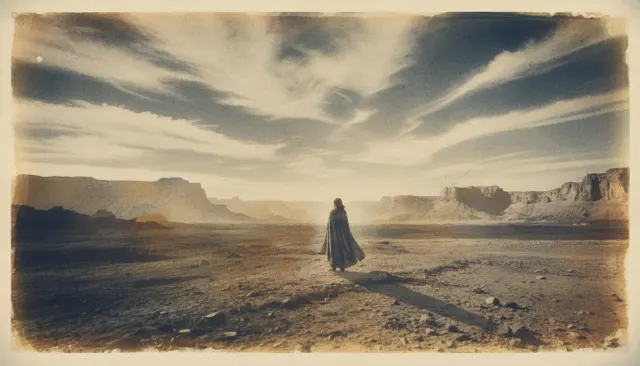
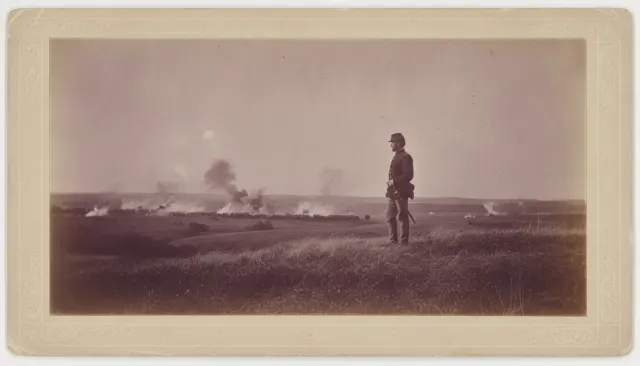
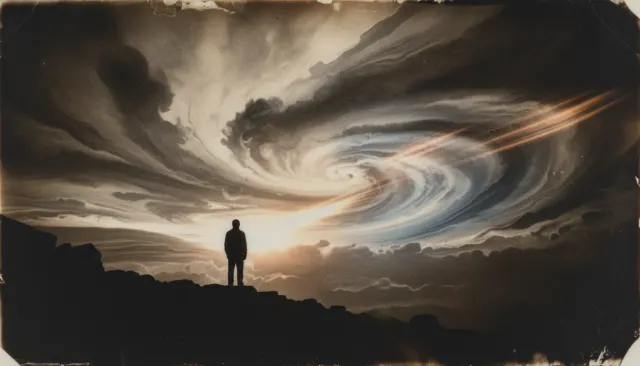
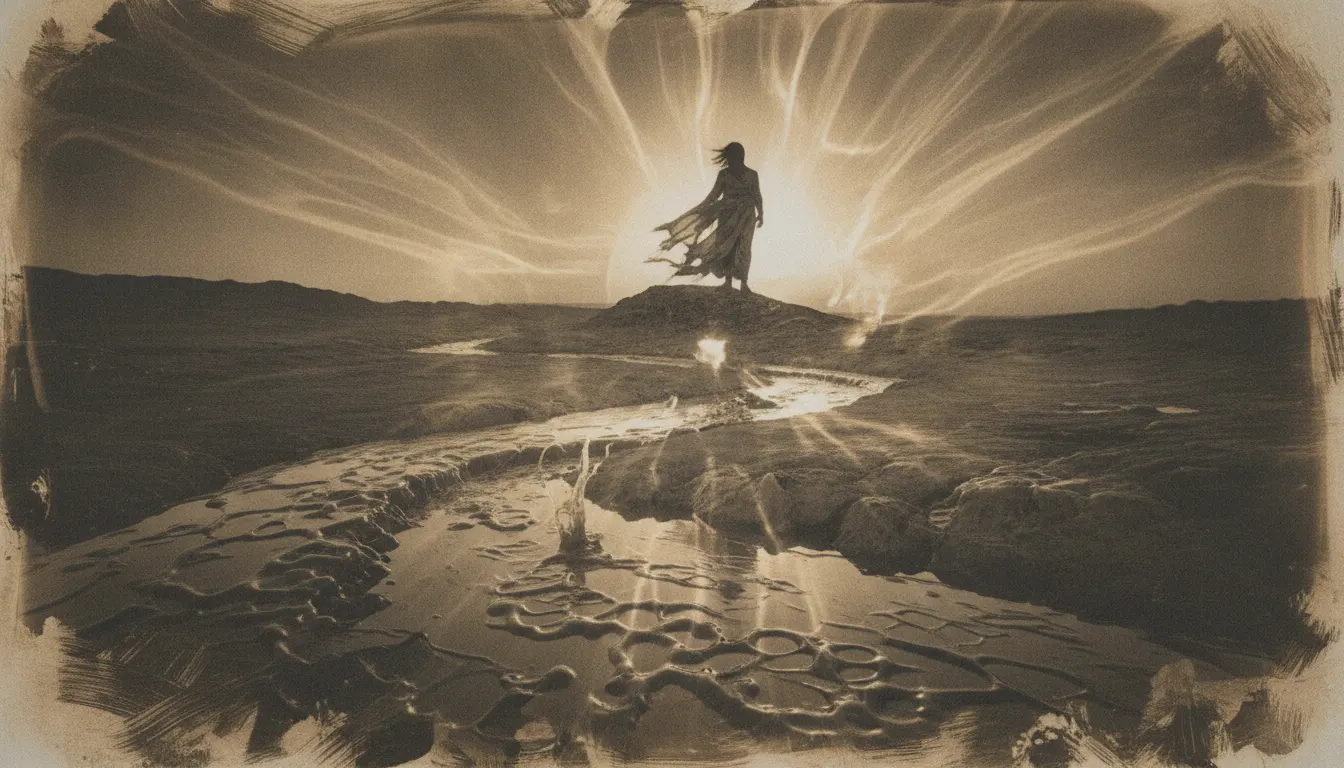
Liquid photo-emulsion poured onto irregular substrate. Light projected through wet emulsion produces organic distortion, soft bleed, hand-coated edge irregularity.
The moves a human crew would use to get here. Cue applies them for you, and knowing their names is how you ask for a change.
application simulation: add visible irregular edge using textured masks with soft scattered brushes
darken or lighten areas in organic (non-geometric) patterns using luminance masks
composite high-opacity crack textures from aged photos or physical emulsion scans in Multiply mode
tone shift: tint warm gray shadows toward sepia or blue-black depending on developer chemistry reference
add small circular or irregular white overexposure spots at high-texture substrate peaks
at image borders, apply irregular vignette that fades uncleanly with brush-paint edge artifact
multiply a wood-grain, stone, or fabric texture over the entire image at 15-30% opacity
Liquid photographic emulsion is conventional silver-gelatin photo chemistry in fluid form, typically sold in a jar, warmed until liquid, and hand-applied by brush or pour onto any surface - stone, wood, fabric, ceramic, canvas, skin, found objects - before exposure and development. The resulting photographs carry the texture of their substrate and the marks of the application process: uneven emulsion thickness produces zones of over- and under-sensitivity; brush strokes leave their record; pooling creates luminous tonal swells; and the edges of the coated area bleed into uncertain chemistry. Light distortion in this context refers to the way uneven emulsion interacts with the enlarger's projected light, bending and redistributing tonal values in ways that no flat paper surface could replicate.
Rockland Colloid Corporation introduced Liquid Light - the first commercially available liquid silver-gelatin emulsion for artists - in the early 1980s. Before Liquid Light, photographers who wanted to coat non-paper surfaces had to mix their own emulsions from scratch, requiring precise chemistry. Rockland's product democratized the process for art schools and working photographers, and throughout the 1980s and 1990s it became a staple of alternative-process photography curricula, particularly in fine art programs inspired by the broader alternative photography revival (including the Polaroid transfer, Van Dyke brown, and cyanotype waves of the same era).
Lucas Samaras and Joel-Peter Witkin used emulsion transfer and unconventional surface printing as components of their broader manipulated-photography practices in the 1970s-80s. Jerry Uelsmann's combination printing darkroom work, though not liquid emulsion specifically, created the same sense of photographic materials behaving beyond their designed parameters. The Polaroid Transfer community (Kathy Thorburn et al., 1980s-2000s) overlaps significantly: Polaroid image transfer physically applies wet emulsion to watercolor paper or fabric, producing tears, folds, and tonal shifts that become integral to the image.
The specific light distortion characteristic of liquid emulsion work includes: thick-coat areas that resist developer penetration and hold gray midtones with unusual density; thin or pinholes where emulsion is absent and complete exposure bleaches to white; edge bleed where emulsion thins at substrate texture peaks; and crawling behavior on non-absorbent surfaces (glass, tile) where the setting emulsion pulls away from the surface in unpredictable patterns during cooling.
Liquid Light silver-gelatin emulsion commercial release (early 1980s)
manipulated and surface-treated silver prints (1970s-present)
altered Polaroids with unconventional surface treatments (1970s-1980s)
multi-negative darkroom combination printing (1960s-2000s)
emulsion transfer to watercolor paper (1980s-2000s)
studied silver chemistry and tonal range; indirect influence on alt-process revival interest
coarse grain and high-contrast silver prints pushed toward material expressionism (1960s-present)
A Look is not a filter. It is a set of stored decisions the pipeline reads before it makes a single frame, so two videos in the same Look actually match.