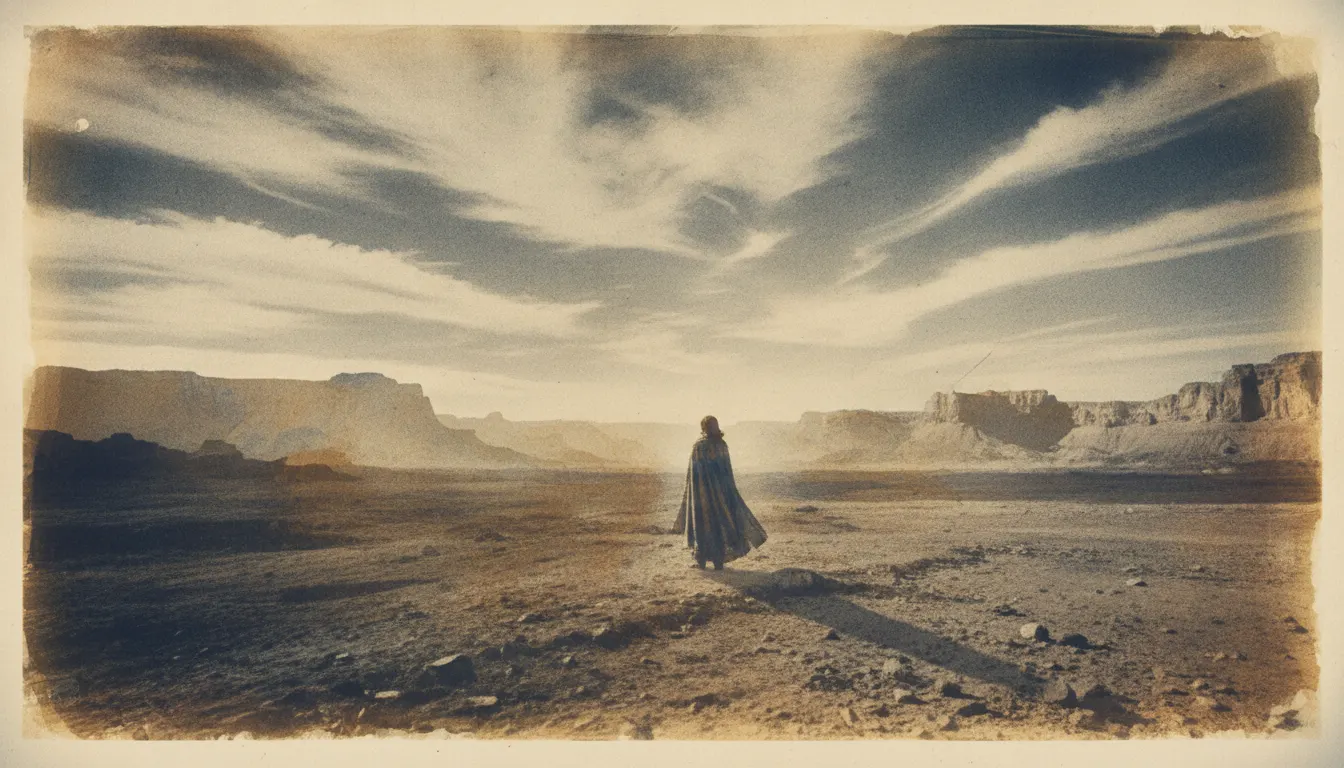
Robert Demachy
1904
_Struggle_ , gum bichromate print, Pictorialist masterwork
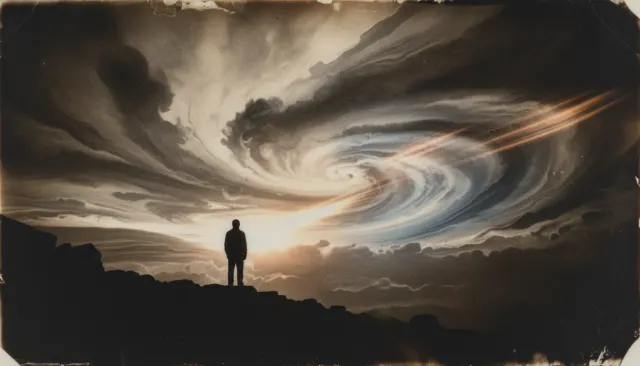
Gum bichromate alternative-process photograph. Pigmented watercolor coated on paper, multiple registration passes, brushy painterly edges, soft tonal compression.
The moves a human crew would use to get here. Cue applies them for you, and knowing their names is how you ask for a change.
duplicate layer, apply Gaussian blur 15-40px, blend in Screen mode at 30-60% opacity
120 units, sized at 40-60 to mimic paper tooth
raise blacks/shadows to 10-20% on tone curve for matte, non-crushing dark areas
shifted highlights (amber or ochre) combined with slightly cooler midtones (slate or moss)
outer 30% of frame softened with Lens Blur 6-12px
highlights to simulate thin emulsion wash-off in bright areas
saturation of the blue channel, boosting red and yellow for Demachy-era warmth
Gum bichromate is a 19th-century alternative photographic printing process that blurs the boundary between lens-based image and hand-made painting. A mixture of watercolor pigment, gum arabic (a natural binder), and potassium or ammonium bichromate is coated onto paper. After contact-printing through a large-format negative under UV light, the unexposed emulsion washes away in warm water, leaving only the pigment-hardened image in areas of shadow and midtone. The technique produces soft, matte, richly toned prints with visible brushstrokes in the emulsion layer and paper texture showing through the highlights.
John Pouncy developed the process as early as 1858 and published a description in Britain. The decisive popularization came in the 1890s Pictorialist movement. Robert Demachy (Paris, 1859-1936) became the most celebrated gum printer, creating his famous _Struggle_ (1904) and dancer portraits with theatrical chiaroscuro and deliberately soft focus that rivaled Impressionist painting. The Photo-Secession group in America, led by Alfred Stieglitz, also embraced gum bichromate as evidence that photography deserved gallery status alongside painting.
Because each layer of pigment must dry before re-coating, photographers could build multi-color prints by registering successive exposures in cyan, magenta, yellow, or arbitrary hues - an early form of color separation printing. Heinrich Kühn in Austria pushed this to richly colored, almost Post-Impressionist results. The process fell out of mainstream use after WWI as silver gelatin prints became fast and affordable, but it was revived as an art-school alternative-process staple from the 1970s onward.
The hallmarks are deliberate softness and grain reminiscent of charcoal or pastel, muted or shifted color palettes (since any pigment can be used), visible paper tooth in highlights, and a hand-crafted warmth that no digital filter fully replicates. Shadows tend toward rich brown or cool gray depending on pigment selection. Edges bleed and bloom where the emulsion thins.
Modern recreations layer desaturation, warm matte lifts in blacks, heavy grain in the 80-120 ISO-equivalent range, radial softening, and selective Orton-effect glows - a multiply-plus-screen double exposure that blooms highlights. Color grading shifts toward warm sepia, mossy green, or slate blue depending on the intended pigment simulation.
1904
_Struggle_ , gum bichromate print, Pictorialist masterwork
dancer series (1900-1910), Paris
multi-layer color gum prints, Austria (1900-1915)
early Photo-Secession advocacy for gum printing as fine art (1902 onward)
gum and platinum combination portraits, New York (1900s)
soft-focus gum prints, pastoral American scenes (1900-1910)
A Look is not a filter. It is a set of stored decisions the pipeline reads before it makes a single frame, so two videos in the same Look actually match.
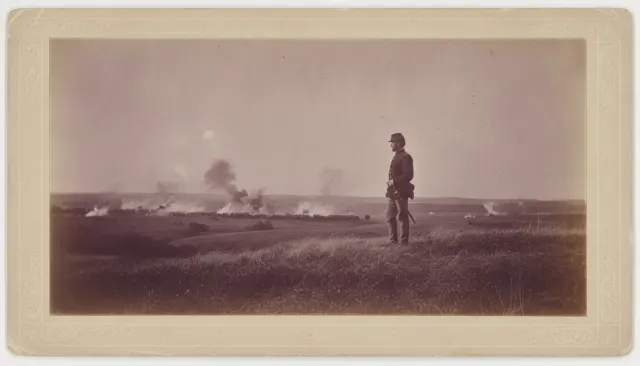 Vintage Formats ExtendedAlbumen Print 1860s Portrait
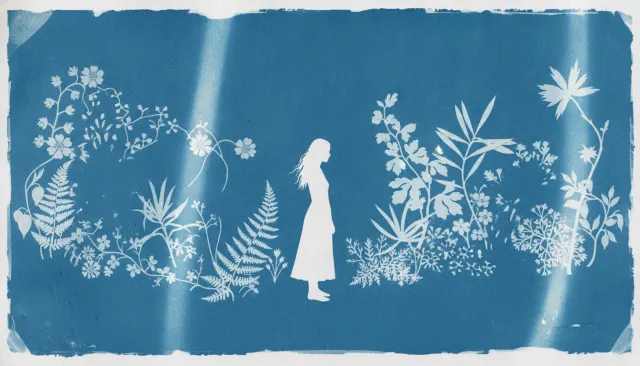 Vintage Formats ExtendedCyanotype Blue Print Historical
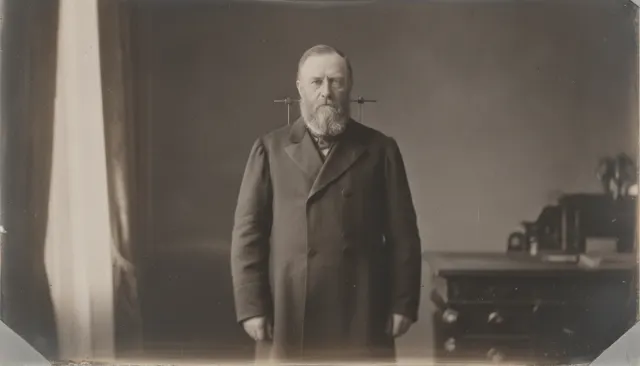 Photographic EraDaguerreotype 1840s Portrait
 Analog Camera ExtendedCamera Obscura Pinhole Historical Aesthetic
 Art Movement ModernAbstract Expressionism Pollock
 Physical ProcessChemigram Acidic Darkroom