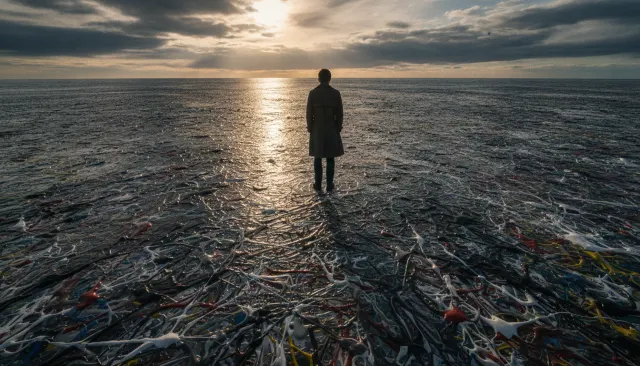
Gjon Mili / Pablo Picasso
_Picasso Draws with Light_ for _Life Magazine_ (January 1950)
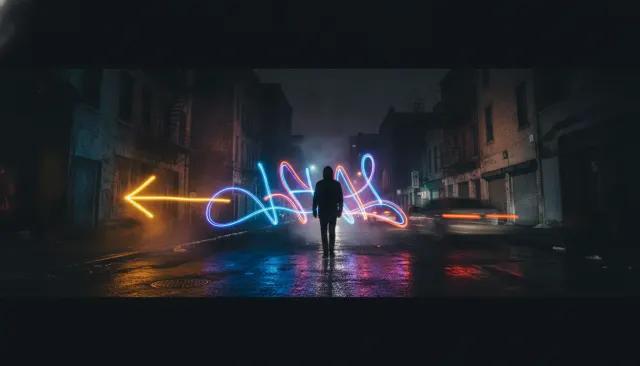
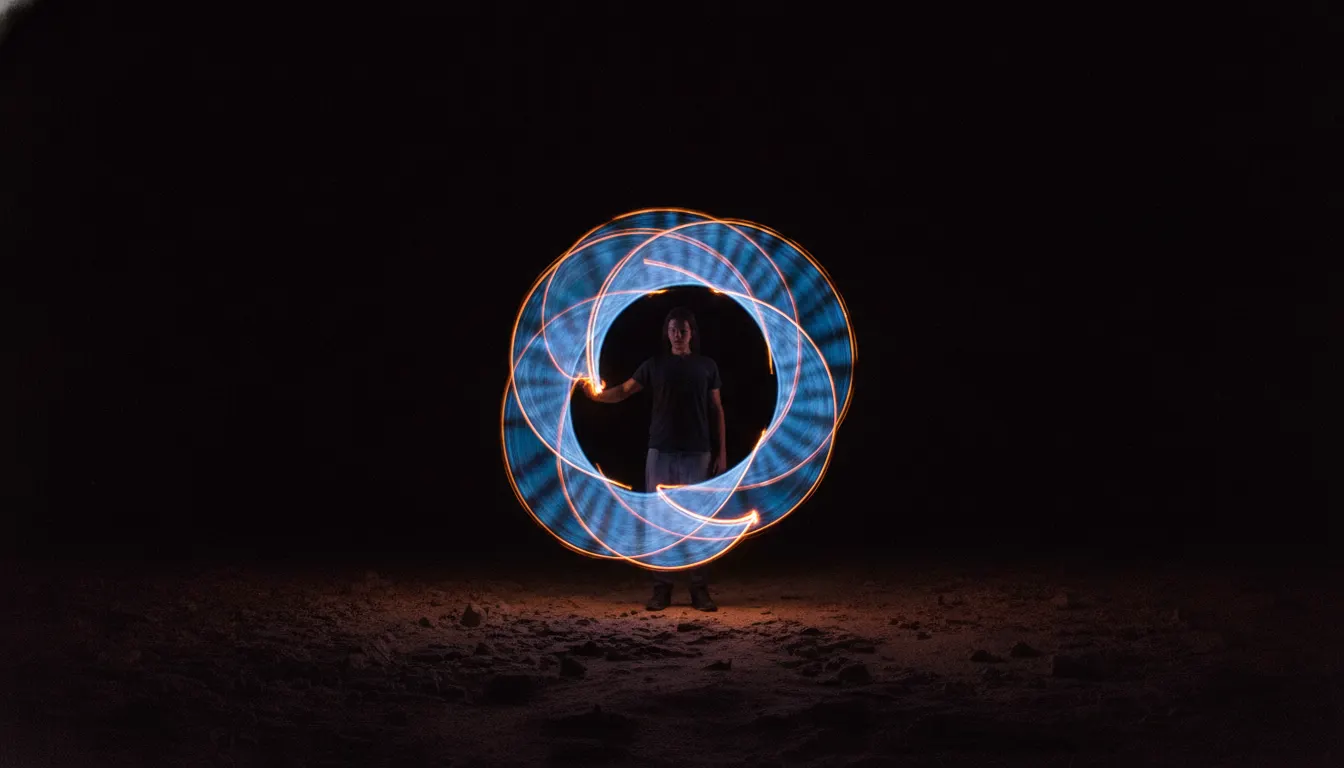
Light-painting long exposure. Performer draws shapes in midair with handheld LED, glowing trail painted across black frame, performer barely visible.
The moves a human crew would use to get here. Cue applies them for you, and knowing their names is how you ask for a change.
120 seconds, ISO 100-200, f/8-f/16, on a stable tripod in near-total darkness
optic brush: a bundle of optical fiber strands with an LED source, used to paint fine detail strokes
move a single LED point source in precise paths for clean single-color calligraphic marks
make multiple short sub-exposures with different colored sources, blending into single frame
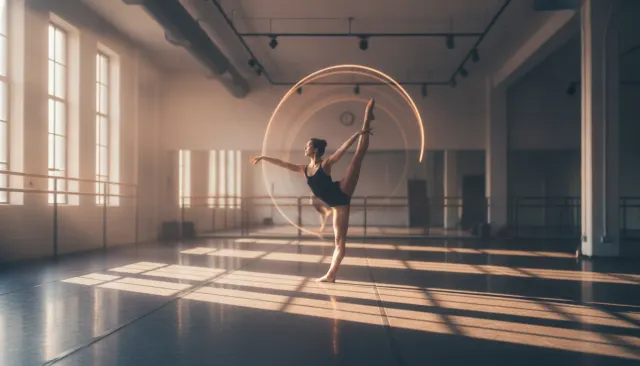
mounted lights: attach LEDs to dancer joints to trace kinetic anatomy paths over choreographic sequence
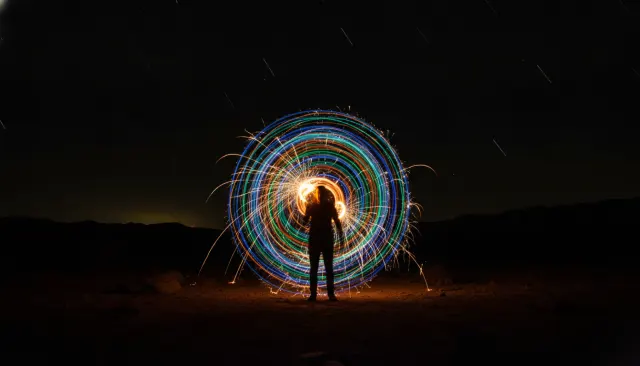
spin a point light in a circle (horizontal or vertical plane) to create perfect spheres and torii
burning steel wool in a whisk creates golden spark-trail hemisphere when spun overhead
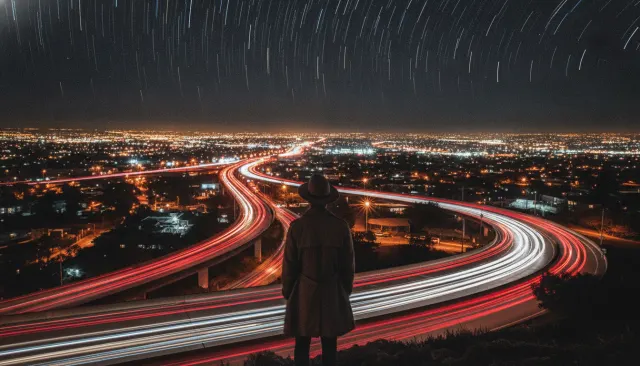
Light painting in darkness is the practice of using a long photographic exposure in a near-black environment to render the movement of handheld light sources as continuous luminous strokes against a dark field. The camera shutter stays open - typically for 5 to 600 seconds - while a person or device moves light through the space. What the camera sees accumulates: every photon of moving light burns into the frame; the static dark background records nothing.
The technique's most celebrated early practitioner was not a photographer but a subject. In January 1949, Gjon Mili - Albanian-American photographer and Life Magazine contributor - visited Picasso at his studio in Vallauris, France. Mili had developed strobe photography techniques that fascinated Picasso. When Mili explained long-exposure light drawing, Picasso immediately seized two small flashlights and, with the camera shutter open in a darkened room, drew a series of centaurs, a bull, and the famous "leaping man" figure in under two seconds each. The resulting photographs, published in _Life Magazine_ in January 1950, became iconic - Picasso was delighted: "I see light again," he reportedly said. These images remain the most widely reproduced examples of light painting in art history.
The technique itself predates Mili: Man Ray photographed moving light sources in his _Rayograph_ adjacent experiments (1921-1930s), and sports chronophotography pioneers like Etienne-Jules Marey (1880s) used multiple exposures to trace motion paths.
What distinguishes light painting from related long-exposure effects is the intentionality of the mark-making: the light source is a tool (like a brush or pen) and the photographer controls both the shutter duration and the movement path. The darkness functions as canvas: black, non-reflective, and only disturbed by deliberate light. The resulting image has no photographic equivalent in single-exposure work - it visualizes time as spatial trace.
From the 2000s, online communities, notably the Flickr _Light Painting Photography_ group (50,000+ members at its peak) and Instagram's light painting community, elevated the practice from experimental novelty to a serious genre with technical journals, competitions, and professional practitioners. Modern light painters use custom LED rigs, fiber-optic brushes, and programmable RGBW strips to achieve highly precise, multicolor results.
_Picasso Draws with Light_ for _Life Magazine_ (January 1950)
light-motion Rayograph experiments (1921-1930s, Paris)
chronophotographic motion trace studies (1880s)
_Martha Graham: Light Trace_ dance photography (1940s)
dreamlike light painting photography, international publications (2010s)
light calligraphy portraits and landscapes (2010s-2020s)
stroboscopic motion trace photographs (1930s-1960s)
A Look is not a filter. It is a set of stored decisions the pipeline reads before it makes a single frame, so two videos in the same Look actually match.