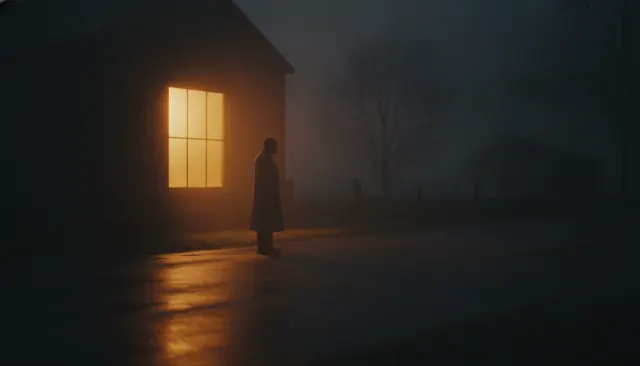
Steven Spielberg / Vilmos Zsigmond
1977
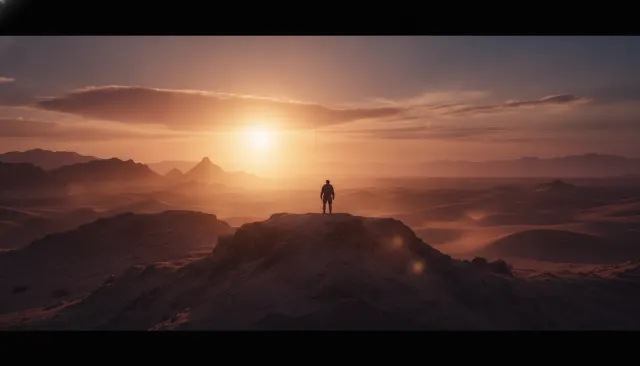
_Close Encounters of the Third Kind_ , deliberate backlit flares
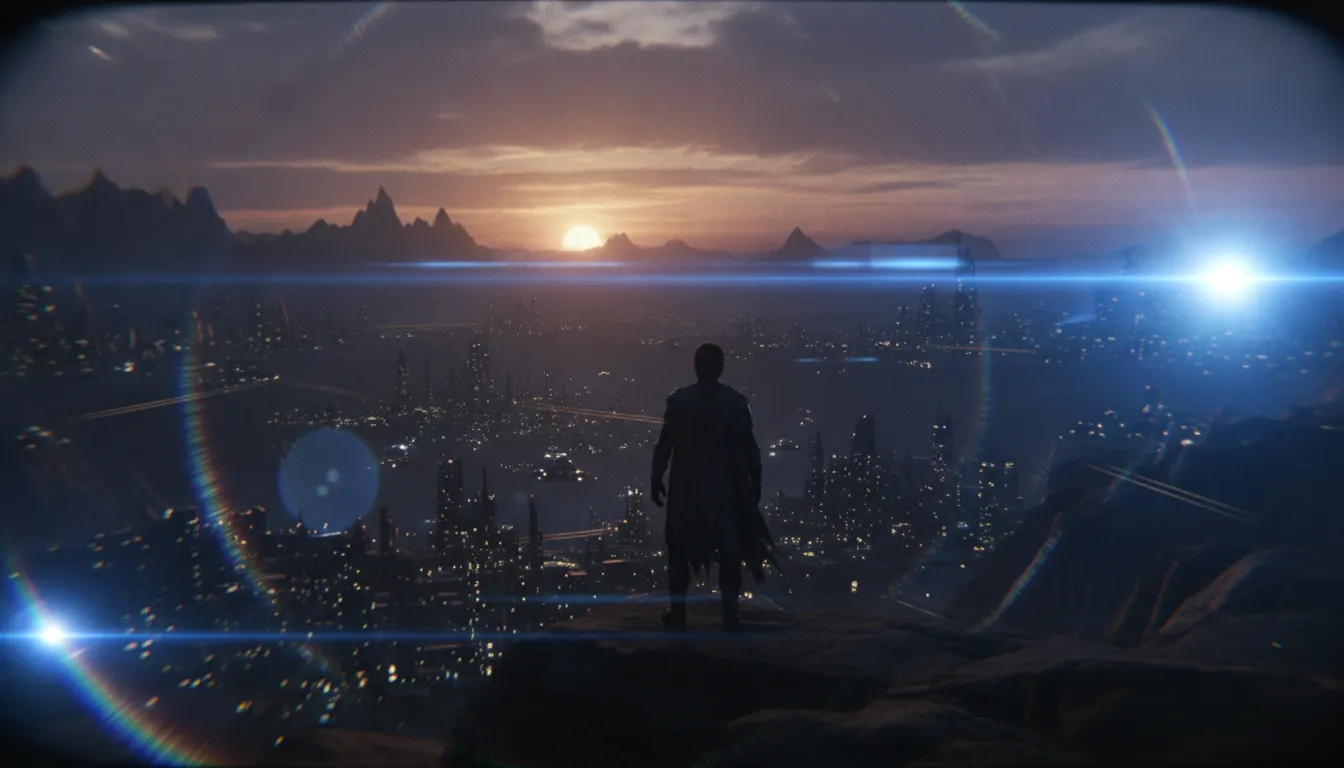
JJ Abrams maximal anamorphic lens flare. Horizontal blue streak across frame from off-screen light, Star Trek 2009 era spectacle, flare-over-content.
The moves a human crew would use to get here. Cue applies them for you, and knowing their names is how you ask for a change.
add a thin, long horizontal blue/white streak across a bright specular point, aspect ratio 1:20 to 1:60
place 5-9 hexagonal bokeh shapes in a line radiating from flare source toward image center
apply radial Gaussian blur 30-80px at 20-40% screen blend around the flare source
duplicate flare source, reduce size to 20-40%, place equidistant on the axis to the frame center at 10-15% opacity
add a thin rainbow spectrum band along the streak, shifted 5-10px from the main streak
place a 1000W+ fresnel behind subject, just outside frame edge, for organic in-camera flare on wide aperture glass
linked flare: animate streak length and intensity to increase on camera shake frames for dynamic integration
A lens flare is an optical artifact that occurs when bright, off-axis light sources interact with the multiple glass elements inside a camera lens, scattering light into geometric shapes - hexagonal aperture polygons, anamorphic horizontal streaks, soft circular halos, and rainbow-spectrum fringe chains. Traditionally treated as a defect to minimize, the lens flare was elevated to an expressive cinematic tool - and eventually to defining stylistic excess - by a succession of filmmakers culminating in J.J. Abrams.
The deliberate use of lens flare as an emotional punctuation mark begins with Steven Spielberg and his longtime cinematographer Vilmos Zsigmond on _Close Encounters of the Third Kind_ (1977) and _Raiders of the Lost Ark_ (1981). Spielberg encouraged flares from direct-in-lens lights to suggest the presence of something powerful, supernatural, or beyond-frame. Nestor Almendros used backlit flares in _Days of Heaven_ (1978) to produce a burnished, transcendent quality that became the standard for "golden hour" cinematography.
The anamorphic lens flare - a characteristic horizontal blue streak produced by the oval aperture of anamorphic lenses used in scope-ratio cinematography - became a luxury signifier. Panavision Primo anamorphic lenses were standard on major studio productions through the 1990s-2000s, and their distinctive streak flares appeared in countless blockbusters.
J.J. Abrams and director of photography Dan Mindel took the lens flare from incidental to structural on _Star Trek_ (2009). Mindel shot portions of the bridge scenes with a hand-held flashlight shining directly into the lens off-camera, adding flares in scenes with no logical light source that could produce them - a deliberate choice to signal energy, optimism, and the feeling of a future "so bright it bleeds." The result divided audiences and critics sharply but became one of the most discussed cinematographic choices of that decade. _Super 8_ (2011, Abrams directing a Spielberg production) doubled down on nostalgic over-flaring as a conscious meta-commentary on Spielberg's own aesthetic.
Wes Anderson's _Asteroid City_ (2023) used anamorphic flares from DPs Robert D. Yeoman and deliberately theatrical light sources as a component of its layered-artifice aesthetic - a more arch, ironic deployment of the same grammar.
Optical flares on set are achieved by using older glass (uncoated pre-1970s lenses), wide apertures, high-contrast backlight, and deliberate direct lamp-to-lens exposure. Digital post-production tools including Knoll Light Factory, Optical Flares (Video Copilot), and native Premiere/After Effects flare generators allow unlimited synthetic application.
1977
_Close Encounters of the Third Kind_ , deliberate backlit flares
1981
_Raiders of the Lost Ark_ , sun-sourced flares
1978
_Days of Heaven_ , golden hour flare as sacred light
2009
_Star Trek_ , maximal added-flare bridge sequences
2011
_Super 8_ , nostalgic over-flare as Spielberg meta-reference
2023
_Asteroid City_ , theatrical anamorphic flare artifice
2010
A Look is not a filter. It is a set of stored decisions the pipeline reads before it makes a single frame, so two videos in the same Look actually match.