Hewlett-Packard HP 5082-7000 seven-segment LED display, first practical LED readout
1968
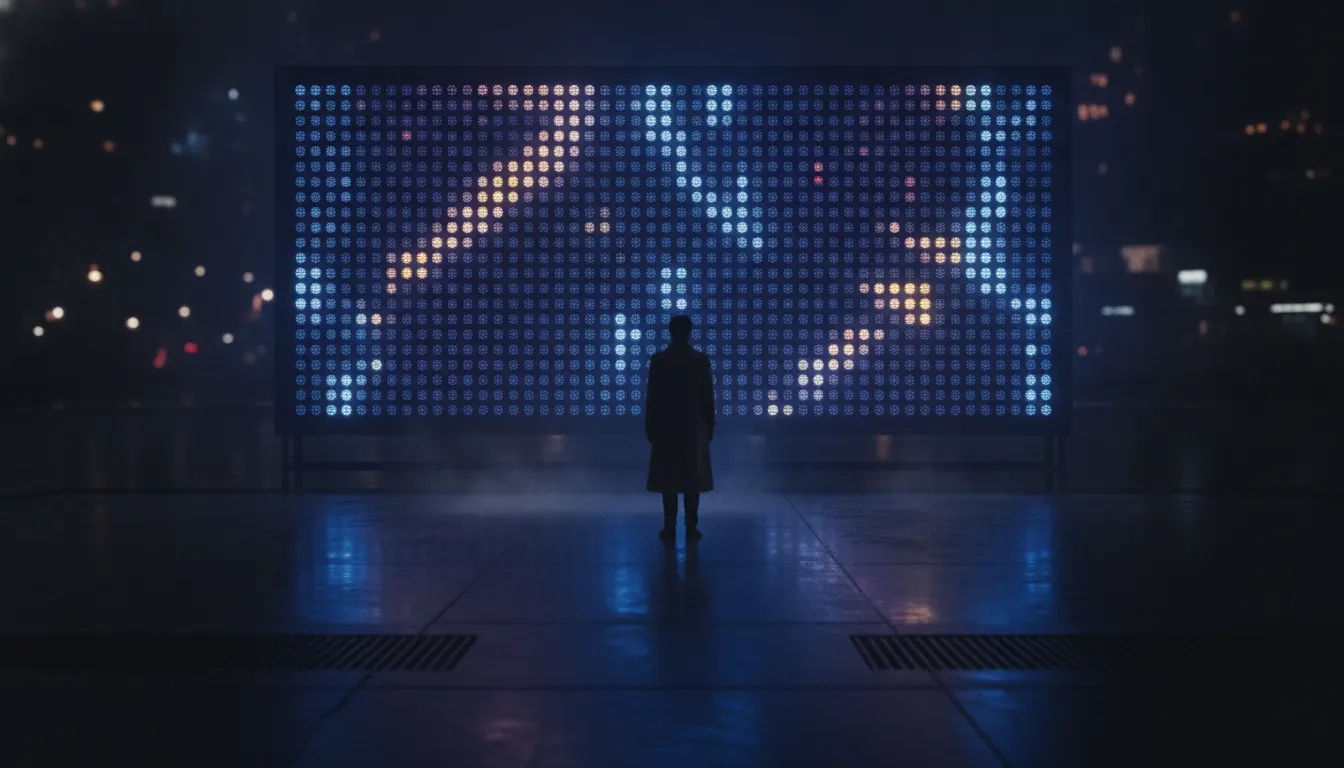
Low-res LED matrix sign render. 64x32 RGB pixel grid, visible dot-bezels, stadium scoreboard or subway sign aesthetic, blooming hot pixels.
The moves a human crew would use to get here. Cue applies them for you, and knowing their names is how you ask for a change.
20px cell size to block image into discrete grid units, then sharpen edges
screen overlay: halftone pattern in Multiply mode at 90% opacity, dot size 6-12px, 0-degree angle
dot glow: apply a small screen-mode glow (radius 3-5px) to each bright pixel to simulate LED emission
pixel gap: create a 1-2px dark border inside each pixel block to simulate physical LED housing gap
quantize to 8-32 colors max to simulate real LED color limitation
rate flicker at 30fps: alternating rows of brightness +10% / -10% per frame to simulate AC refresh
matched ambient glow to sell the emissive character of real LED arrays
The LED matrix display aesthetic presents images or text as if rendered on a low-resolution grid of individual illuminated dots - each pixel visibly separated by a dark gap, creating a pointillist-like array of discrete light sources rather than a seamless continuous image. The look is simultaneously retro-technological and warmly human, because these displays were the face of public information for decades.
The light-emitting diode was invented in 1962 by Nick Holonyak Jr. at General Electric, producing red light (the only practical LED color for many years). Hewlett-Packard and Monsanto jointly developed the first practical LED display chip - the HP 5082-7000 seven-segment numeric display - introduced in 1968. This chip, able to display 0-9 and a limited character set, appeared in early calculators, electronic scoreboards, and laboratory instruments. By the early 1970s, matrix-layout LED arrays (5x7 dot matrices) could display the full alphanumeric character set and simple graphics.
Outdoor LED matrix displays grew from small calculator displays to sports scoreboard installations through the 1980s. Mitsubishi Electric's Diamond Vision system (1980) installed at Dodger Stadium became the first large-scale video display using LED matrix technology for stadium entertainment. Through the 1990s and 2000s, Times Square in New York transitioned from neon and incandescent to massive LED matrix billboard installations.
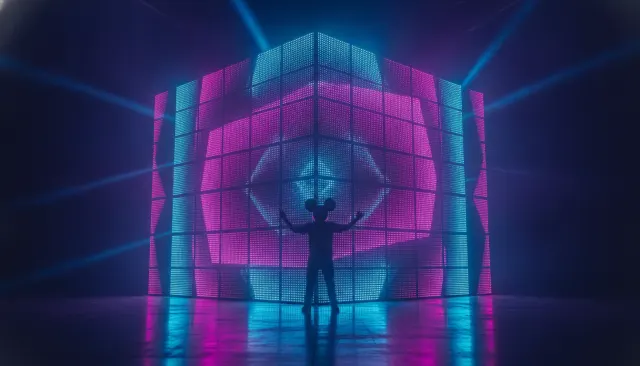
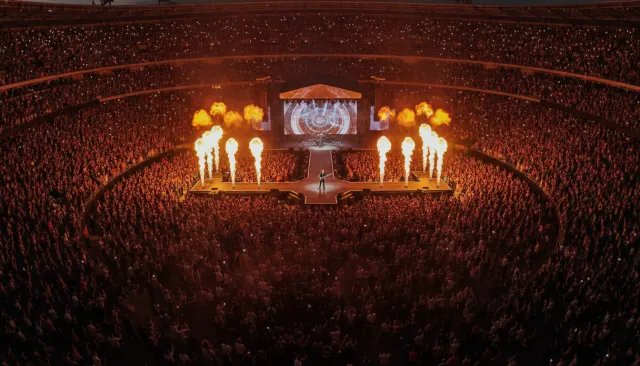
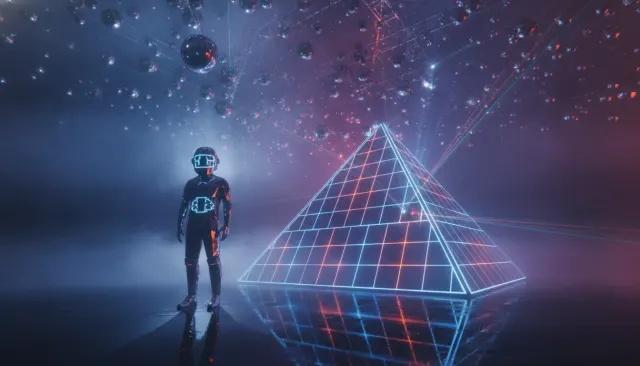
LED matrix aesthetics entered live music production through elaborate stage rigs. Daft Punk's _Alive 2007_ pyramid stage used a custom LED video surface. deadmau5's iconic LED cube stage setup (debuted around 2009-2010) became the defining image of EDM live production - a 10-foot-per-side cube of LED panels with the mau5head mounted on top. U2's 360 Tour (2009-2011) used a massive LED video screen called "the Claw." Contemporary artists from BTS to Taylor Swift use floor-to-ceiling LED volumetric stages.
The deliberate low-resolution pixel-grid look - as opposed to the high-pixel-density LED displays that now replace it - became a retro-futurist signifier by the 2010s, associated with nostalgia for early digital culture, sports culture, and electronic music subculture.
1968
1980
_Alive 2007_ LED pyramid stage, Paris Bercy concert film
LED cube stage rig, debut and peak use approximately 2009-2012
360 Tour LED video screen stage structure (2009-2011)
full LED billboard conversion (late 1990s through 2010s)
2002
_Geogaddi_ album visual motifs citing CRT and LED display aesthetics
A Look is not a filter. It is a set of stored decisions the pipeline reads before it makes a single frame, so two videos in the same Look actually match.