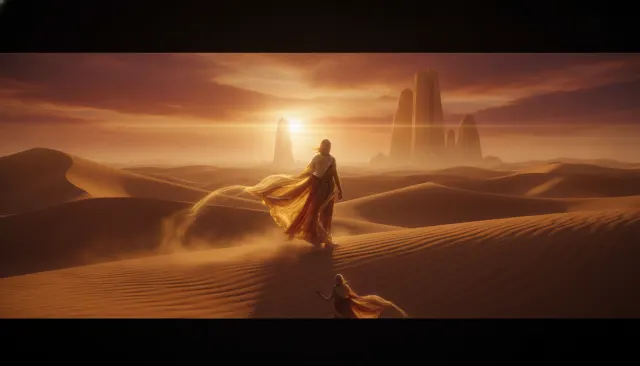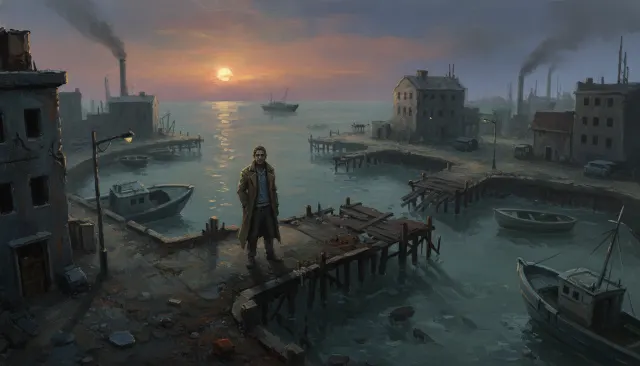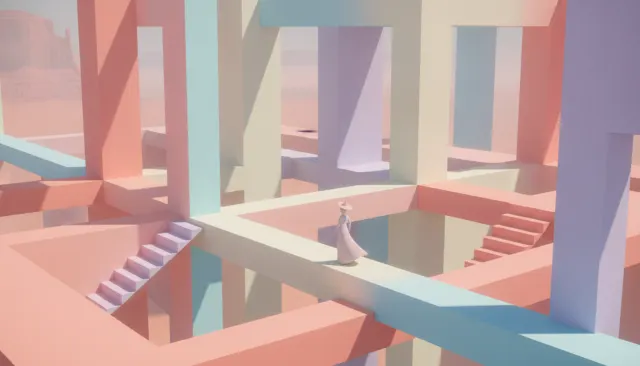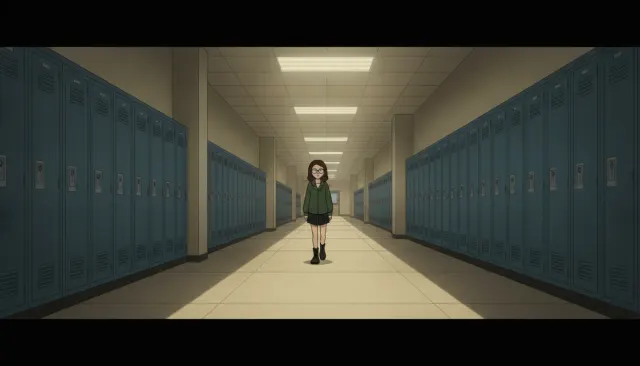
Kentucky Route Zero Act I-V
Cardboard Computer (Jake Elliott, Tamas Kemenczy), 2013-2020 (PC/Mac/Linux/Switch/PS4/Xbox One)
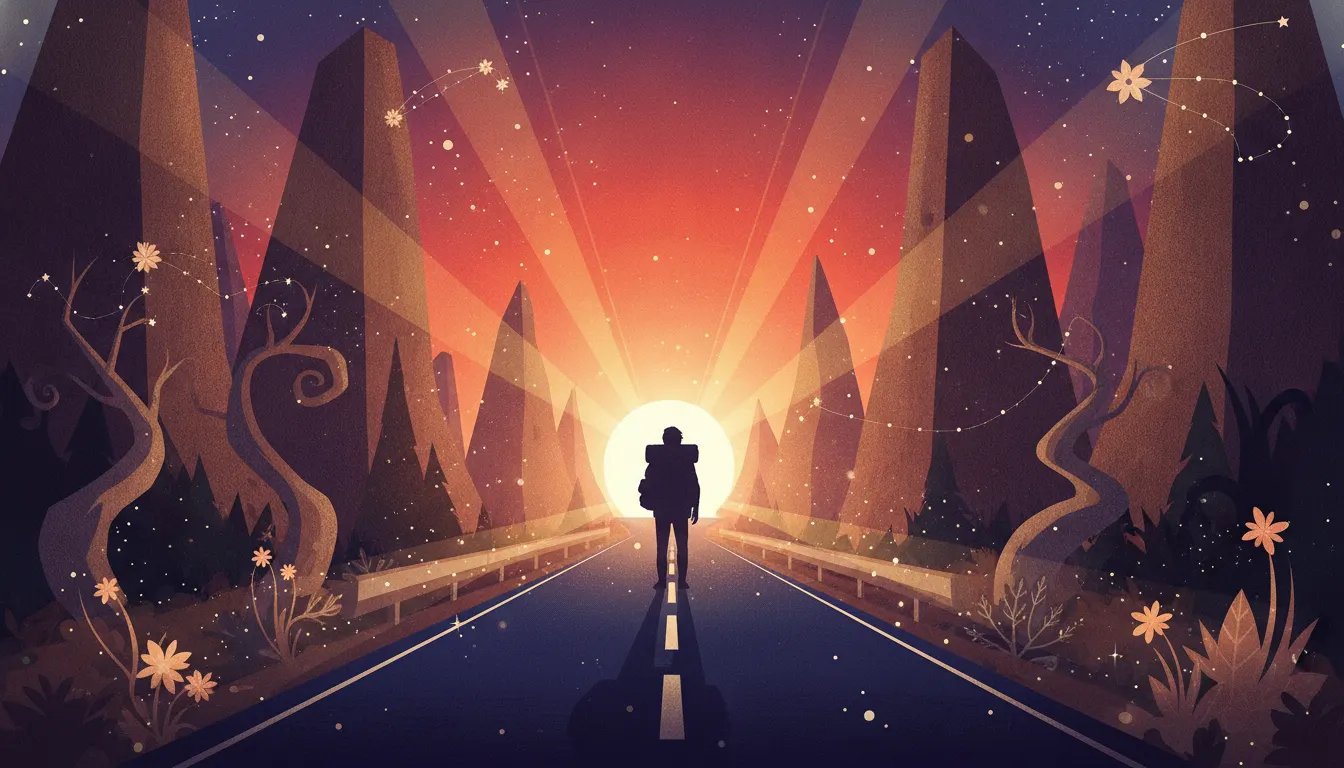
Kentucky Route Zero Cardboard Computer flat-vector aesthetic. Magical-realist Appalachian highway, theatrical staging, single-point-light silhouette, magical realism.
The moves a human crew would use to get here. Cue applies them for you, and knowing their names is how you ask for a change.
impossible architectures rendered with the same graphic weight as mundane ones
characters positioned as actors on a stage with spotlight lighting and audience perspective
silent atmospheric sound design reinforcing the visual emptiness of flat night scenes
plays, broadcasts, and phone apps rendered in KRZ's vocabulary to expand the world
heavy choice dialogue that functions as literary fiction layered over the graphic environment
Kentucky Route Zero was developed by Jake Elliott and Tamas Kemenczy at Cardboard Computer across seven years, releasing Act I in January 2013 and completing with Act V in January 2020. No other game in the decade between those dates pursued its specific visual and narrative ambitions: a magical realist road trip through a fictional underground Kentucky, rendered in flat vector graphics that reference 1960s minimalist graphic design and architectural drawings more than any game precedent.
Characters and environments in KRZ are rendered as flat geometric silhouettes with no internal line detail. A person is their outline and their fill color. A warehouse is a black rectangle against a deep-blue night sky. A horse standing in a gas station forecourt is immediately readable as a horse, but has no texture, no gradient, no shadow beyond the softened ambience of the scene's atmospheric color. This reduction is not a budget compromise - it is the precise aesthetic choice of artists who trained in graphic design and architecture.
The game is almost entirely nocturnal or subterranean. The Route Zero highway below Kentucky is lit by a spectral twilight; above ground, scenes unfold under stars and the dim amber of gas station signs. Kemenczy's signature color is deep ultramarine blue offset by warm amber single-point light sources - lanterns, monitors, neon signs. This constrained palette creates an atmosphere that has more in common with Edward Hopper's nocturnal oil paintings than with typical game visual design.
KRZ's world contains a TV repair shop staffed by the ghost of Conway's dead horse, an underground concert hall where a funeral home doubles as a venue, and a bureaucratic agency office building suspended mid-cavern. These architectural impossibilities are rendered with the same flat matter-of-fact graphic treatment as the realistic elements - a formal decision that enacts the game's magical realist literary tradition visually.
Scenes frequently shift to theatrical framing: characters are positioned on what reads as a stage, viewed from the audience. Lighting drops to spot illumination. The game's interstitial works include a play (Here and There Along the Echo) and a TV broadcast, each rendered in the game's flat graphic vocabulary but adapted to those specific theatrical and broadcast formats.
Cardboard Computer (Jake Elliott, Tamas Kemenczy), 2013-2020 (PC/Mac/Linux/Switch/PS4/Xbox One)
ZA/UM, 2019 - text-heavy narrative RPG peer in literary game tradition
Devolver Digital / Nomada Studio, 2018 - flat painterly minimal platformer in emotional parallel
Giant Sparrow, 2017 - narrative exploration with architectural storytelling overlap
Simogo, 2013 - flat vector Scandinavian folk horror parallel
Night School Studio, 2016 - atmospheric teen supernatural story with graphic panel aesthetic
A Look is not a filter. It is a set of stored decisions the pipeline reads before it makes a single frame, so two videos in the same Look actually match.