ARCHITECTURAL REALESTATE · 1950S · USA
Julius Shulman Mid Century Modern
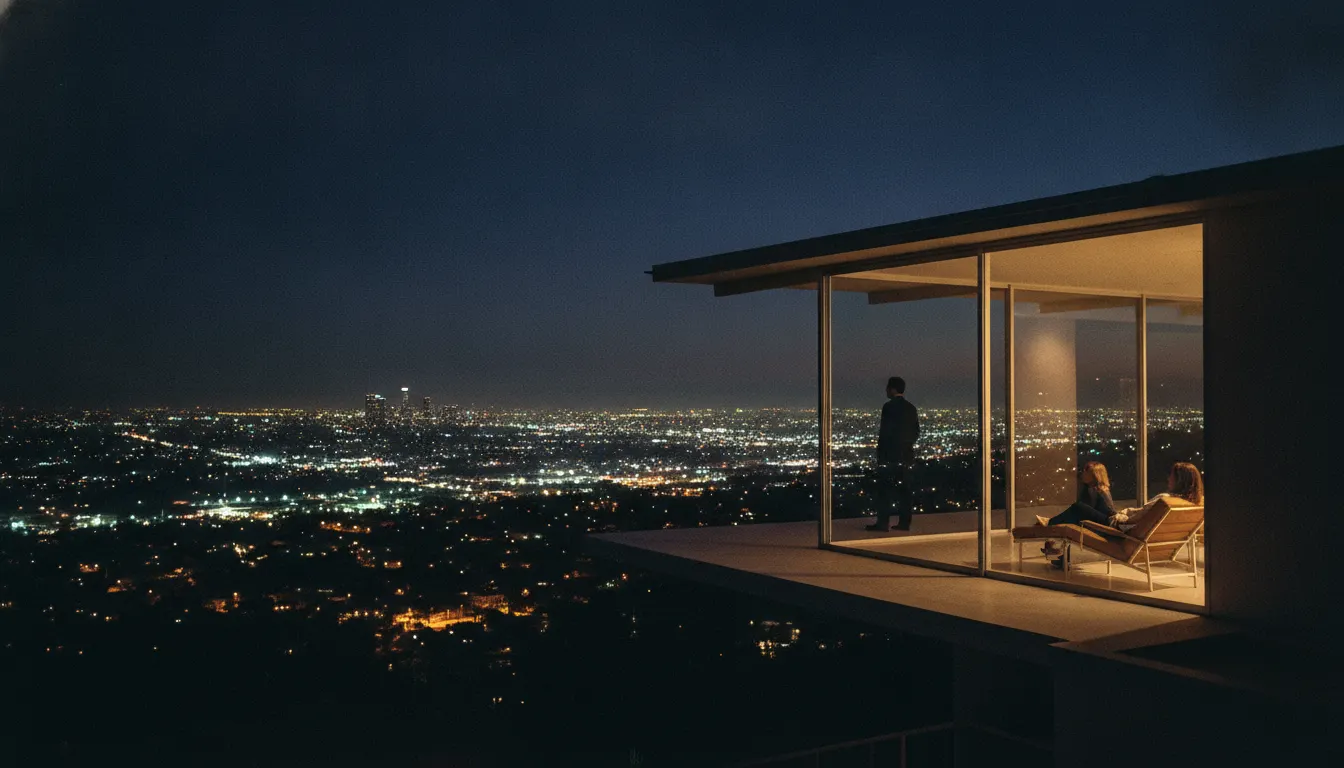
Julius Shulman Case Study House. Stahl House cantilever over LA, two-models seated, dusk window glow, Neutra-Lautner architectural icon.
shulmanmid-centuryarchitectureiconic
LUT shulman-dusk-glow
WHEN TO USE
- Residential and architectural photography for modernist or mid-century properties
- Real estate marketing for design-forward properties
- Interior design editorial content emphasizing spatial flow and lifestyle
- Brand content for furniture, architecture, and design companies with modernist identity
- California, Palm Springs, or Pacific Coast lifestyle content with mid-century register
WHEN NOT TO USE
- Traditional or historic architecture where modernist spatial emphasis is inappropriate
- Daytime documentary architectural photography without twilight window
- Small-budget real estate where the controlled lighting setup is not feasible
- Intimate portrait work unrelated to architecture or interior space
SIGNATURE TECHNIQUES
How the look is made.
The moves a human crew would use to get here. Cue applies them for you, and knowing their names is how you ask for a change.
- 01Twilight photography
20-30 minute window when interior and exterior light balance
- 02Large
format 4x5 or 8x10 view camera on tripod for maximum resolution
- 03Human figures in architectural space for scale and lifestyle suggestion
- 04Wide
angle perspective emphasizing spatial flow and depth
- 05Warm tungsten interior light contrasted with cool blue exterior sky
- 06Meticulous staging
furniture repositioned, lights adjusted, reflections managed
- 07Long exposure (minutes) to balance multiple light sources
HISTORY & CONTEXT
Where it comes from.
Julius Shulman: Mid-Century Modern Architecture Photography
Julius Shulman (1910-2009) photographed California architecture for seven decades and produced the defining images of mid-century modern design. His photographs of the Case Study Houses built by Charles and Ray Eames, Pierre Koenig, Eero Saarinen, Richard Neutra, and others did not merely document architecture - they sold a way of life. When developers in Palm Springs or suburban Los Angeles wanted to market a modern house in the 1950s, they called Shulman.
The Case Study House Program
Arts & Architecture magazine ran the Case Study House program from 1945 to 1966, commissioning major architects to design experimental low-cost modern houses that would be built and then opened to the public. Shulman was the program's primary photographer and his images of the finished houses were published in the magazine and in architectural press worldwide. The program produced 36 houses; Shulman photographed most of them.
Case Study House #22 by Pierre Koenig - the Stahl House in the Hollywood Hills - produced Shulman's most famous image. Photographed in 1960, the image shows two women in evening wear sitting in the glass-walled living room at night, with the luminous grid of Los Angeles sprawling below and beyond. The image is carefully composed and technically complex: the interior is lit to balance with the exterior city lights (which would have been underexposed by any exposure that rendered the interior correctly). Shulman made multiple exposures over 30 minutes to get the balance right.
Shulman's Method
Shulman worked in large format - 4x5 and 8x10 view cameras - for maximum resolution and tonal control. He preferred to photograph buildings at twilight, when interior lights and exterior sky light are in balance and warm tungsten interior light contrasts beautifully with the cooling blue of post-sunset sky. This twilight window, which lasts roughly 20-30 minutes, required precise planning; Shulman would spend hours scouting and staging before the light arrived.
He often included human figures in architectural photographs - an unusual approach in an era when most architectural photography excluded people. The figures served both a compositional function (providing scale and animation) and a lifestyle function (suggesting the experience of living in the house).
Influence
Shulman's images defined the visual identity of California modernism and continue to set the standard for residential and architectural photography. His approach - twilight balance, human figures, wide-angle perspective emphasizing spatial flow - is the baseline every contemporary architectural photographer works against or from.
NOTABLE WORKS
Where you have seen it.
Kaufmann Desert House, Richard Neutra, Palm Springs, 1947
Case Study House #8 (Eames House), Charles and Ray Eames, Pacific Palisades, 1950
Singleton House, Richard Neutra, 1959
Various Case Study Houses for Arts & Architecture magazine, 1945-1966
J. Paul Getty Center documentation photographs
THE RECIPE
The exact knobs
the renderer turns.
A Look is not a filter. It is a set of stored decisions the pipeline reads before it makes a single frame, so two videos in the same Look actually match.
SettingValue
GradeColour LUT applied to every frame
shulman-dusk-glowTransitionHow one shot becomes the next
dissolve cuts · 480ms · ease-in-outKen BurnsCamera move applied to stills
Slow push · 0.022 · rule-of-thirdsTypographyDisplay / body / mono pairing
Futura · Helvetica Neue · JetBrains MonoMusic moodWhat the bed under the voice sounds like
cool-jazz-quintet · martin-denny-exoticaPrompt suffixAppended to every shot prompt in this Look
Julius Shulman Case Study House 22 Stahl, cantilever over LA night, two models seated, dusk window glow, Neutra LautnerPALETTE
Primary
#1A2A3A
Secondary
#5C5040
Accent
#F5C144
Text/Light
#0A1418
Text/Dark
#FFF1D0
BG 900
#08101A
BG 800
#0F1F2E
RELATED LOOKS
Next to it on the shelf.
 Architectural RealestateHiroshi Sugimoto Long Exposure Architecture
 Architectural RealestateCandida Höfer Symmetric Interior
 Photographers Fine ArtAndreas Gursky Large Format Monumental
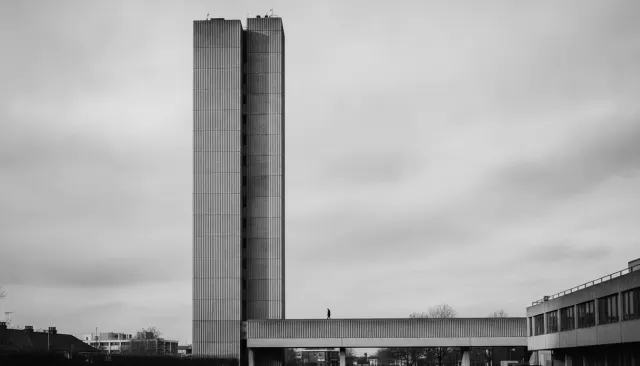 Architectural RealestateBrutalist Architecture Photography
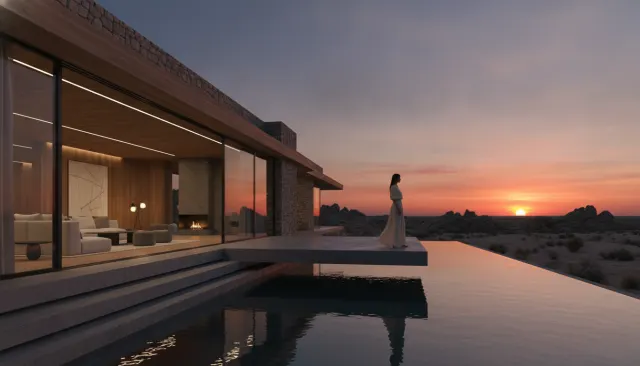 Product RenderArchitectural Archviz
 Brand Identity ExtendedApple Product Minimal Modern
Your first cut
is on us.
+ New videoFree plan · no card · 1080p export