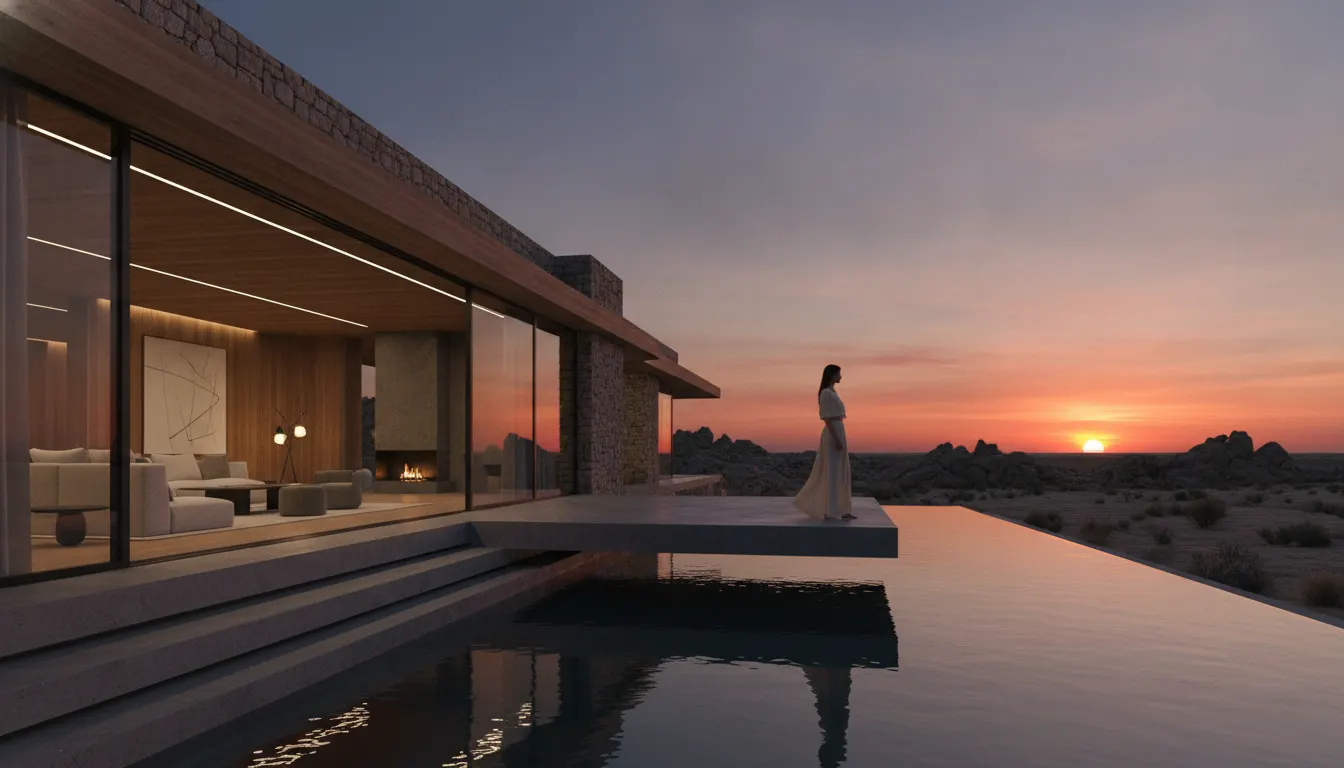
PRODUCT RENDER · CONTEMPORARY · INTERNATIONAL
Architectural Archviz
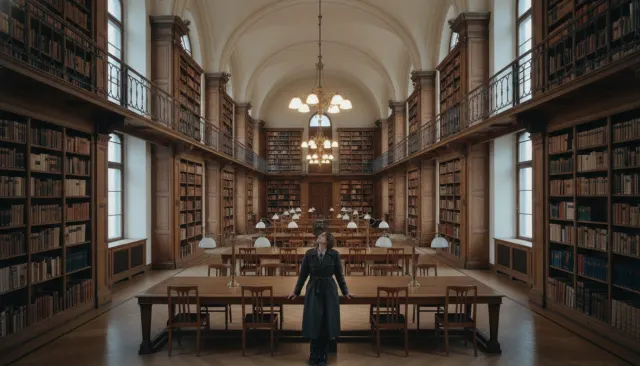
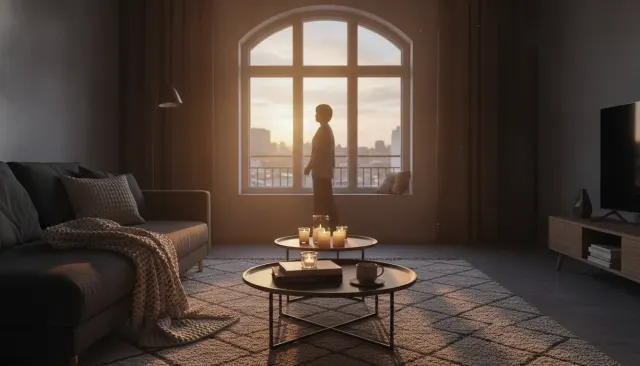
Architectural visualization archviz. V-Ray Corona photoreal interior, magic-hour exterior, lifestyle staging, real estate marketing render.
archvizreal-estatemagic-hourlifestyle
LUT archviz-magic-hour
WHEN TO USE
- Pre-construction property marketing for residential developments, commercial real estate, and hospitality projects
- Architectural competition and planning permission submissions requiring photorealistic visual proof
- Real estate developer content marketing where rendered lifestyle imagery drives pre-sales
- Interior design presentations to clients before procurement and construction
- Urban planning and master development communications to public stakeholders
- Luxury brand content that uses precision-built environments as a backdrop signal of quality
WHEN NOT TO USE
- Consumer-facing branded content where the sterility of CGI environments undercuts human warmth
- Documentary or editorial contexts where the staged, idealized nature of archviz reads as misleading
- Brand work for products without an architectural or spatial dimension
- Social media content formats where photorealistic renders are indistinguishable from photos and lose impact
- Projects with tight budgets - high-quality archviz is time-intensive and studio-expensive
SIGNATURE TECHNIQUES
How the look is made.
The moves a human crew would use to get here. Cue applies them for you, and knowing their names is how you ask for a change.
- 01Physically
based rendering (PBR) with real-world sun angle and HDRI environment lighting
- 02IES photometric profiles for artificial light fixtures (recessed LEDs, pendants, track lights)
- 03Golden hour and blue hour exterior compositions emphasizing building form and shadow geometry
- 04Translucent or ghost
figure entourage humans for scale without uncanny valley problems
- 05Depth
of-field focused on material and light transitions (foreground grass, mid-ground facade, background sky)
- 06Post
production photomanipulation layering real vegetation and people into CGI plates
- 07Real
time interactive renders in Unreal Engine 5 with Lumen global illumination
HISTORY & CONTEXT
Where it comes from.
Architectural Visualization (Archviz)
Architectural visualization-archviz-is the practice of producing photorealistic CGI renders, animations, and interactive walkthroughs of buildings and spaces before they are built. It occupies a unique intersection of commercial photography, interior design, industrial design, and CGI rendering, with its own mature studio ecosystem spanning firms like Mir (Oslo), Forbes Massie (London), Peter Guthrie (UK/international freelance), and Hayes Davidson.
The Photorealism Imperative
Unlike entertainment CGI, archviz operates under a hard photorealism constraint: the client (architect, developer, real estate firm) needs stakeholders, planners, and buyers to believe the space exists or will exist exactly as rendered. This drives near-obsessive accuracy in two areas: lighting physics and material response. Archviz studios use physically-based rendering engines-V-Ray (Chaos Group), Corona Renderer, Arnold, or Unreal Engine 5 with Lumen global illumination-configured with real-world lighting data (sun position by latitude and time of day, HDRI environment captures, IES photometric profiles for artificial fixtures).
Light as Subject
The definitive archviz compositional convention is treating natural light as the primary subject. The 'golden hour' or 'blue hour' exterior shot-sun at 15-20 degrees elevation casting long shadows that emphasize building form and material-is the archviz equivalent of the hero shot. Interior shots prioritize how light enters: the geometry of a window's shadow on a concrete floor, the way diffuse daylight fills a white plaster ceiling without harsh gradients. Norwegian studio Mir (Bjarke Ingels Group residential and cultural projects) is particularly celebrated for this approach.
Human Presence: Ghost Figures and Entourage
Archviz has developed a specific convention for human figures: they appear as slightly translucent, blurred, or stylized 'entourage' figures rather than fully rendered people. This preserves scale reference without creating the uncanny valley problem of rendered humans. Post-production photomanipulation layers real human cut-outs into CGI frames-a hybrid workflow refined by studios like Hayes Davidson since the 1990s.
The 2020s Unreal Engine Shift
Real-time archviz using Unreal Engine 5 (launched 2022) with Nanite geometry and Lumen global illumination has compressed render times from hours to real-time, enabling interactive walkthroughs and VR experiences. Studios like Kilograph, VIZE, and Enscape's ecosystem have made real-time archviz accessible to smaller firms.
NOTABLE WORKS
Where you have seen it.
Hayes Davidson architectural visualizations
The Shard (Renzo Piano) pre-construction imagery
Peter Guthrie interior archviz (CGI Society featured works, 2010–present)
Forbes Massie
Battersea Power Station residential marketing renders (2017–2022)
VIZE Studio
luxury residential and hospitality international projects
Kilograph
Unreal Engine real-time archviz (2019–present)
THE RECIPE
The exact knobs
the renderer turns.
A Look is not a filter. It is a set of stored decisions the pipeline reads before it makes a single frame, so two videos in the same Look actually match.
SettingValue
GradeColour LUT applied to every frame
archviz-magic-hourTransitionHow one shot becomes the next
soft cuts · 280ms · ease-in-outKen BurnsCamera move applied to stills
Slow push · 0.04 · centerTypographyDisplay / body / mono pairing
Inter · Inter · JetBrains MonoMusic moodWhat the bed under the voice sounds like
ambient-piano · minimalist-stringsPrompt suffixAppended to every shot prompt in this Look
architectural visualization archviz, V-Ray Corona photoreal interior, magic hour exterior, lifestyle staging, real estate renderPALETTE
Primary
#A89A7A
Secondary
#5C5040
Accent
#3A8E5A
Text/Light
#2A241A
Text/Dark
#F0E8D5
BG 900
#1A140A
BG 800
#2A2418
RELATED LOOKS
Next to it on the shelf.

Your first cut
is on us.
+ New videoFree plan · no card · 1080p export