ARCHITECTURAL REALESTATE · CONTEMPORARY · INTERNATIONAL
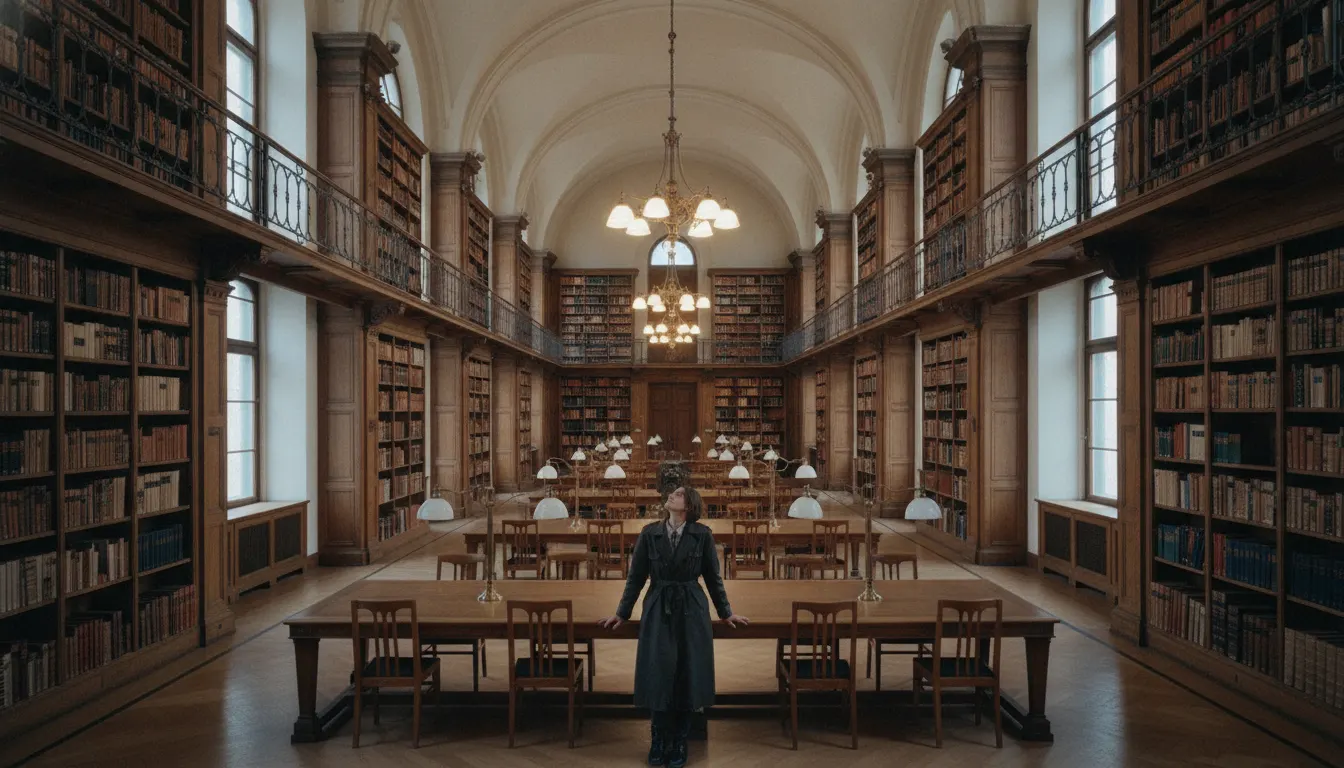
Candida Höfer Symmetric Interior
Candida Höfer symmetric institutional interior. Grand library reading room dead-center, large-format precision, Becher-school typology.
hofersymmetricbecher-schoolinstitutional
LUT hofer-large-format-symmetric
WHEN TO USE
- Architectural and institutional content for libraries, museums, concert halls, or civic buildings
- Content about cultural heritage, historical architecture, or institutional spaces
- Brand content for cultural institutions, academic organizations, or luxury hospitality in historic buildings
- Photography or art history content discussing the Dusseldorf School or typological photography
- Content where emptiness, contemplation, and spatial grandeur are the desired emotional register
- Interior design editorial content where architectural geometry and proportion are the primary subject
WHEN NOT TO USE
- Content requiring human presence and social energy within architectural spaces
- Commercial real estate where the absence of people suggests vacancy or lack of demand
- Warm, domestic, or residential content - the aesthetic is fundamentally institutional and public
- Fast-paced or energetic content where the contemplative stillness of the approach creates tonal mismatch
SIGNATURE TECHNIQUES
How the look is made.
The moves a human crew would use to get here. Cue applies them for you, and knowing their names is how you ask for a change.
- 01Strict bilateral or axial symmetry
camera positioned on the central axis of the interior
- 02Elimination of all human figures
spaces photographed empty or between occupations
- 03Large format (4x5 or 8x10) view camera on tripod
maximum sharpness across the full depth plane
- 04Available interior light
fluorescent, incandescent, or daylight from windows, minimally supplemented
- 05Cool or neutral color temperature rendering architectural materials at their true color
- 06Wide field of view capturing the full room rather than architectural detail fragments
- 07Deep recessive space emphasized through symmetrical geometry drawing the eye to the vanishing point
- 08Fine detail in ceiling ornament, floor pattern, and wall surface accessible at large print scale
HISTORY & CONTEXT
Where it comes from.
Candida Höfer Symmetric Interior Photography
Candida Höfer (b. 1944, Eberswalde, Germany) studied at the Kunstakademie Dusseldorf under Bernd and Hilla Becher alongside Andreas Gursky, Thomas Struth, and Thomas Ruff, forming a cohort of photographers known as the Dusseldorf School or Becher School. Her sustained project - large-format color photographs of public interiors - is the most immediately recognizable body of work to emerge from that tradition.
The Typological Method
The Becher influence on Höfer is expressed not in her subject matter (she photographs far from industrial structures) but in her methodological approach: identifying a building type, systematically photographing representative examples across multiple countries and time periods, and presenting the accumulated images as comparative typological studies. The empty libraries, museums, bank interiors, opera houses, university halls, and government buildings she has photographed across fifty years form a catalogue of the public interior as a building type - its recurring geometries, its symbolic associations, its social function.
What most immediately distinguishes Höfer's work is the complete absence of human figures. Where conventional architectural photography might wait for or introduce figures to provide scale and life, Höfer systematically excludes them. The spaces she photographs - typically buildings that exist to serve large numbers of people - are presented as if the humans have just left or are about to arrive. This emptiness creates a contemplative, slightly melancholic relationship with spaces designed for collective use.
Specific Buildings and Projects
Höfer's most cited images include: the Biblioteca Joanina, Coimbra (a Baroque university library); the Biblioteca Nacional de España, Madrid; the Kunsthistorisches Museum Wien; the Casino Knokke; the Schloss Charlottenburg in Berlin; and repeated returns to Irish Georgian houses and French palace interiors.
Her 2003 Biennale contribution at the Venice Biennale, representing Germany, included monumental prints of Portuguese libraries. She has returned to Portugal multiple times, drawn to the quality of light in its monastic and civic interiors.
Format and Technical Approach
Höfer works with a large-format view camera (4x5 or 8x10) on a tripod, using the building's own available light supplemented minimally. The prints are produced at large scale - typically 100x120cm or larger - which allows the architectural detail that the large-format negative contains to be fully appreciated. The prints have a slightly cool color temperature that suggests institutional fluorescent or gallery lighting.
NOTABLE WORKS
Where you have seen it.
Candida Höfer, Kunsthistorisches Museum Wien
2002
Candida Höfer, German Pavilion, Venice Biennale
2003
Candida Höfer, 'Libraries' monograph (Schirmer/Mosel, 2005)
Candida Höfer, Trinity College Dublin Library
2004
Candida Höfer, Casino Knokke
1998
Candida Höfer, 'Orte/Places' retrospective monograph (Schirmer Mosel, 1992)
Candida Höfer, Schloss Charlottenburg, Berlin series
THE RECIPE
The exact knobs
the renderer turns.
A Look is not a filter. It is a set of stored decisions the pipeline reads before it makes a single frame, so two videos in the same Look actually match.
SettingValue
GradeColour LUT applied to every frame
hofer-large-format-symmetricTransitionHow one shot becomes the next
dissolve cuts · 540ms · ease-in-outKen BurnsCamera move applied to stills
Slow push · 0.018 · centerTypographyDisplay / body / mono pairing
Inter · Inter · CourierMusic moodWhat the bed under the voice sounds like
minimal-piano-glass · ambient-dronePrompt suffixAppended to every shot prompt in this Look
Candida Höfer symmetric institutional interior, grand library reading room dead center, large format precision, Becher schoolPALETTE
Primary
#7A5A3E
Secondary
#5C5040
Accent
#A89B82
Text/Light
#1F1408
Text/Dark
#F0E5D2
BG 900
#1A1208
BG 800
#2A1F10
RELATED LOOKS
Next to it on the shelf.
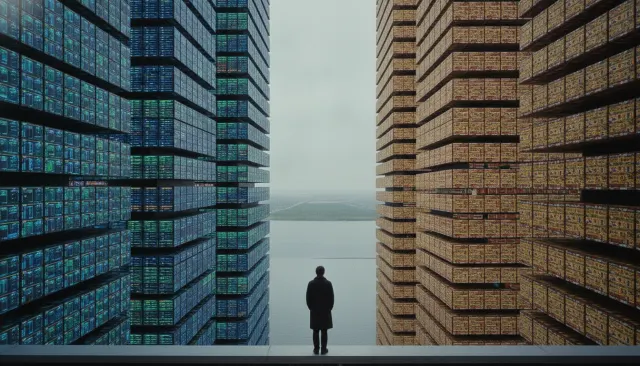 Photographers Fine ArtAndreas Gursky Large Format Monumental
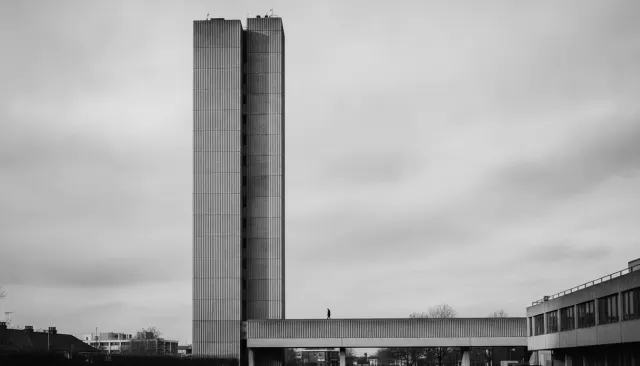 Architectural RealestateBrutalist Architecture Photography
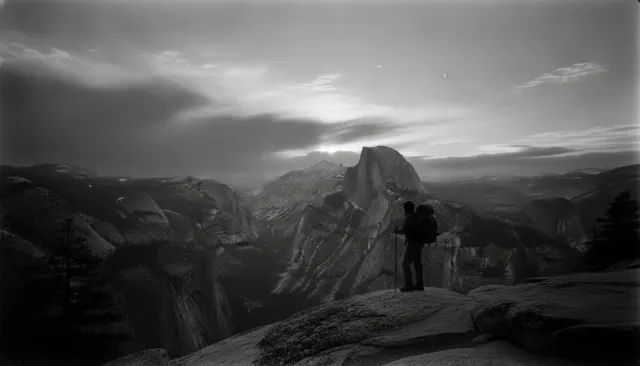 Wildlife NatureAnsel Adams BW Yosemite Large Format
 Food Product StillBon Appetit Overhead Flat
 Architectural RealestateAirbnb Warm Interior
 Photographers Fine ArtCatherine Opie Portrait Formal
Your first cut
is on us.
+ New videoFree plan · no card · 1080p export