The Gruffalo
Julia Donaldson (author), Axel Scheffler (illustrator) · 1999
The foundational work; 13M+ copies, 74 language translations; the template for the Donaldson/Scheffler visual partnership
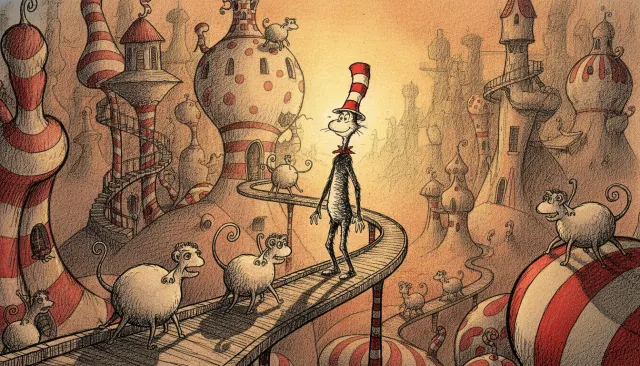
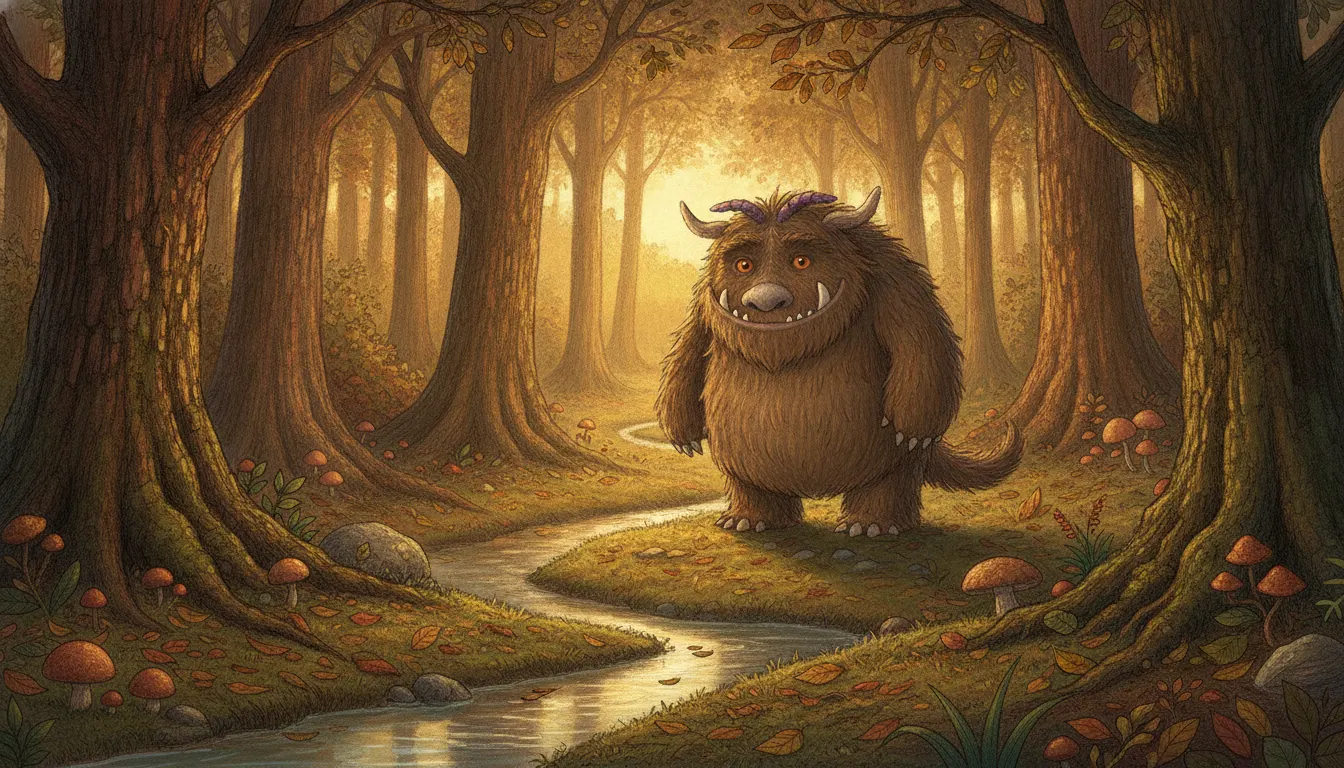
Axel Scheffler illustrations for Julia Donaldson Gruffalo. Warm earthy forest palette, rounded character, friendly textured creature.
The moves a human crew would use to get here. Cue applies them for you, and knowing their names is how you ask for a change.
Every scene filled with identifiable British woodland species - fungi, plants, birds, insects - creating visual richness without competing with the central character action.
Characters designed for clear emotional reading at any reproduction size - large expressive eyes, posture vocabulary communicating character and mood before text is read.
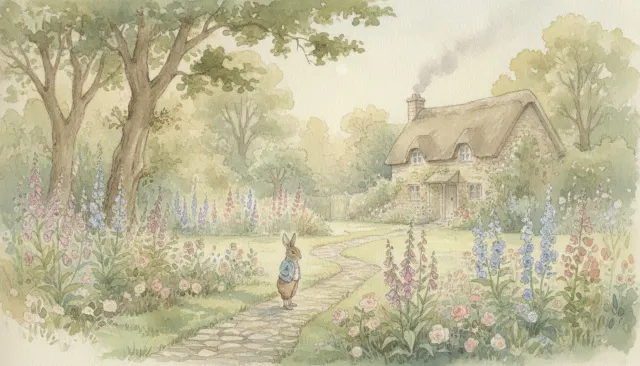
Pen-and-ink line provides structural clarity and detail; watercolor wash provides the warm, slightly soft color quality that signals approachable rather than clinical.
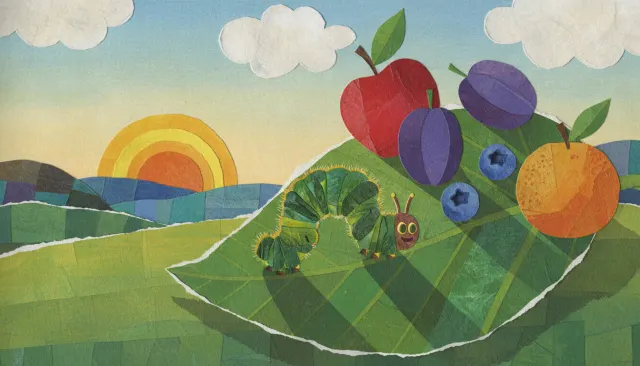
Ochre, amber, and russet for leaf litter and autumn foliage; sage and forest green for summer; a palette that is simultaneously naturalistic and emotionally warm.
Antagonist creatures (the Gruffalo, the Gruffalo's child) designed as assemblages of frightening features a child might list - large teeth, terrible claws, orange eyes - producing creatures that are conceptually scary but visually lovable.
Double-page spreads in which the environment tells parallel visual stories - animals peeking out, weather changing, season progressing - running beneath the primary text narrative.
The collaboration between British author Julia Donaldson (born 1948) and German illustrator Axel Scheffler (born 1957) has produced the most consistently successful picture book series in British publishing since the late 1990s, beginning with The Gruffalo (1999) and extending across over twenty jointly-produced titles. Their partnership defines the dominant visual register of British children's books in the early 21st century: warm, detailed, humor-rich illustration combining naturalistic woodland environment with expressive anthropomorphic characters.
The Gruffalo (1999, Macmillan Children's Books) was illustrated by Scheffler in a style developed through his work in German and British publishing: a dense, detailed pen-and-ink and watercolor technique that fills every panel with observed environmental detail - leaf litter, tree bark, mushrooms, woodland grasses - while keeping the character designs broadly appealing and emotionally readable from across a room.
Scheffler's character design approach is based on expressive silhouette legibility. The Gruffalo himself - purple prickles, orange eyes, a wart on his nose, terrible claws and terrible teeth - is designed as a child's construction of terrifying physical features assembled without knowledge of actual terrifying anatomy, producing a creature that is simultaneously frightening in concept and lovable in execution. The mouse protagonist has large, expressive eyes, a slightly surprised expression, and a confident upright posture that reads as intelligence and competence across any reproduction size.
Scheffler works in a combination of pen-and-ink line and watercolor wash, with the line providing structural clarity and the color providing warmth and environmental richness. His woodland environments are densely observed - the woodland floor of The Gruffalo contains identifiable British species of fungi, plant, and bird - but never overwhelming, because the character design reads clearly above the environmental detail.
The color palette is warm throughout: ochre and amber for autumn leaves, sage and forest green for summer foliage, soft grey-blue for winter skies. Skin tones on human characters (when present) are warm peach; animal characters have naturalistic base colors with slight brightening toward the warm register.
Typography in Donaldson/Scheffler books is typically handled by the publisher in a warm, rounded sans-serif or serif typeface that complements Scheffler's line quality without competing with it.
The Gruffalo has sold over 13 million copies worldwide and been translated into 74 languages. The 2009 BBC/Magic Light animated special (dir. Max Lang and Jakob Schuh), voiced by Helena Bonham Carter, extended the visual vocabulary to animation, winning a BAFTA. Julia Donaldson was appointed Children's Laureate of the UK in 2011.
Julia Donaldson (author), Axel Scheffler (illustrator) · 1999
The foundational work; 13M+ copies, 74 language translations; the template for the Donaldson/Scheffler visual partnership
Julia Donaldson / Axel Scheffler · 2004
Sequel; winter palette; Scheffler's snow and frost rendering extending the environmental vocabulary
Julia Donaldson / Axel Scheffler · 2000
Tropical environment; tests Scheffler's naturalistic observational approach in non-woodland biome
Julia Donaldson / Axel Scheffler · 2001
Halloween-adjacent subject; autumnal palette; BBC animated special (2012)
Julia Donaldson / Axel Scheffler · 2010
Dragon school story; Scheffler's character design range extended to fantastical creatures
Magic Light Pictures, dir. Max Lang and Jakob Schuh · 2009
BAFTA-winning animated adaptation; the visual vocabulary translated to movement
A Look is not a filter. It is a set of stored decisions the pipeline reads before it makes a single frame, so two videos in the same Look actually match.