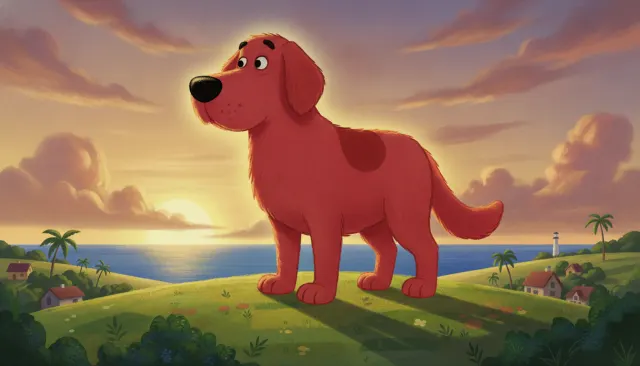
The Poky Little Puppy
Janette Sebring Lowrey (author), Gustaf Tenggren (illustrator) · 1942
First Golden Books title; best-selling hardcover children's book of all time at 15M+ copies
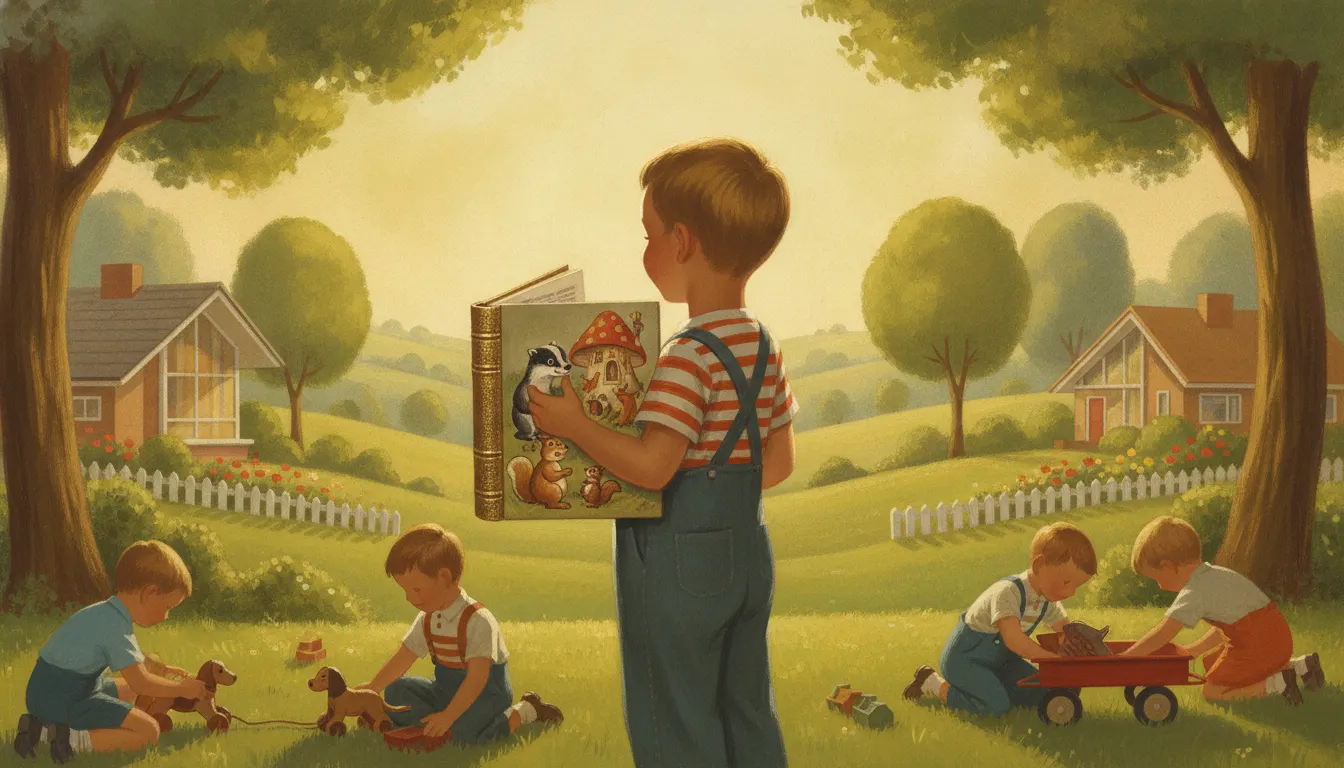
Little Golden Books 1940s American childrens illustration. Gilt spine, plump painted animals, midcentury suburban kids, Garth Williams Eloise Wilkin warm gouache.
The moves a human crew would use to get here. Cue applies them for you, and knowing their names is how you ask for a change.
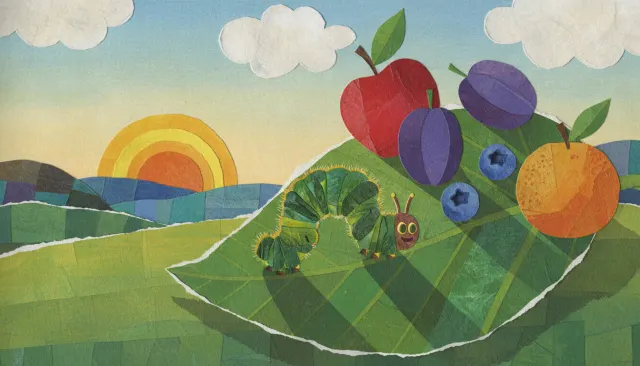
Yellows, warm ochres, dusty blues, and soft sage greens predominate - a palette associated with safety, warmth, and domestic comfort rather than visual excitement.
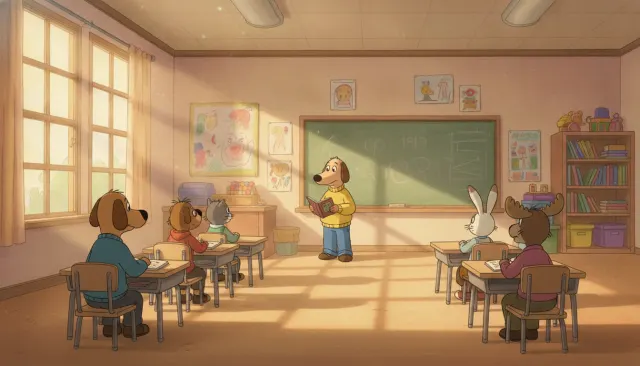
Animals and human figures drawn with warm, slightly rounded proportions that prioritize approachability and emotional expressiveness over anatomical accuracy.
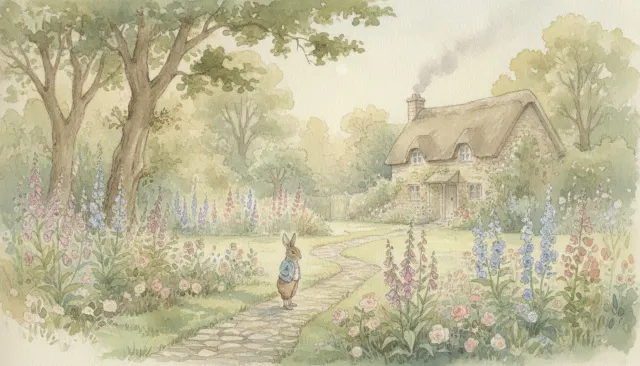
Backgrounds rendered with loose brushwork suggesting meadow, forest, or domestic interior texture rather than tight illustrative detail - creating depth without visual complexity.
Trees, fields, and architectural elements in middle distance rendered in semi-soft focus, drawing the eye to foreground figures while maintaining a sense of inhabited world.
Compositions designed for a 6.75x8 inch page, with strong figure-ground separation and unambiguous visual hierarchy that works at the size children hold books.
The gold-foil spine that gave the series its name functions as a visual identity element - a material signal of the brand that parents and children recognized instantly.
Little Golden Books, launched by Simon & Schuster and Western Publishing in September 1942, were designed to bring high-quality illustrated children's books to mass market at 25 cents each - a price point that democratized illustrated children's literature in America. The first twelve titles included The Poky Little Puppy (by Janette Sebring Lowrey, illustrated by Gustaf Tenggren), which became the best-selling hardcover children's book of all time, with over 15 million copies sold.
The illustration style associated with Little Golden Books' first decade is not a single hand but a house style developed across a group of illustrators working in the era's commercial illustration conventions. Key artists include Gustaf Tenggren (1896-1970), whose work on the original series drew on his experience at Disney (Snow White, 1937; Pinocchio, 1940); Tibor Gergely (1900-1978), whose work was more graphic and architecturally precise; Richard Scarry (1919-1994), who joined the series in 1949; and Eloise Wilkin (1904-1987), whose warm, rounded baby and toddler illustrations defined the nursery end of the catalog.
The unifying visual properties: a warm, inviting color palette in which yellows, ochres, warm reds, and dusty blues predominate; a rounded, slightly simplified naturalism in which animals and human figures are drawn with warmth and anatomical approachability rather than documentary accuracy; strong, clear compositions designed for small page sizes (roughly 6.75 x 8 inches); and the physical binding detail - the gold-foil spine that gave the series its name.
Gustaf Tenggren's work is the most referenced for the specific 1940s aesthetic. Trained in Sweden and an early Disney associate, his illustrations for The Poky Little Puppy (1942), Tawny Scrawny Lion (1952), and Saggy Baggy Elephant (1947) have a painterly warmth - areas of color rendered with loose brushwork suggesting texture and depth - combined with storybook compositional clarity. His backgrounds use soft gradations of warm ochre and sage green, with the midground details of trees, fields, and domestic interiors rendered in semi-soft focus.
Little Golden Books defined the visual expectations for illustrated children's books in postwar America. The aesthetic - warm, rounded, safe, clearly legible - became the default register for children's picture books marketed to the middle class, and its influence persists in contemporary children's media. The series is collected as visual art objects as well as childhood memory artifacts.
Janette Sebring Lowrey (author), Gustaf Tenggren (illustrator) · 1942
First Golden Books title; best-selling hardcover children's book of all time at 15M+ copies
Kathryn and Byron Jackson (authors), Gustaf Tenggren (illustrator) · 1947
Tenggren's warm painterly animal style at full development
Kathryn Jackson (author), Gustaf Tenggren (illustrator) · 1952
Tenggren's ochre-heavy African landscape palette; warm compositional clarity
Richard Scarry · 1963
Scarry joins the series; his more graphic, detail-dense style diversifies the aesthetic
Eloise Wilkin · 1954
Wilkin's soft, rounded baby illustrations defining the nursery end of the catalog
Various · 1942
The founding set; 1.5 million copies sold in the first 5 months establishing the series' commercial model
A Look is not a filter. It is a set of stored decisions the pipeline reads before it makes a single frame, so two videos in the same Look actually match.