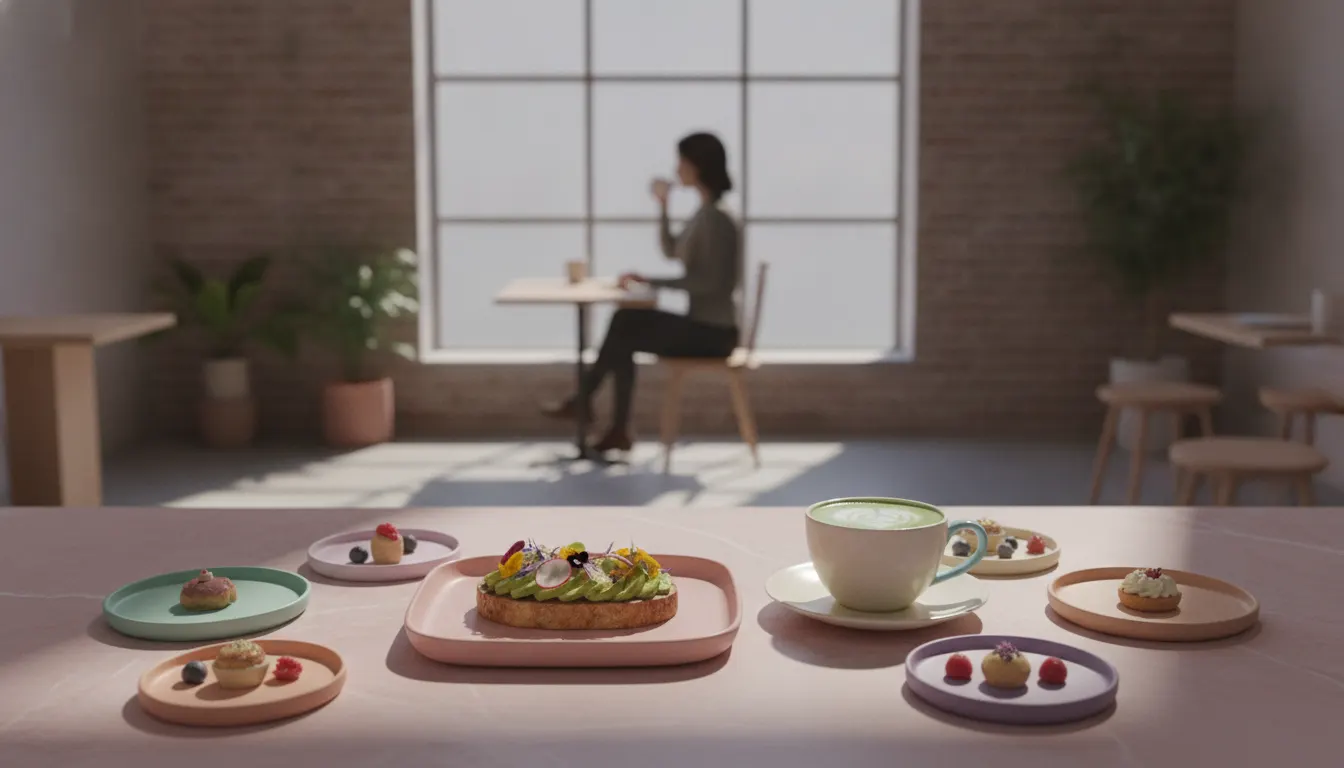
FOOD PRODUCT STILL · 2010S · INTERNATIONAL
Instagram Flat Lay Pastel Food
Instagram-era pastel flat-lay food. Pink-marble countertop, avocado-toast and matcha, pastel plate palette, considered flat-lay symmetry.
flat-laypastelinstagramcafe
LUT pastel-flat-lay
WHEN TO USE
- Food brand marketing targeting female Millennial and elder Gen Z consumers
- Cookbook, recipe, and food blog content where ingredient variety is a selling point
- Café, bakery, and artisan food brand social media content
- Product gift guides, subscription box unboxings, flat product showcases
- Beauty and skincare flat lays following the same visual grammar
WHEN NOT TO USE
- Fine dining photography where environmental context and plating precision matter
- Content targeting Gen Z audiences who associate the aesthetic with inauthenticity
- Dark, moody food photography for craft whiskey, steak, or savory-forward brands
- Any subject requiring depth of field or perspective to convey scale
SIGNATURE TECHNIQUES
How the look is made.
The moves a human crew would use to get here. Cue applies them for you, and knowing their names is how you ask for a change.
- 01Camera at precisely 90 degrees overhead
camera directly above the surface, no angle
- 02Soft diffused natural light from camera
left or camera-right window
- 03Pastel or neutral surface
marble, light wood, linen, painted concrete
- 04Deliberate compositional scatter
props of varying size arranged to lead the eye
- 05Color
coordinated hero subject with supporting props in tonal harmony
- 06Negative space used intentionally
empty surface as compositional element
- 07Post
processing: lifted exposure, reduced contrast, cool shadows, warm midtones
HISTORY & CONTEXT
Where it comes from.
Instagram Flat Lay: Pastel Food Aesthetic
The flat lay food photograph - camera mounted overhead at 90 degrees, subject arranged below on a textured surface - became the defining visual unit of Instagram food culture between 2013 and 2019. At its peak, the style influenced not just personal accounts but restaurant menus, cookbook covers, brand packaging, and editorial food photography in major publications.
Origins and Mechanics
The flat lay format predates Instagram - overhead product photography appeared in mail-order catalogs throughout the 20th century - but Instagram's square crop and mobile-first audience gave it new life. The challenge of photographing food on a table with a phone camera held overhead is precisely its appeal: the constraint forces a considered, almost graphic arrangement. Everything must be deliberately placed because the camera sees everything equally, with no perspective to hide mistakes.
The pastel variant of flat lay emerged around 2014-2015, associated with a broader millennial pink and terracotta trend in interior design and branding. Marble cutting boards, blush linen napkins, rose-gold cutlery, and ceramic tableware in sage, dusty pink, and cream became standard props. The food itself was often chosen or colored to harmonize: acai bowls with pink pitaya, matcha lattes, lavender lemonade.
Lighting Protocol
Flat lay food photography almost exclusively uses diffused natural light from a large window or a daylight-balanced softbox positioned to one side. Direct sunlight creates harsh shadows that read as unflattering in the format's characteristic even lighting. Reflectors bounce light into the shadow side to reduce contrast further. The goal is a soft, airy quality where textures are visible but shadows are open and gentle.
Post-processing
Editing tends toward the bright and airy: exposure slightly elevated, highlights reduced, whites lifted, clarity reduced for softness. VSCO's A4 and C1 presets were standard for several years; Lightroom Mobile's 'Bright' profiles also common. Color grading adds warmth to midtones and a slight cool cast to shadows - the reverse gradient of cinematic color grading.
Cultural Moment
By 2020, the flat lay aesthetic had peaked and began to be associated with a dated, overthought Instagram sensibility. A counter-movement toward casual, imperfect food photography - messier styling, harsher lighting, no props - emerged in its wake. The pastel flat lay now functions as a clear period marker for 2014-2019 social media aesthetics.
NOTABLE WORKS
Where you have seen it.
The Faux Martha, Pinch of Yum
food blog aesthetic parallels
Various Kinfolk food editorials, 2013-2016
Waiting on Martha Instagram, 2014-2017
Anthropologie product flat lays and editorial photography, 2015-2018
THE RECIPE
The exact knobs
the renderer turns.
A Look is not a filter. It is a set of stored decisions the pipeline reads before it makes a single frame, so two videos in the same Look actually match.
SettingValue
GradeColour LUT applied to every frame
pastel-flat-layTransitionHow one shot becomes the next
soft cuts · 320ms · ease-in-outKen BurnsCamera move applied to stills
Slow push · 0.02 · centerTypographyDisplay / body / mono pairing
Inter · Inter · JetBrains MonoMusic moodWhat the bed under the voice sounds like
indie-pop-2010s · cafe-acousticPrompt suffixAppended to every shot prompt in this Look
Instagram pastel flat lay food, pink marble counter, avocado toast matcha, pastel plate palette flat lay symmetryPALETTE
Primary
#FBE0EC
Secondary
#D4B098
Accent
#7AC95C
Text/Light
#1F1018
Text/Dark
#FFF5F8
BG 900
#2A1820
BG 800
#3D2530
RELATED LOOKS
Next to it on the shelf.



Your first cut
is on us.
+ New videoFree plan · no card · 1080p export