Dennis Gabor
first holographic reconstruction experiment (1947, Nobel Prize 1971)
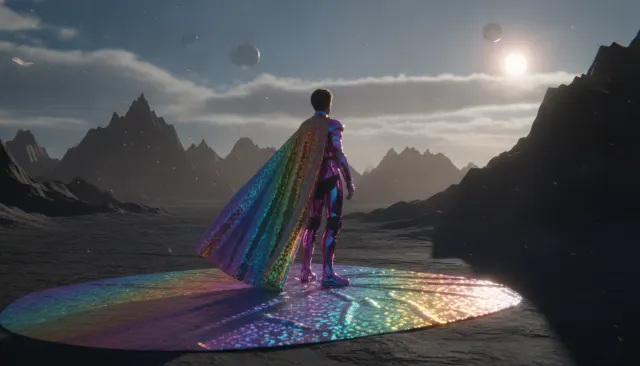
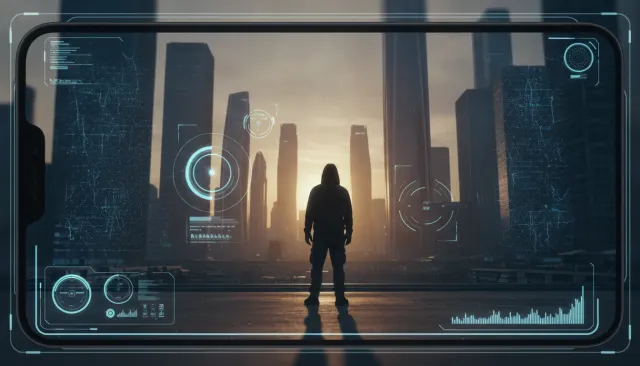
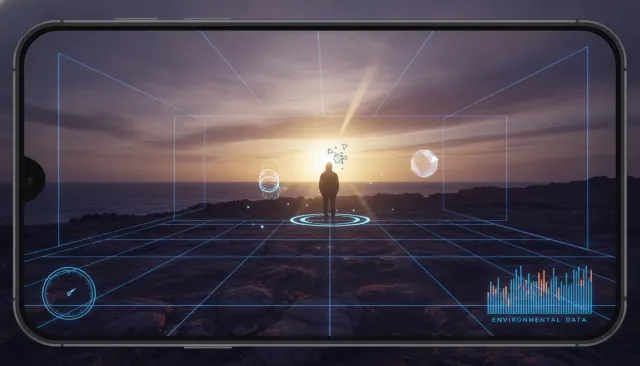
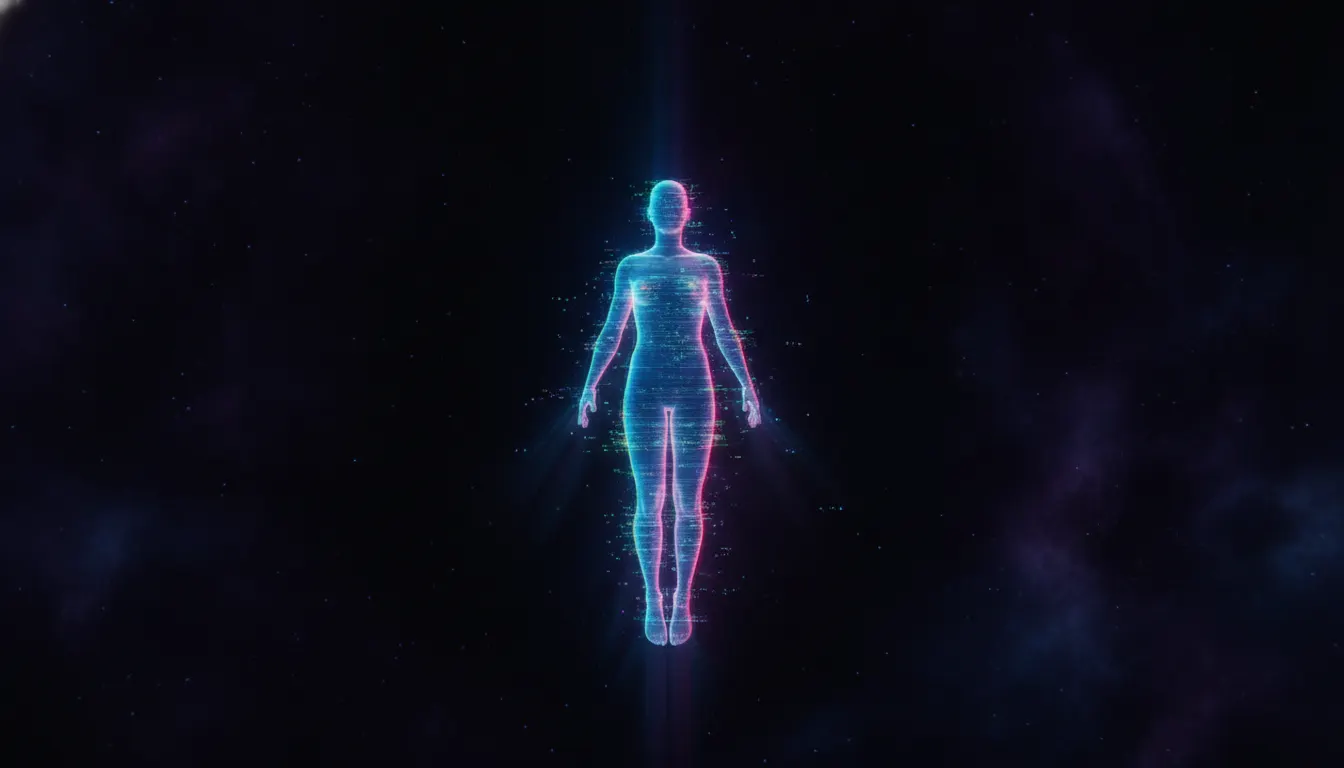
Volumetric hologram 3D projection aesthetic. Subject floating in dark space with chromatic edge separation, scan-line shimmer, slight wireframe interference, sci-fi gravitas.
The moves a human crew would use to get here. Cue applies them for you, and knowing their names is how you ask for a change.
to-blue gradient tint on subject, 70-90% desaturation of original color channels
line overlay: horizontal lines at 2-4px spacing, 20-35% opacity, blended in Screen or Add mode
keyframe opacity between 85-100% at irregular intervals
duplicate layer, offset blue channel 2-3px, blend at 40% Lighten
small floating cyan particles around the figure in a 10-20px radius
axis size pulse: 99-101% scale oscillation on a 0.5-second loop for floating instability
The hologram aesthetic is one of the most recognizable visual shorthand for advanced technology - a free-floating, semi-transparent three-dimensional image surrounded by scan lines, flickering edges, and blue-cyan light. Its roots are deeply scientific but its visual language has been almost entirely defined by cinema and live entertainment.
Dennis Gabor invented holography in 1947 while working at British Thomson-Houston, using mercury lamp coherent light to reconstruct wavefront interference patterns. He received the Nobel Prize in Physics in 1971, the same year the technology became publicly spectacular. The invention was largely theoretical until the 1960 invention of the laser gave holographers a coherent light source powerful enough for practical work. Emmett Leith and Juris Upatnieks at the University of Michigan created the first laser-lit transmission holograms in 1962-1964.
Lloyd Cross pushed holography into art and spectacle with the integral (multiplex) hologram in 1972, combining 360-degree photography with holographic film to create the _Kiss II_ series - small cylinders in which a woman seems to move and blink as you walk around them. These were widely exhibited and defined the popular imagination of what a hologram "should" look like.
The 2012 Coachella Tupac hologram (technically a Pepper's Ghost illusion using a modern Musion Eyeliner foil screen) brought the aesthetic to mass pop-cultural awareness. The 19th-century stage trick - a 45-degree half-silvered mirror reflecting a bright image from an off-stage source - was reframed as a "hologram" in news coverage, cementing the association between floating translucent figures and the term. ABBA Voyage (2021-ongoing) uses a more sophisticated volumetric LED volume capture pipeline but still leans on the same blue-tinted floating-figure aesthetic.
The look as applied to video and motion graphics draws from Star Wars (1977) - Princess Leia's blue flickering message from R2-D2 - and was codified by decades of sci-fi HUD design: translucent cyan geometry, scan-line interference, 2-4 Hz flicker, slight holographic chromatic fringing at edges, and a dark environment to sell the emission illusion.
first holographic reconstruction experiment (1947, Nobel Prize 1971)
first laser transmission holograms, University of Michigan (1962-1964)
1972
_Kiss II_ integral hologram cylinders
1977
Princess Leia R2-D2 message, directed George Lucas
2012
2010
A Look is not a filter. It is a set of stored decisions the pipeline reads before it makes a single frame, so two videos in the same Look actually match.