Hi-Fi Rush
Tango Gameworks / John Johanas (director) · 2023
Defining work: beat-synced comic-game aesthetic with licensed soundtrack, surprise Xbox Game Studios release
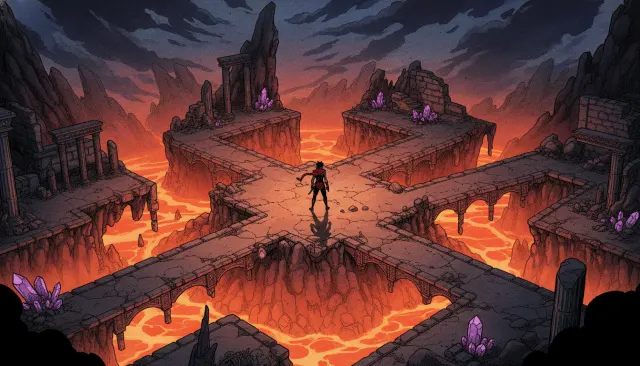
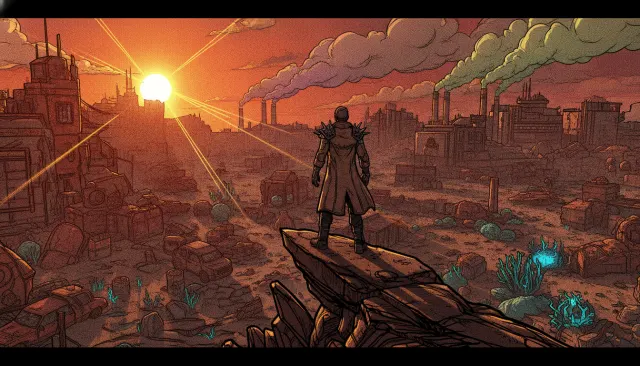
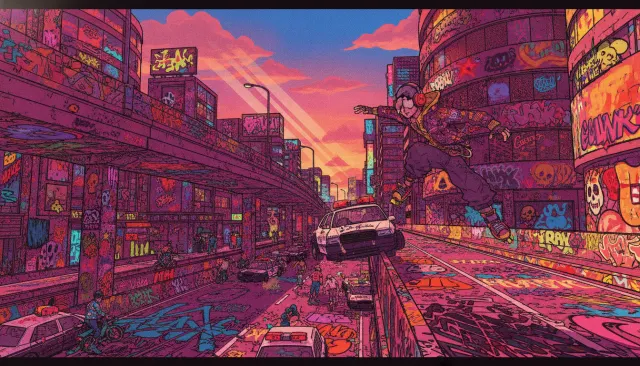
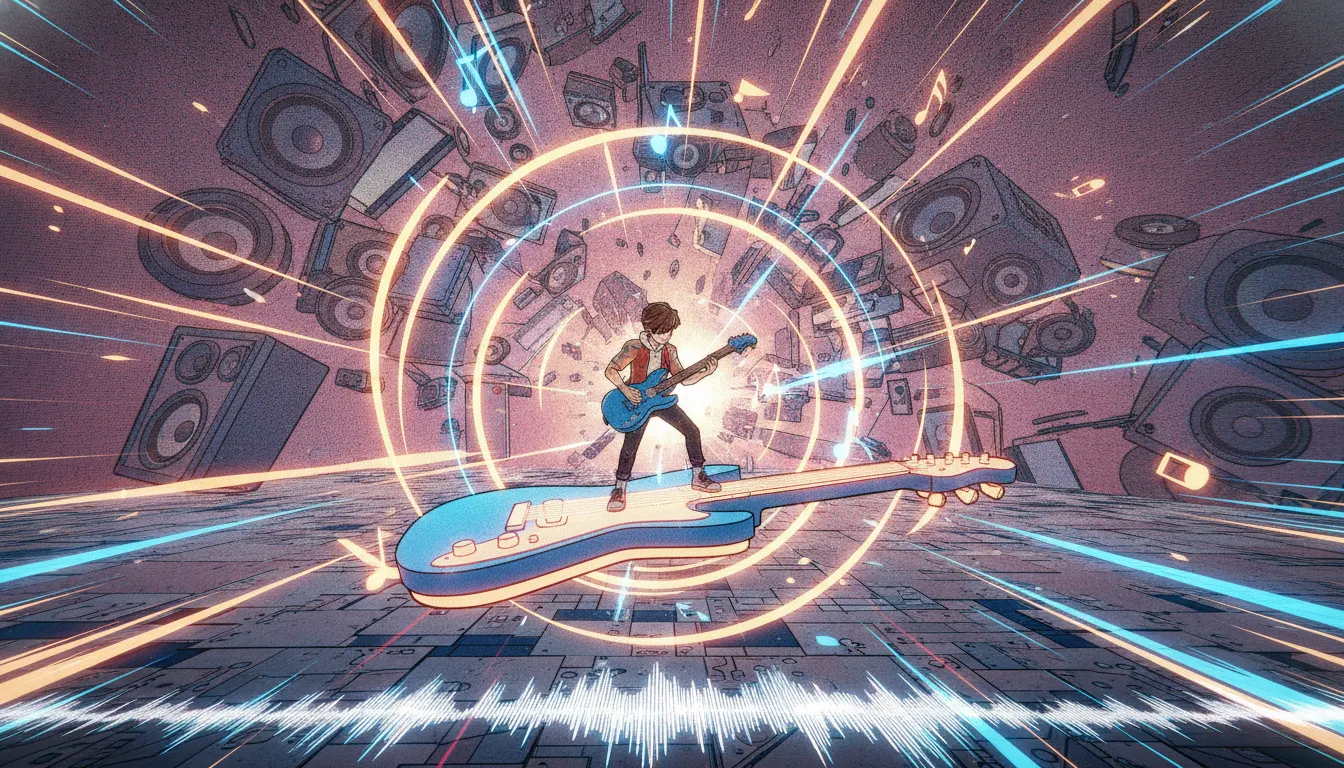
Hi-Fi Rush rhythm-comic 3D game. Bold inked outlines, music-synced action, kinetic comic burst frames.
The moves a human crew would use to get here. Cue applies them for you, and knowing their names is how you ask for a change.
All background elements -- vents, lights, NPC gestures -- animated on-beat to the current track, creating a world that visibly breathes music
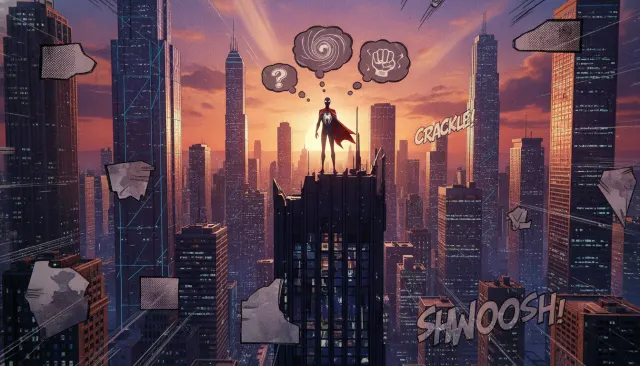
Special moves trigger camera cuts to partial-panel compositions with halftone shading and onomatopoeia, merging game HUD with comic visual language
Hard outline pass around all characters and interactive objects, maintaining the 2D comic feel across full 3D geometry
Protagonist orange-red contrasting against Vandelay corporate steel-blue, making faction identity legible through ambient lighting alone
Character designs verified readable as simplified outlines, referencing the thick-stroke character design tradition of 2000s action cartoons
Impact events punctuated by stylized text particles -- 'WHAM', 'CLANG' -- positioned as diegetic comic-panel elements rather than UI overlays
Tango Gameworks' Hi-Fi Rush (January 2023, creative director John Johanas) arrived as a surprise Xbox Game Studios release and immediately established itself as one of the most inventive visual systems in contemporary game design. The core conceit -- everything in the world pulses to the beat of the game's licensed soundtrack, from NPC animations to environmental lighting rigs -- created a unique hybrid of comic book aesthetic, rhythm game visual language, and Saturday morning cartoon energy.
Hi-Fi Rush's visual system is built around 120 BPM baseline timing (adjusting per track). Background elements -- factory vents, indicator lights, background characters -- all animate on-beat. This creates a world that feels alive and musical rather than gamey, and it serves as the foundation for the game's visual identity: bright, rhythmic, purposeful. The technique required Tango's engineers to build a proprietary beat-synced animation system that drives environmental FX, particle systems, and enemy behavior simultaneously.
The game uses flat-shaded character models with prominent cel outlines, rendered over painterly hand-drawn backgrounds. Impact effects and ability text are drawn as comic-panel inserts -- when Chai uses a special move, the camera cuts to a partial-panel composition with halftone shading and bold onomatopoeia. Speed lines, panel borders, and exaggerated motion blur reference the visual grammar of American and Japanese superhero comics simultaneously.
Hi-Fi Rush uses a bold, primary-influenced palette with strong saturation and clear faction coding: Chai and CNMN are warm orange-red, corporate Vandelay Industries environments are cold steel-blue. Character outfits use complementary accent colors as focal points. The industrial factory setting gives the art team a mechanical scaffolding against which the warm character colors pop with maximum contrast.
Chai's design combines a prosthetic guitar-arm with skater-adjacent streetwear, readable at multiple LOD levels. Supporting characters like Peppermint, Macaron, and Korsica each have distinct silhouettes derived from their weapon archetypes. The ensemble aesthetic references Saturday morning action cartoons -- Dexter's Lab, Teen Titans Go, and the Jak and Daxter era of character platformers.
Hi-Fi Rush was released without any prior marketing announcement on January 25, 2023, directly from an Xbox Developer Direct showcase. This stealth release strategy meant the game had to establish its entire aesthetic identity within the first 30 seconds of gameplay footage -- viewers were seeing it for the first time and deciding immediately whether to download it. The visual system's legibility and energy were marketing documents as much as game design decisions: the beat-sync, the orange-vs-steel color story, and the comic onomatopoeia all had to communicate the game's core proposition before a single sentence of copy appeared.
Tango Gameworks is the studio behind The Evil Within (2014) and Ghostwire: Tokyo (2022) -- games at the opposite end of the tone spectrum from Hi-Fi Rush. Creative director John Johanas's decision to pivot the studio toward bright comic-game aesthetics represented one of the most striking genre departures in recent game development history. The studio's subsequent closure by Xbox in 2024 -- and near-immediate acquisition by Krafton -- made Hi-Fi Rush retrospectively poignant as both a creative peak and a farewell.
Tango Gameworks / John Johanas (director) · 2023
Defining work: beat-synced comic-game aesthetic with licensed soundtrack, surprise Xbox Game Studios release
Supergiant Games · 2020
Contemporaneous painterly 2.5D comic-game aesthetic offering a darker register counterpoint to Hi-Fi Rush's bright energy
Capcom / Clover Studio · 2006
Earlier cel-shaded-meets-traditional-art hybrid that proved stylized non-realism could be a commercial and critical success
Insomniac Games / Xbox Game Studios · 2014
Open-world comic-energy game with similar bright palette and onomatopoeia impact language, direct aesthetic precedent
Atlus / P-Studio · 2016
JRPG using comic-panel UI and bold color blocking to integrate graphic design with gameplay aesthetic
Metronomik · 2020
Music-themed action game with beat-influenced visual design offering a contemporaneous comparison point
A Look is not a filter. It is a set of stored decisions the pipeline reads before it makes a single frame, so two videos in the same Look actually match.