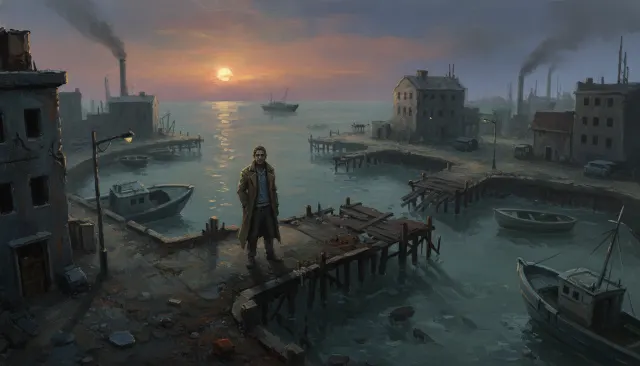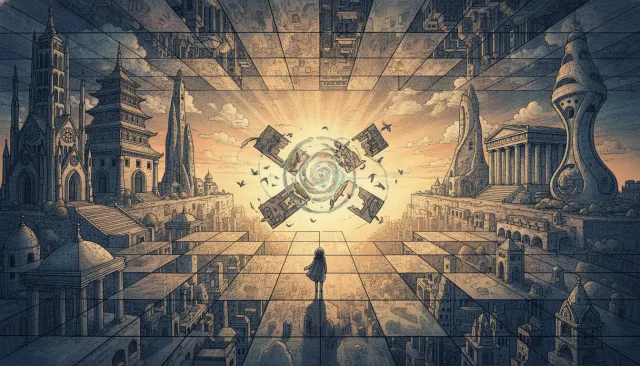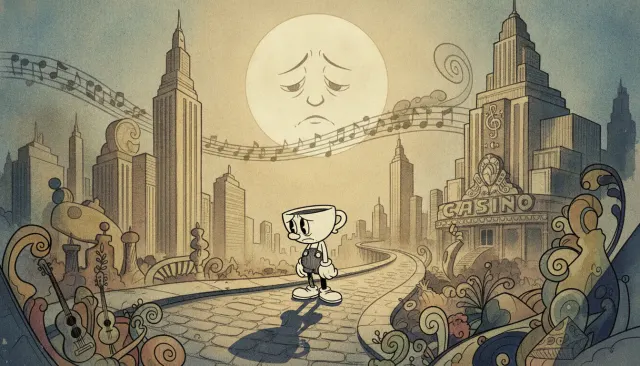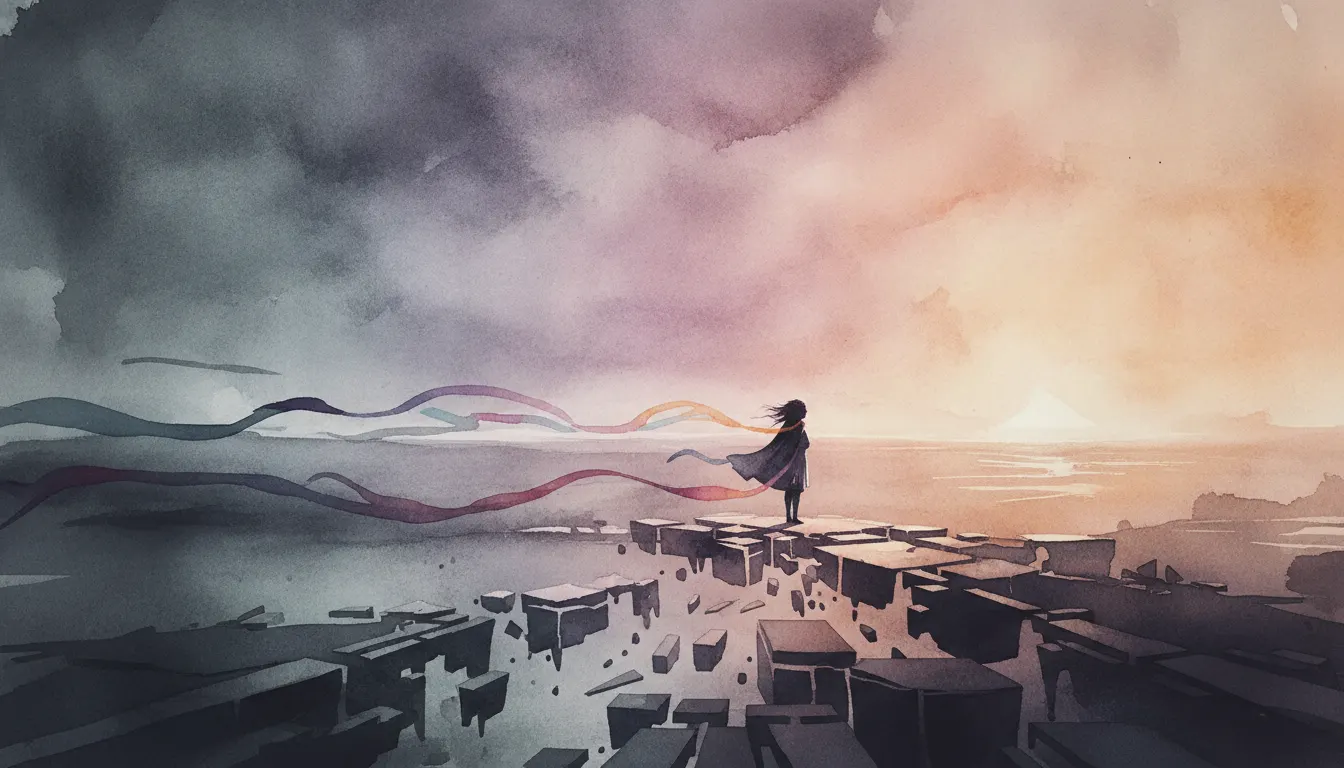
GRIS (Nomada Studio, 2018)
the defining reference
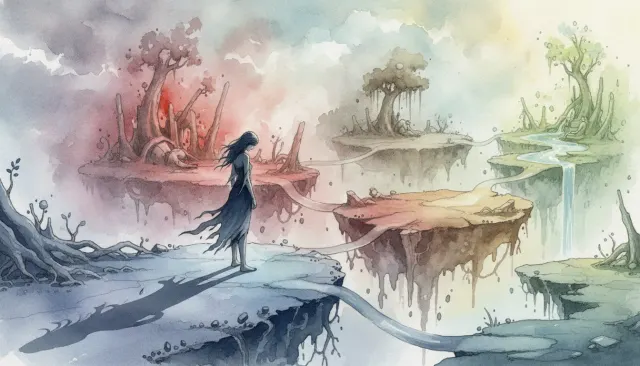
Gris Nomada Studio watercolor platformer aesthetic. Conrad Roset painted background, grief-color recovery palette progression, wordless emotional indie platformer.
The moves a human crew would use to get here. Cue applies them for you, and knowing their names is how you ask for a change.
derived figurative design: flowing protagonist silhouette, minimal linework, graceful animation
time watercolor simulation: visible brushwork, color bloom at wet edges, paper grain texture
color temperature and musical harmonic changes coordinated
tiny protagonist in vast architectural spaces signals vulnerability
environments shift and reshape as emotional states change
GRIS (Nomada Studio, 2018) is a wordless indie platformer whose visual art direction by Conrad Roset became one of the defining references for 'games as fine art' discussions of the late 2010s. Roset - a Barcelona-based illustrator whose personal work is rooted in romantic figurative illustration and watercolor technique - created a world that functions as an extended animated illustration, where gameplay mechanics are inseparable from color, emotion, and painterly visual language.
Roset's personal practice focuses on delicate figurative illustration - women in flowing environments, minimal linework over rich watercolor washes, romantic and melancholy emotional registers. GRIS translates this illustration sensibility directly into a game: the protagonist is drawn with the same flowing grace as Roset's personal sketchbooks, and the environments have the gestural, non-photographic quality of illustration rather than the optical quality of photography-derived game art.
The game's central design idea is that color represents emotional state and recovery: the world begins in greyscale (despair/numbness) and color is progressively reintroduced as narrative milestones are reached. Red, green, blue, and gold are added in sequence, each corresponding to an emotional stage of grief and recovery. This is color functioning as game mechanic and emotional storytelling simultaneously - one of the most elegant fusions of art direction and game design in the medium.
Environments appear to be painted in real-time - backgrounds have visible brushwork, color blooms at edges, and a luminous transparency quality. This is achieved through careful real-time rendering that mimics watercolor paper grain and wet-edge effects rather than using static pre-rendered backgrounds. The technique distinguishes GRIS from games that use watercolor as static backdrop.
Berlinist's musical score (composer Berlinist) and Roset's visual design were developed in close parallel, with color temperature shifts coordinating with harmonic shifts. This total-art integration - where visual, musical, and mechanical systems are one coherent emotional experience - is the game's highest artistic achievement.
the defining reference
visual origin source
parallel emotional wordless game aesthetic
painterly beautiful meditative game peer
color-as-emotion game precedent
illustration-integrated game narrative
watercolor platformer parallel
A Look is not a filter. It is a set of stored decisions the pipeline reads before it makes a single frame, so two videos in the same Look actually match.