
Iatmul haus tambaran spirit house facades
Middle Sepik villages, East Sepik Province, PNG
Inspired by the carved-mask traditions of the Sepik River and highland clans of Papua New Guinea. Elongated faces, cowrie-shell eyes, ceremonial pigment.
The moves a human crew would use to get here. Cue applies them for you, and knowing their names is how you ask for a change.
ochre and charcoal black face-paint patterns
work woven basketry structure with geometric lattice visible through the mask form
hatch, diamond, and zigzag patterns covering non-facial surface areas
Papua New Guinea is among the most diverse artistic cultures on earth: with over 800 distinct languages and corresponding material culture traditions, no single 'Papua New Guinea style' exists. The objects most recognized internationally – the elongated masks and spirit boards of the Sepik River region and the towering ceremonial houses of the Abelam people – represent traditions from specific communities in the country's north and west.
The Sepik River (Papua New Guinea's longest river, running 1,126 km through the northern provinces) sustains dozens of distinct artistic traditions among the Iatmul, Sawos, Chambri, Middle Sepik, and other peoples. The haus tambaran (spirit house, also called the men's ceremonial house) is the architectural and spiritual center of community life: its facades are covered with painted ancestral figures, its interior houses sacred flutes, masks, and ritual objects forbidden to women and uninitiated men.
Sepik masks (waki among the Iatmul) take several forms: hook figures (yipwon) – thin, hook-shaped supernatural beings associated with hunting magic; woven basketry masks with elongated faces, open-worked geometric patterns, and cassowary feather headdresses; and painted wood masks with exaggerated nasal projections. The characteristic color palette is earth-based: white lime wash (kambwi), red ochre, and black charcoal, sometimes supplemented with yellow clay and blue-green pigments from plant or mineral sources.
The Abelam people of the East Sepik Province create some of the most visually dramatic architecture in the world: their ceremonial houses (ngego) have painted gable facades rising 20+ meters, covered with concentric diamond patterns in white, red, and black and dominated by a large face (nggwalndu) at the apex representing the female spirit. Abelam yam ceremonies involve ritually grown long yams (up to 3 meters) decorated with masks, paint, and headdresses and presented as living beings during exchange ceremonies.
Across the Sepik traditions, shared visual elements include: elongated oval faces with prominent brow ridges and hooked noses; geometric cross-hatch, diamond, and zigzag body-paint patterns that also appear on carved surfaces; bold white and red-ochre contrast as the dominant color system; open-work lattice on woven masks; and cassowary feather and shell ornament as frame elements. The face is always the primary compositional anchor; bodies, when present, are secondary or schematic.
Middle Sepik villages, East Sepik Province, PNG
gable facades up to 25 meters
permanent collection of Sepik material culture
Asmat and Sepik objects acquired 1961, now at Metropolitan Museum of Art, New York
substantial Sepik River collection including haus tambaran poles and masks
Oceania collection including PNG masks and Sepik hook figures
A Look is not a filter. It is a set of stored decisions the pipeline reads before it makes a single frame, so two videos in the same Look actually match.
 Indigenous Australia OceaniaMaori Carving and Ta Moko (New Zealand)
 Indigenous AmericasPacific Northwest Formline Totem
 African ExtendedMalagasy Zafimaniry Carving (Madagascar)
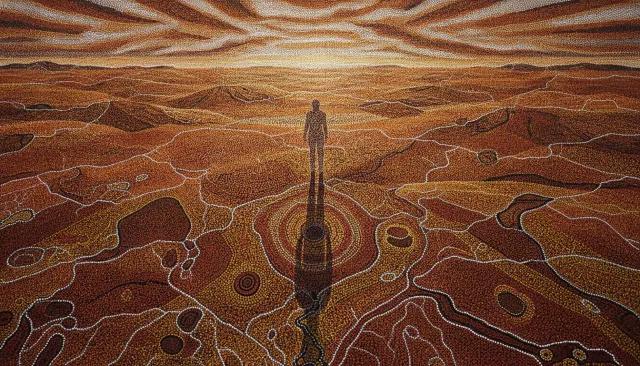 Indigenous Australia OceaniaAboriginal Dot Painting (Australia)
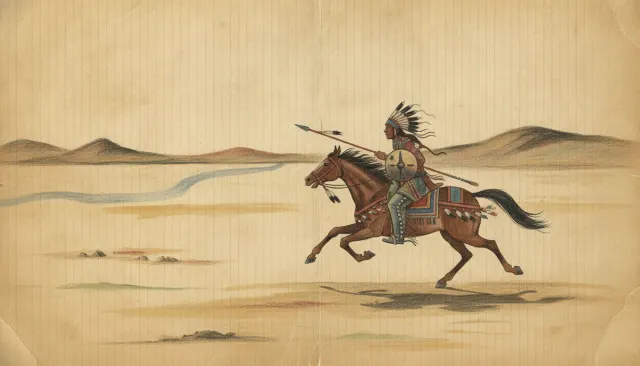 Indigenous AmericasPlains Native American Ledger Art
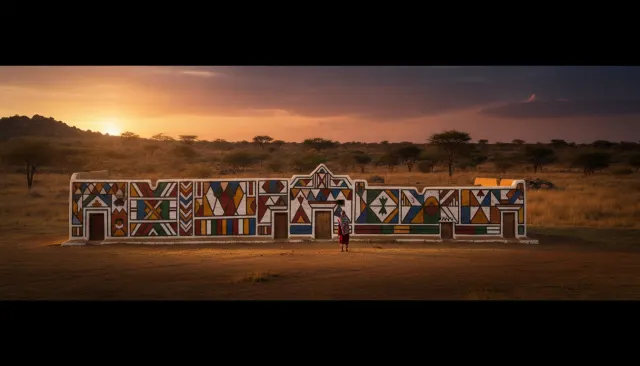 African ExtendedNdebele Mural Houses Extended (South Africa)