Don Clemente Gallo
Original 54-card Lotería deck (1887, standardized edition), widely reproduced
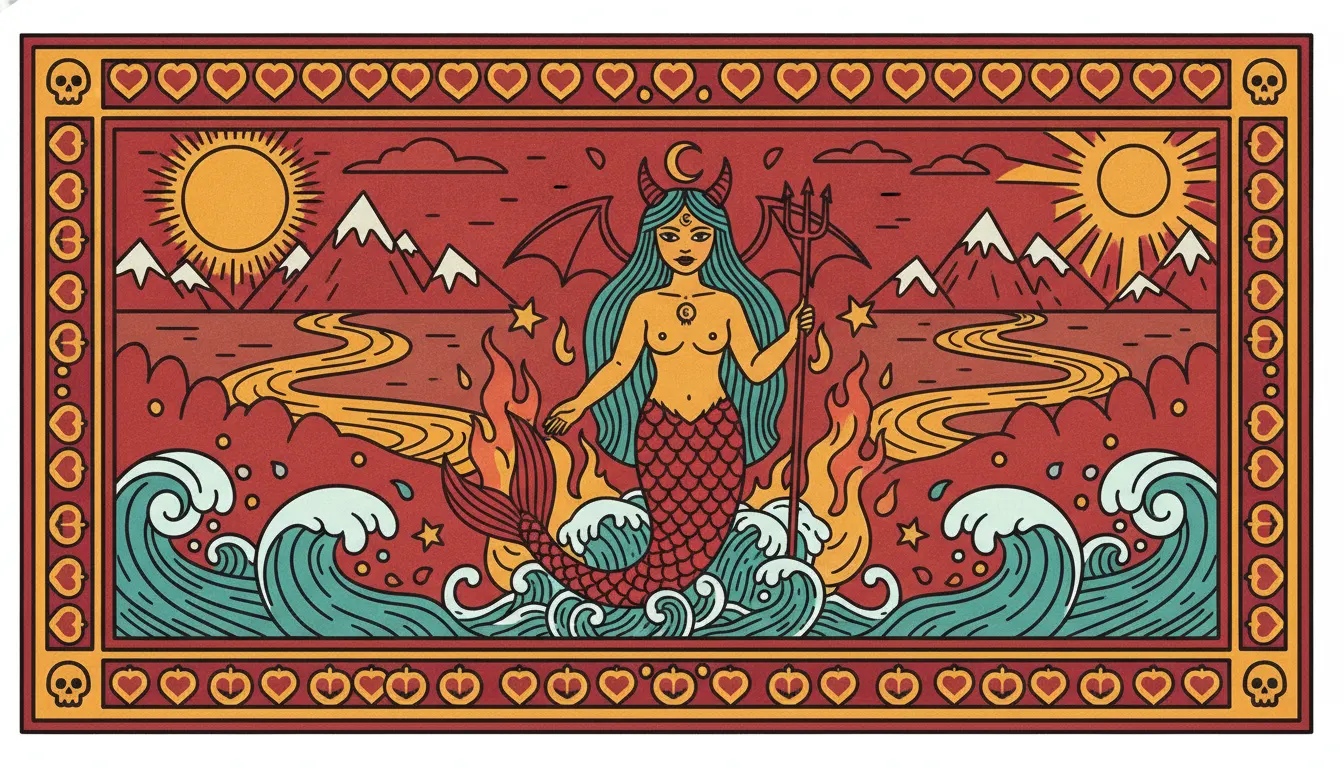
Inspired by the iconic Mexican Loteria card-game tradition. Bold-outlined naive illustration of La Sirena, El Diablito, La Luna over saturated red and yellow.
The moves a human crew would use to get here. Cue applies them for you, and knowing their names is how you ask for a change.
color fills: vermilion red, golden yellow, cobalt blue, forest green
Lotería (from the Italian lotteria, lottery) arrived in New Spain in the late 18th century as a European parlor game. Its transformation into distinctly Mexican visual culture accelerated in 1887 when Don Clemente Jacques (later the company Don Clemente Gallo) standardized a 54-card deck that has remained culturally central for over 130 years.
The 54 cards of the classic Gallo deck form a complete symbolic universe of Mexican popular imagery. Each card carries a number, a bold illustrated figure, and a name. The most iconic include: El Catrín (Card 1, the dandy in top hat – a direct reference to José Guadalupe Posada's La Calavera Garbancera, later renamed La Catrina by Diego Rivera); La Sirena (Card 18, the mermaid, rendered in vivid cobalt blue and green); El Corazón (Card 27, the flaming sacred heart); La Muerte (Card 16, death as a crowned skeleton); El Diablito (Card 29, the little devil); and La Mano (Card 22, the hand). The game is called by a cantador who recites a rhyming riddle for each card rather than its name – a rich oral poetry tradition in itself.
The illustrations combine European chromolithographic printmaking technique with Mexican folk sensibility: thick black outlines, flat color areas in a warm palette of vermilion, golden yellow, cobalt blue, forest green, and cream, and a deliberately bold, graphic, slightly naive figure style. Backgrounds are white or cream, and each card has a red decorative border frame. The figures are iconic rather than realistic – every curve, expression, and proportion is exaggerated for maximum immediate legibility at card-game distance.
The connection to José Guadalupe Posada (1852–1913) is critical: Posada's calavera (skull) illustrations for broadsheets and newspapers established the visual language of Mexican death-as-celebration that feeds directly into both lotería imagery and Día de los Muertos aesthetic more broadly.
Lotería imagery pervades Chicano and Mexican-American visual culture: murals, tattoos, T-shirt graphics, and political posters regularly cite the card archetypes. Contemporary artists including Xavier Garza (children's picture books) and Artemio Rodriguez have created reinterpreted decks addressing immigration, identity, and social justice.
Original 54-card Lotería deck (1887, standardized edition), widely reproduced
*La Calavera Garbancera* (c. 1910), precursor to El Catrín card imagery
1947
*Sueño de una Tarde Dominical en la Alameda Central* , mural naming La Catrina figure
2008
*Lotería: Tomás and the Library Lady* , bilingual picture book using card illustrations
*Lotería de la Frontera* deck (2010s), Chicano reinterpretation addressing border identity
permanent collection of historic lotería decks and printing plates
A Look is not a filter. It is a set of stored decisions the pipeline reads before it makes a single frame, so two videos in the same Look actually match.