Łowicz Museum (Łowicz, Mazovia)
largest historical wycinanki collection, regular workshops and exhibitions
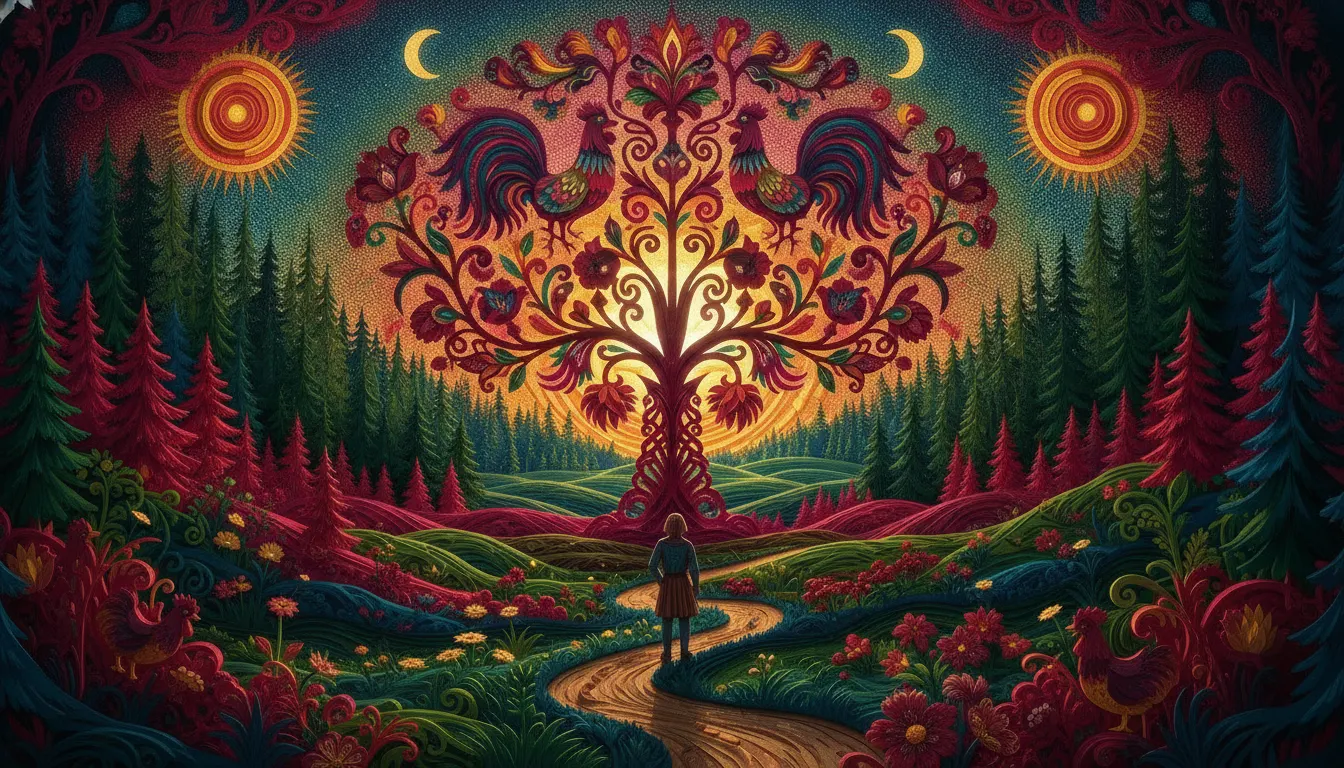
Inspired by the Polish wycinanki folk paper-cutting tradition, especially the multi-color layered Lowicz style. Symmetric roosters, flowers, and trees of life.
The moves a human crew would use to get here. Cue applies them for you, and knowing their names is how you ask for a change.
both halves identical
layer color construction: successive cut paper layers pasted on top of each other in contrasting colors
shear freehand cutting without drawn template – slight irregularity marks authentic handwork
vivid pink, red, cobalt blue, grass green, yellow, and orange
dahlias, tulips, poppies surrounding the primary figure
layer Kurpie lace variant: negative-space geometric stars and snowflake forms in one cut sheet
Wycinanki (pronounced vee-chee-NAN-kee, from wycinać, to cut out) is the Polish tradition of decorating homes with elaborately cut paper designs – hung on whitewashed cottage walls, suspended from ceiling beams, and pasted onto furniture as seasonal decoration primarily for Easter and Christmas. The tradition emerged as a widespread cottage practice in the first half of the 19th century, when cheap tissue and colored paper became available in rural markets and replaced the straw and bark decorations that preceded them.
Polish wycinanki divides into distinct regional vocabularies, the two most recognized internationally being the Łowicz and Kurpie styles.
Łowicz wycinanki (from Mazovia's Łowicz county, central Poland) is the most visually exuberant: multi-layered compositions built up by pasting successive cut layers of different colors, building depth and chromatic intensity. The primary motif is the rooster (kogut) – a symbol of the sun, male energy, and announcement of the new day – shown in full profile with an elaborate tail plume. Flower bouquets, peacocks, horses, and human figures in regional Łowicz costume fill compositions that are bilaterally symmetric about a vertical axis. The Łowicz palette is the most saturated in Polish folk art: vivid pink, red, cobalt blue, grass green, yellow, and orange layered over each other.
Kurpie wycinanki (from the Kurpie forest region of northeastern Mazovia) uses a single layer of black, green, or colored paper cut with sheep shears into lace-like symmetrical forms: single-layer compositions with repeated stars, flowers, and geometric border motifs. Kurpie work relies on the negative-space cutaway rather than multi-layer addition for its visual effect.
Beyond these, Radomskie (Radom region) develops its own circular gwiazda (star) rosette format.
Wycinanki is cut freehand with sheep shears (nożyce) or small curved scissors from folded paper without a drawn template – the symmetry emerges from the fold. A skilled wycinankarka (female cutter) works directly and rapidly, making hundreds of cuts in a single continuous session. The cut pieces are then unfolded, flattened, and pasted onto a white ground or directly onto a whitewashed wall.
Wycinanki is still actively practiced in the Łowicz region; the Łowicz Museum maintains a large historical collection and runs regular workshops. Contemporary artists including Nela Rubinstein (in diaspora, USA) and multiple award-winning wycinankarka masters from Mazovia have expanded the form into large-scale installations and international exhibition.
largest historical wycinanki collection, regular workshops and exhibitions
regional Polish folk art collection including wycinanki from multiple regions
national collection of Polish folk art including wycinanki
documented 19th-century Łowicz practitioner, historical reference
national cooperative founded 1949, maintaining wycinanki production standards
contemporary wycinanki in large-scale installation format, international exhibitions
A Look is not a filter. It is a set of stored decisions the pipeline reads before it makes a single frame, so two videos in the same Look actually match.