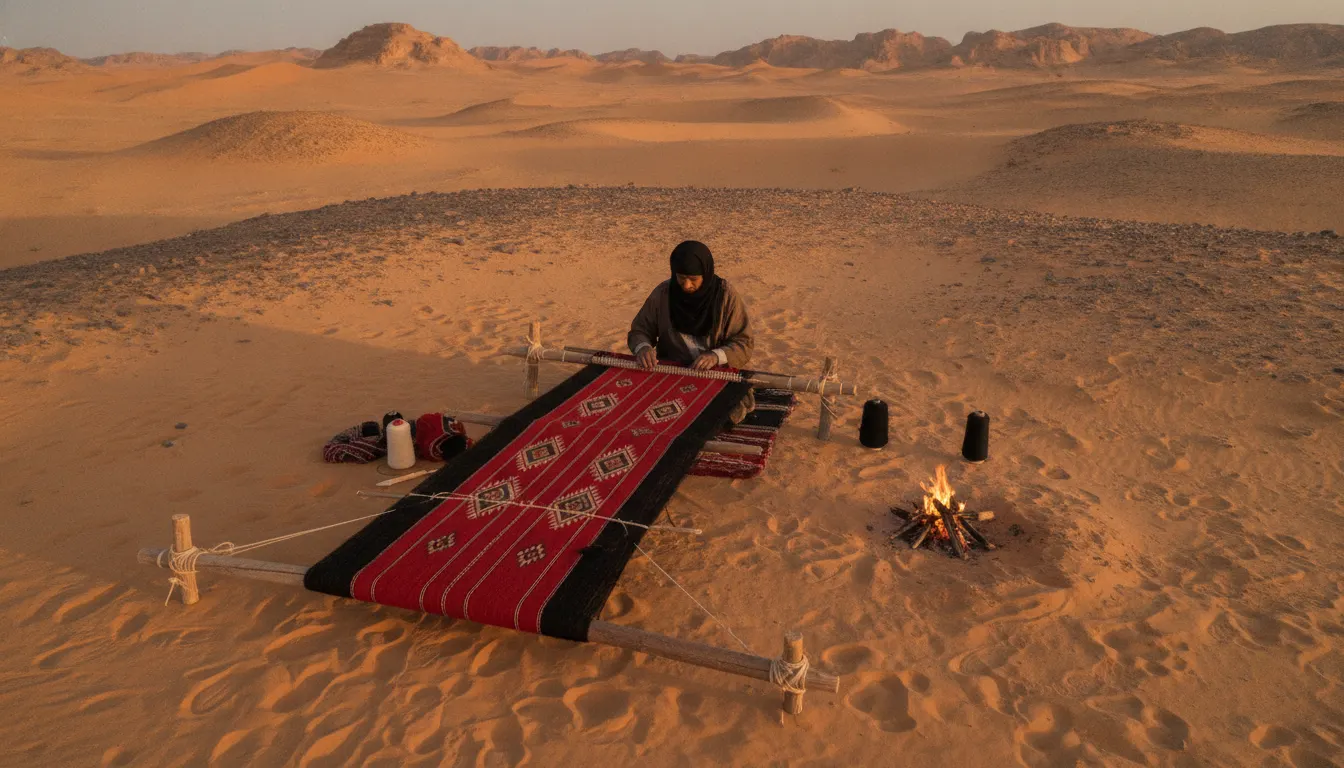
Wadi Rum sadu tent panels
living tradition, Bedouin tribal communities of southern Jordan
Inspired by Jordanian Bedouin tent and rug weaving tradition. Long horizontal strips of black goat-hair and red wool with hand-stitched diamond and zigzag motifs.
The moves a human crew would use to get here. Cue applies them for you, and knowing their names is how you ask for a change.
tone palette anchored in undyed camel tan, charcoal black, and madder red
loom warp-dominant structure
float texture suggesting hand-beaten weave density
Sadu (سدو) is the traditional flat weaving practiced by the Bedouin peoples of the Arabian Peninsula and Levant – including the communities of Jordan's Badia (eastern steppe), the Wadi Rum region, and the Badia tribes stretching into Saudi Arabia and Kuwait. The craft is inscribed on UNESCO's Representative List of Intangible Cultural Heritage (2020 for the Bedouin communities of the UAE; the tradition is pan-peninsular).
Sadu is woven on a low, horizontal ground loom (nol) that travels with the household. The loom width is determined by the weaver's arm span, typically 40–60 cm, producing narrow bands that are sewn together edge-to-edge to make tent panels (bayt sha'r, the black goat-hair tent), saddle bags (khuraj), camel panier bags, and floor cushions (makhaddas). Warp threads are usually undyed camel hair, goat hair, or white wool; weft threads carry the pattern in dyed wool.
Sadu patterns are built entirely from horizontal and diagonal geometric elements: stepped diamonds (muraba'at), zigzag chevrons (muthallathat), interlocking lozenges, and stripe sequences that encode tribal, family, and regional identity. Each tribe or sub-tribe maintains recognizable color-pattern combinations – a system analogous to Scottish tartan in its social function. The core palette is warm earth: undyed camel tan and charcoal black from goat hair, supplemented by madder red, weld yellow, indigo blue, and natural white. Contemporary sadu incorporates synthetic dyes that extend the palette into burnt orange, terracotta, and bright crimson.
Wadi Rum's rock-cut landscape provides the environmental backdrop most associated with this textile: the rust sandstone cliffs, ochre sand, and deep-blue desert sky echo directly in the color vocabulary of the cloth.
The weaving is historically women's work, passed from mother to daughter within the tent. Sadu encodes genealogy: a skilled reader can identify a family's tribal affiliation, the weaver's home region, and sometimes the occasion for which the piece was made (bridal textile, tent panel, or trading gift). Contemporary Jordanian NGOs and the Jordan Hashemite Fund for Human Development (JOHUD) have supported sadu revival programs in communities around Azraq, Mafraq, and Wadi Rum.
For video and graphics, apply sadu patterns as geometric stripe overlays, texture backgrounds for travel or heritage content, or as authentic set dressing references. The warm earth-tone palette pairs naturally with desert landscape footage.
living tradition, Bedouin tribal communities of southern Jordan
permanent collection of historical sadu textiles from eastern Badia tribes
revival program serving communities in Mafraq and Azraq
established 1969, documentation and revival of Gulf sadu
'Sadu, traditional weaving skills of Bedouin women' inscribed on Representative List
on-site sadu demonstrations and artisan market, Jordan
A Look is not a filter. It is a set of stored decisions the pipeline reads before it makes a single frame, so two videos in the same Look actually match.
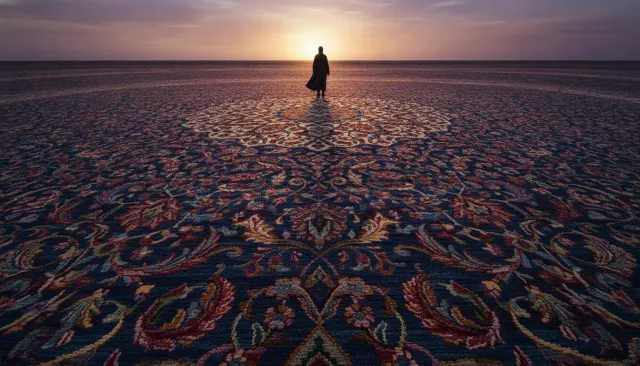 Middle Eastern ExtendedPersian Rug Medallion (Iran)
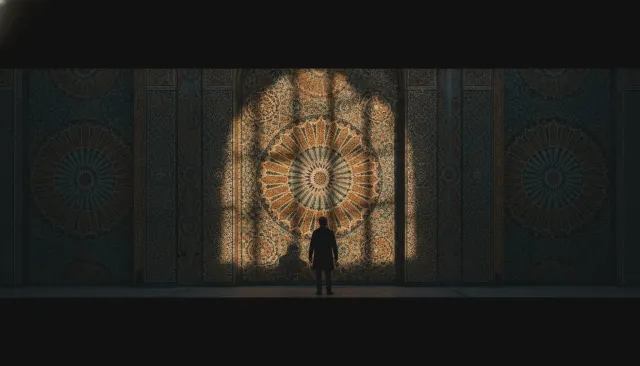 Middle Eastern North AfricanMoroccan Zellige Tile
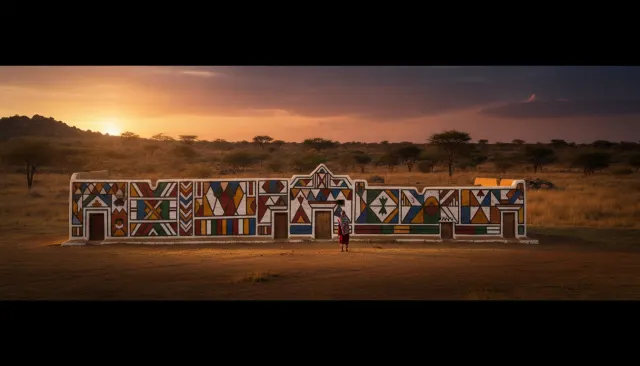 African ExtendedNdebele Mural Houses Extended (South Africa)
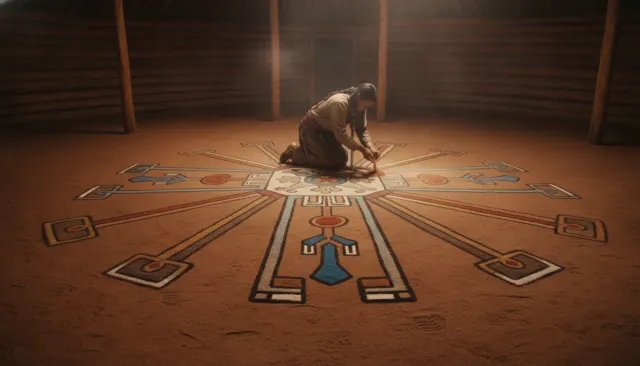 North American FolkNavajo Sand Painting Ritual (Dine)
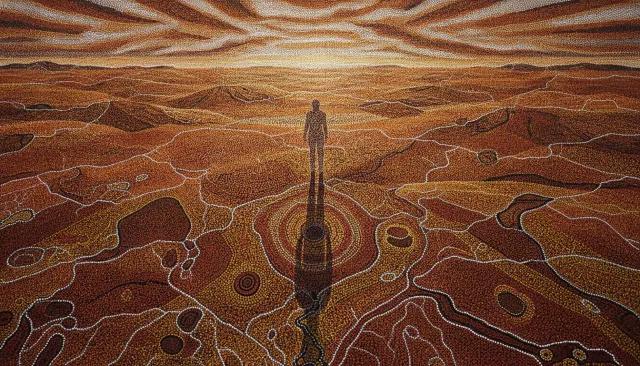 Indigenous Australia OceaniaAboriginal Dot Painting (Australia)