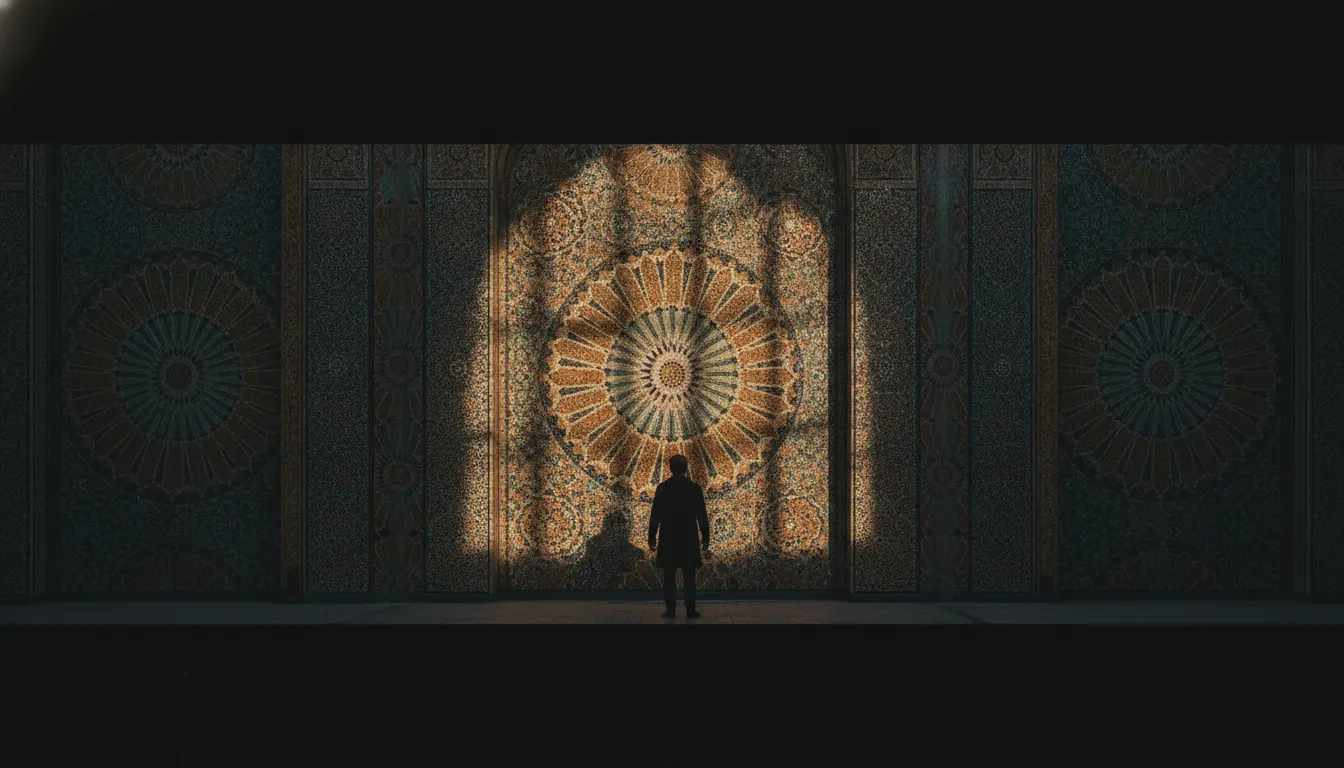
Ben Youssef Madrasa (Marrakech, 14th c. Marinid, restored 16th c.)
floor-to-cornice zellige covering
In the tradition of Moroccan zellige hand-cut mosaic tile. Hand-chipped polychrome ceramic tessellations covering fountains, riad walls, and palace floors.
The moves a human crew would use to get here. Cue applies them for you, and knowing their names is how you ask for a change.
cut terracotta tile pieces – squares, rhombuses, star points, and irregular fill pieces – set in geometric mosaic
point star (*khatam*) as primary pattern generator with interlacing strap-work ribbons
tone palette: turquoise, deep navy, saffron yellow, forest green, black, and white
cut piece variation – no two pieces machine-identical
down plaster-set assembly revealing the design only on completion (*naqsha* template method)
band border system framing the central geometric field in receding color bands
infinite non-repeating variation through girih tile division system
Zellige (زليج, from the Arabic zellij, 'small stone') is the art of hand-cutting glazed terracotta tiles into precise geometric shapes and assembling them face-down in plaster mortar to create complex mosaic surfaces. The tradition originated in the early Moorish period – 10th-century Fez is cited as the point of origin – and reached its architectural apotheosis in the Marinid, Saadian, and Alaouite dynasties (13th–17th centuries and continuing).
A zellige artisan (the maalem, or master craftsman) first forms terracotta slabs by hand, fires them in a wood kiln, and applies single-color lead silicate glazes before a second firing. The glazed tile (bejmat) is then cut by hand with a qaddoum (pointed hammer-chisel) into the required geometric shapes: squares, rhombuses, triangles, hexagons, five-pointed stars, elongated hexagons, and irregular 'ferqa' fill pieces. No two pieces are machine-cut; the slight irregularities in each piece create the characteristic 'shimmer' of a finished zellige panel.
Assembly follows a template (naqsha, pattern drawing) that encodes the symmetry group of the design – typically p4m, p6m, or p3m1 from the 17 possible wallpaper symmetry groups. The master reads the naqsha, places pieces face-down into damp plaster, and the finished mosaic is only revealed when the panel is flipped and grouted.
Zellige compositions are built on Islamic geometric principles: the six-point star, eight-point star (khatam), twelve-point star, and sixteen-point star serve as primary generators. Interlacing strap-work bands (tawriq) weave through star fields, creating the appearance of over-under ribbon. Girih tiles – the underlying polygonal division system used by medieval Islamic mathematicians – enable near-infinite variation without ever repeating. The zillij al-kabir (large zellige panel) covering a riad fountain or a mosque mihrab (prayer niche) may incorporate hundreds of thousands of individual cut pieces.
The classic Moroccan zellige palette includes turquoise (akhdar), deep navy (kahla), saffron yellow (hamra safra), white (bida), black (kahla), and forest green. The Fez school favors cooler turquoise and navy; the Marrakech school adds terracotta-red and ivory. Major surviving examples include the Ben Youssef Madrasa (Marrakech, 14th-century Marinid foundation, restored 16th century), the Bou Inania Madrasa (Fez, 1351–56), the Saadian Tombs (Marrakech, 1578), and the Hassan II Mosque (Casablanca, completed 1993) – the largest zellige installation in the world, created by over 6,000 maalems.
floor-to-cornice zellige covering
Marinid-era zellige courtyard, considered the technical standard
Saadian dynasty mausoleum with elaborate zellige floor panels
largest zellige installation in the world, 6,000+ artisans
late 19th-century zellige and stucco ensemble
collection of historical Moroccan ceramics and zellige samples
A Look is not a filter. It is a set of stored decisions the pipeline reads before it makes a single frame, so two videos in the same Look actually match.
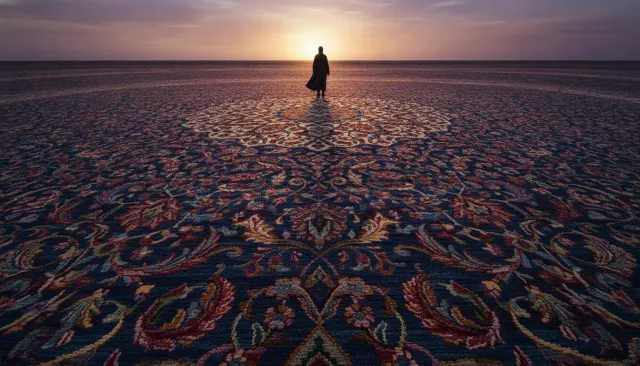 Middle Eastern ExtendedPersian Rug Medallion (Iran)
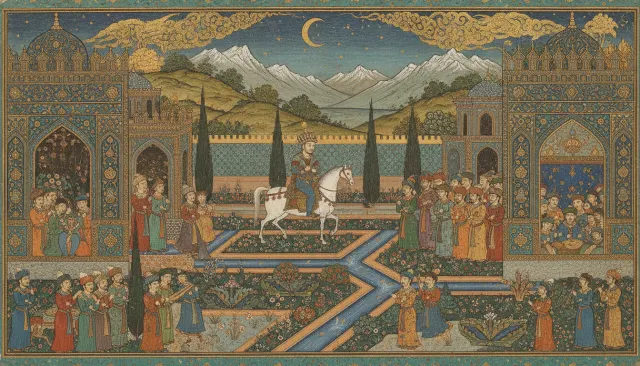 Middle Eastern North AfricanPersian Miniature Illuminated
 East AsianJapanese Shibori Indigo Dye
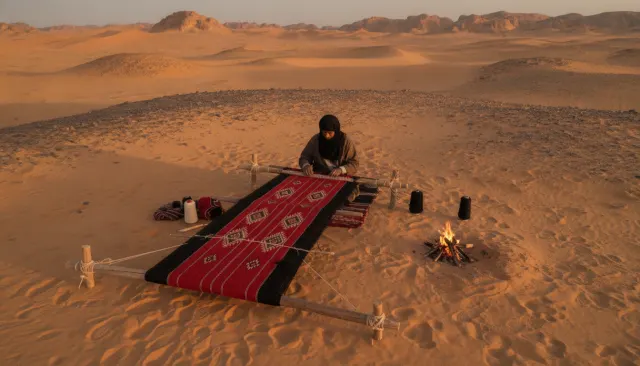 Middle Eastern ExtendedJordanian Bedouin TextileAsian ExtendedMongolian Traditional Carpet Pattern
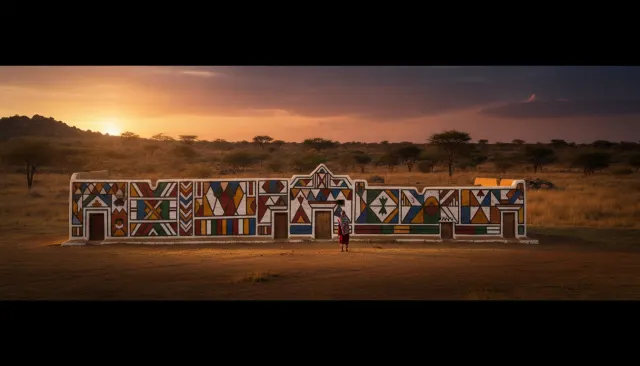 African ExtendedNdebele Mural Houses Extended (South Africa)