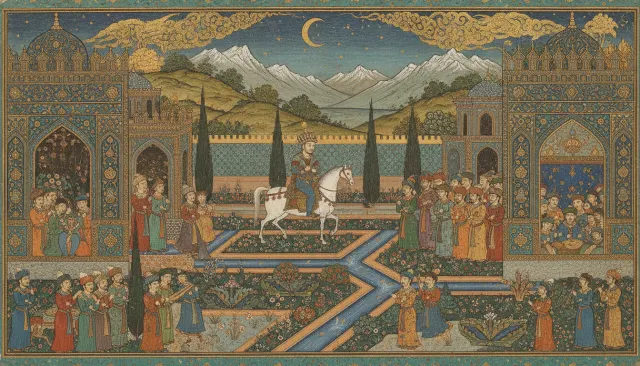
National Museum of Mongolia (Ulaanbaatar)
permanent collection of Mongolian carpet, felt, and textile work
Inspired by Mongolian felt and wool carpet tradition of the steppe. Khas symbol, ulzii endless knot, and stylized cloud motifs hand-stitched into thick wool ger floor coverings.
The moves a human crew would use to get here. Cue applies them for you, and knowing their names is how you ask for a change.
medallion corners and multi-band ornamental border
scroll field – five-clawed imperial or tribal scaled variants
scroll (*khorlo*) all-over repeating comma-S fields in contrasting colors
deep madder red, indigo blue, saffron gold, natural cream, and brown-black
Mongolian textile art spans felt-making (isegei), needlework (ujguur), and woven carpet traditions that reflect both nomadic steppe life and the cultural exchanges generated by the vast Mongol Empire (13th–14th centuries) and subsequent interactions with Chinese, Tibetan, and Central Asian aesthetic systems.
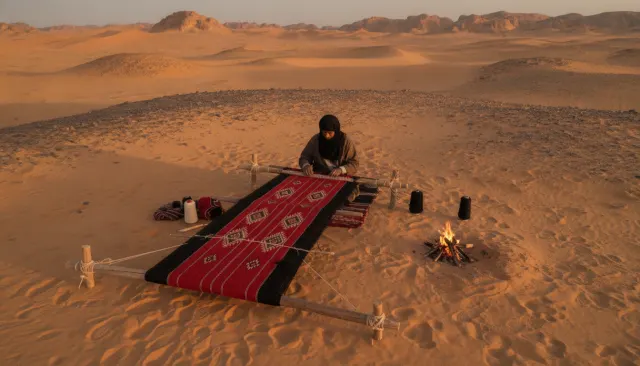
The primary domestic textile in Mongolian nomadic life is felt (isegei), used for ger (yurt) walls, floor coverings, and storage bags. Felt is made by rolling and beating wet wool into dense sheets, often with cut-appliqué or mosaic-felt technique (khatanbaatar) inlaying contrasting wool colors to form geometric patterns. Woven carpets (shireg) occupy the ger's most honored spaces – the floor before the northern khoimor altar wall, and beneath seating for honored guests.
The dominant pattern vocabulary bridges Mongolian, Tibetan Buddhist, and Chinese imperial traditions. The dragon (luu) appears as a five-clawed imperial dragon in cloud-scroll fields on court-quality textiles, and as a simpler scaled serpent form in tribal work. Cloud scrolls (khorlo) – the Buddhist wheel of dharma stylized into an S-curve or interlocking comma form – create all-over repeating fields. Soyombo (the national symbol) – a geometric stack of flame, sun, moon, fire, earth, water, and yin-yang elements – appears on ceremonial textiles. Eight auspicious Buddhist symbols (naiman takhil): the endless knot, lotus, conch, umbrella, golden fish pair, treasure vase, dharma wheel, and victory banner appear in temple carpets.
Traditional Mongolian textile palette centers on undyed natural wool whites and creams, deep madder red, saffron gold, indigo blue, and natural brown-black. Ceremonial and court-quality work adds gilt thread and silk supplementary weft. Compositions favor central medallion layouts with quarter-medallion corner fills and a multi-band border – a format shared with Persian and Central Asian carpet traditions but rendered with distinctly flatter, more graphic line work. Tribal felt work uses simpler bold stripe and zigzag bands.
Mongolian cashmere and wool products have brought textile heritage into international luxury markets. Designers including Mongolian Ger Folk Arts cooperatives and the state Gobi brand recontextualize traditional patterns for export.
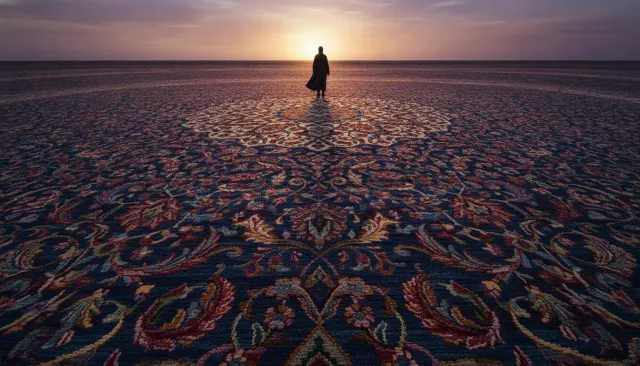
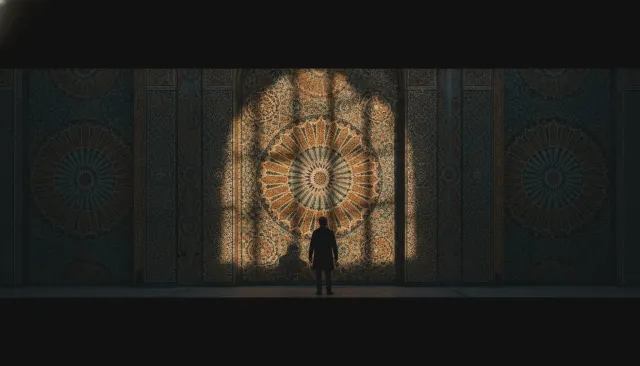
For video and graphic applications, Mongolian carpet patterns translate as repeating ornamental backgrounds, ceremonial title card borders, or richly textured overlays for heritage or nature content set on the Mongolian steppe.
permanent collection of Mongolian carpet, felt, and textile work
imperial-quality Mongolian carpets and ceremonial textiles
19th c. court-quality pile carpet, Zanabazar Museum of Fine Arts, Ulaanbaatar
state wool and cashmere brand with heritage pattern archives, Ulaanbaatar
living artisan tradition, contemporary isegei felt production
A Look is not a filter. It is a set of stored decisions the pipeline reads before it makes a single frame, so two videos in the same Look actually match.