EUROPEAN EXTENDED · 1400S · ITALY
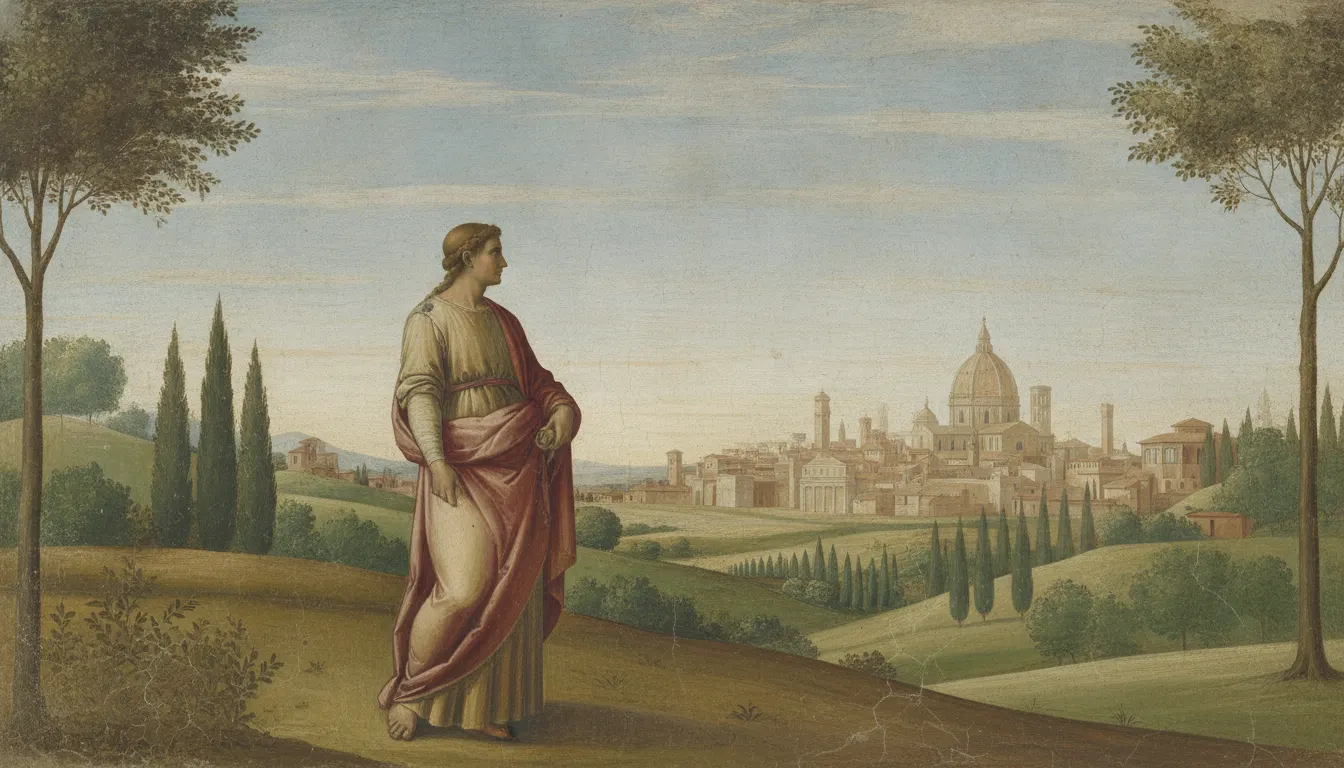
Italian Renaissance Fresco
Inspired by Italian Renaissance fresco tradition from Florence and Rome, in the lineage of Giotto, Masaccio, and the Sistine Chapel. Pigment painted into wet plaster, classical figural composition, soft chiaroscuro.
frescorenaissanceitalianclassical
LUT renaissance-fresco-plaster
WHEN TO USE
- Italian cultural heritage, Vatican and museum tourism, and European Renaissance art content
- High-prestige institutional content -- universities, galleries, cultural foundations -- referencing the apex of Western painting tradition
- Religious content (Catholic, broadly Christian) drawing on the visual grandeur of Rome and Tuscany
- Film and video content with historical epic or Renaissance drama settings
- Luxury brand content invoking European cultural inheritance and supreme craft mastery
- Documentary and educational content about the Renaissance, Catholic Church history, or Western art history
WHEN NOT TO USE
- Content with no genuine connection to Italian or broader European cultural heritage where the reference would be incongruous
- Minimalist or contemporary design contexts where the monumental figurative complexity would be tonally overwhelming
- Digital-native, fast-media content formats that cannot hold the large-scale compositional complexity frescoes require
- Brand contexts where Christian religious iconography would be inappropriate for the target audience
SIGNATURE TECHNIQUES
How the look is made.
The moves a human crew would use to get here. Cue applies them for you, and knowing their names is how you ask for a change.
- 01Giornata division
daily plaster sections with visible seam lines marking each day's painted area
- 02Cartoon transfer
full-scale preparatory drawing transferred by incision or spolvero charcoal-pouncing
- 03Lime
stable mineral pigments only: earth ochres, iron reds, malachite green, lapis ultramarine, lime white
- 04Intonaco texture
slightly rough, mineral plaster ground visible in raking-light photographs of finished surfaces
- 05Giotto's psychological gesture language
hands, faces, and body posture carrying emotional narrative weight
- 06Michelangelo's foreshortening and torsion
extreme anatomical contortion establishing dynamic spatial energy
- 07Architectural illusionism
painted architectural frames (quadratura) extending real space into fictive space
HISTORY & CONTEXT
Where it comes from.
Italian Renaissance Fresco
Fresko (from Italian affresco, meaning 'fresh') is one of the most technically demanding and historically significant painting media in Western art. Buon fresco (true fresco) is executed by applying mineral pigments suspended in water directly onto freshly laid wet lime plaster (arriccio and intonaco). As the plaster carbonates (dries), the pigment is chemically bonded into the wall surface itself, producing images of extraordinary durability -- the Arena Chapel frescoes (1304-06) have survived seven centuries.
Giotto and the Arena Chapel
Giotto di Bondone (c. 1267-1337) is the foundational figure of the Italian painted tradition that leads to the Renaissance. His fresco cycle in the Arena (Scrovegni) Chapel, Padua (1304-06), is among the most important works of art in Western history. Commissioned by Enrico Scrovegni as an act of penance for his father's usury, the cycle covers the entire barrel-vaulted interior with 38 narrative panels depicting the lives of Joachim and Anna (Mary's parents), the life of the Virgin, and the Passion, Death, and Resurrection of Christ, plus a large Last Judgment on the west wall.
Giotto's revolution was the depiction of human figures with genuine weight, psychological expressiveness, and spatial coherence -- a decisive break from the flat, gold-ground Byzantine conventions of his immediate predecessors. His figures stand on ground planes, their drapery reveals body form beneath, and their gestures communicate emotional states rather than theological symbols.
The Sistine Chapel Ceiling
Michelangelo Buonarroti (1475-1564) was commissioned by Pope Julius II to paint the Sistine Chapel ceiling (1508-1512). Working largely alone on scaffolding (the story of lying on his back is largely mythologized -- he stood bent backward), he created approximately 500 square meters of painted vault surface. The central panels depict nine scenes from Genesis, flanked by Prophets and Sibyls, with smaller figures (ignudi, athletic nude youths) and bronze-colored medallions. The Creation of Adam (c. 1511) -- God reaching toward the languid Adam, fingers nearly touching -- is among the most reproduced images in world art. Michelangelo then painted The Last Judgment on the altar wall (1534-41), commissioned by Pope Clement VII and completed under Paul III.
Technique and Process
Buon fresco preparation divides the wall into giornate (day's work sections) -- the painter could only paint as much as the plaster could receive before it dried and set (typically 6-8 hours). Lines marking each day's work boundary are often visible under raking light. The cartoon (preparatory drawing, actual size) was transferred by incision (incisione diretta) or by pricking and pouncing (spolvero) charcoal powder through the cartoon holes. Pigment palette is limited to lime-stable minerals: earth ochres, red iron oxide, copper green (malachite), ultramarine (lapis lazuli), and lime white.
NOTABLE WORKS
Where you have seen it.
Michelangelo, Sistine Chapel ceiling, Vatican (1508-12) -- Creation of Adam, 500 sq meters, most visited painted surface in the world
Michelangelo, Last Judgment, Sistine Chapel altar wall (1534-41) -- papal commission, 391 figures
Masaccio, Brancacci Chapel frescoes, Florence (1424-28) -- Expulsion from Eden, defining proto-Renaissance space and form
Raphael, Stanza della Segnatura, Vatican (1508-11) -- School of Athens, combining portrait and ideal philosophy
Piero della Francesca, Legend of the True Cross, Arezzo (1452-66) -- mathematical space, color, and light at fresco's height
THE RECIPE
The exact knobs
the renderer turns.
A Look is not a filter. It is a set of stored decisions the pipeline reads before it makes a single frame, so two videos in the same Look actually match.
SettingValue
GradeColour LUT applied to every frame
renaissance-fresco-plasterTransitionHow one shot becomes the next
soft cuts · 400ms · ease-in-outKen BurnsCamera move applied to stills
Slow push · 0.025 · centerTypographyDisplay / body / mono pairing
Source Serif Pro · Lora · JetBrains MonoMusic moodWhat the bed under the voice sounds like
renaissance-lute · sacred-polyphonyPrompt suffixAppended to every shot prompt in this Look
inspired by Italian Renaissance fresco tradition Florence Rome, pigment painted into wet plaster, classical figural composition, soft chiaroscuro, Giotto Masaccio Michelangelo lineagePALETTE
Primary
#C9956A
Secondary
#7A4A2E
Accent
#1A4A6E
Text/Light
#1F1208
Text/Dark
#F5E0C8
BG 900
#1A140A
BG 800
#2A2018
RELATED LOOKS
Next to it on the shelf.
Your first cut
is on us.
+ New videoFree plan · no card · 1080p export