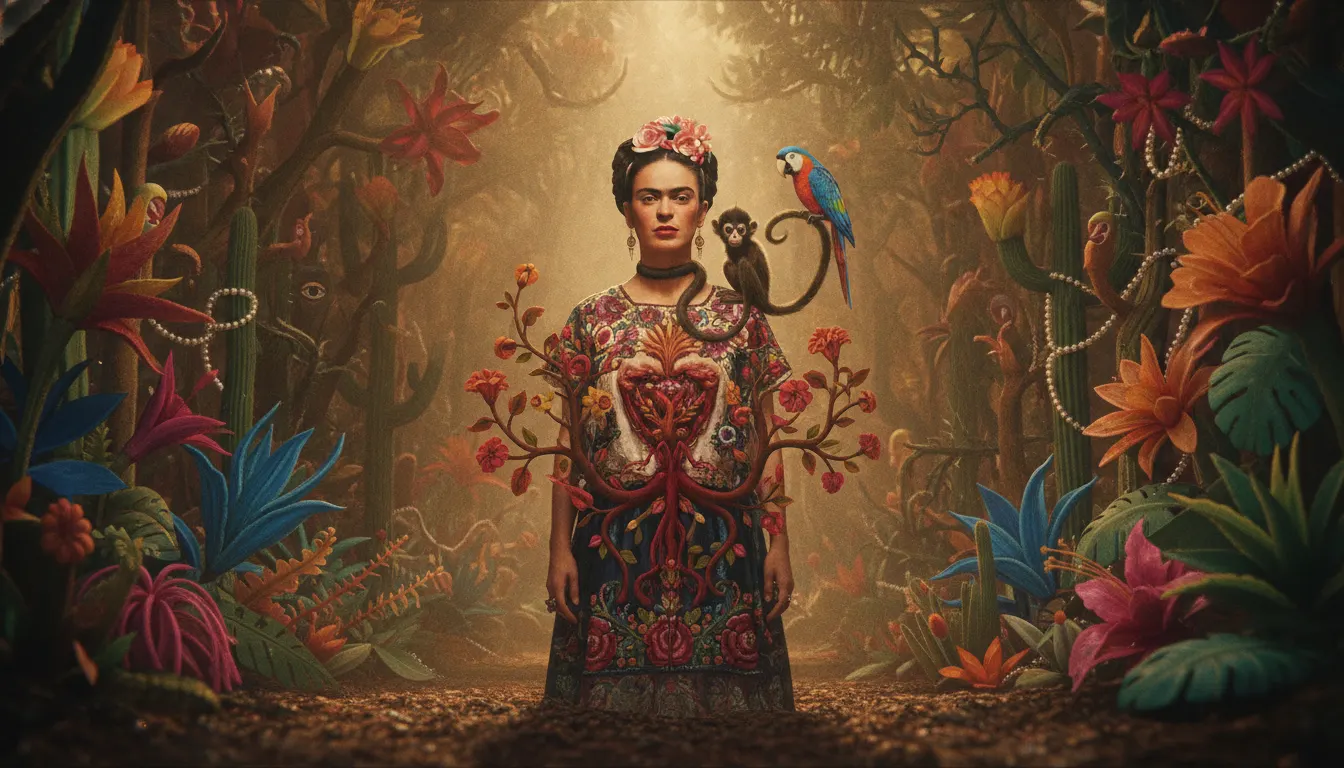
The Two Fridas -- 173x173 cm, largest canvas, now at Museo de Arte Moderno, Mexico City
1939
In the tradition of Frida Kahlo Mexican folk surrealism. Direct unflinching self-portrait with tropical foliage, monkey and parrot companions, symbolic wound and bloom.
The moves a human crew would use to get here. Cue applies them for you, and knowing their names is how you ask for a change.
- deliberate refusal of Eurocentric femininity norms
embroidered Oaxacan huipil blouse, floor-length skirt, elaborate headdress with braided hair
Columbian jewelry: jade, obsidian, Mixtec gold, coral, and bone necklaces and earrings
- jungle leaves, flowers, and vines referencing La Casa Azul garden
heart or visceral anatomical imagery revealing interior psychological and bodily experience
format oil on masonite or metal with fine, tight brushwork and vivid saturated palette
hummingbirds (luck), monkeys (pets and alter-egos), deer, and black cats as personal emblems
Frida Kahlo (born Magdalena Carmen Frieda Kahlo Calderon, July 6, 1907, Coyoacan, Mexico City; died July 13, 1954, Coyoacan) is among the 20th century's most recognizable visual artists. Working largely in small-format oil on canvas or masonite, she produced 55 self-portraits among roughly 143 paintings, weaving personal mythology, bodily autobiography, Mexican folk tradition, and Latin American surrealism into a uniquely compelling visual idiom.
Kahlo's self-portraiture is built on consistent visual elements that function almost like a personal heraldic system. The unibrow and faint mustache were consciously preserved and emphasized -- she described her face as her subject because she was the person she knew best. Traditional Tehuana dress from the Tehuantepec Isthmus of Oaxaca -- embroidered blouses (huipiles), floor-length skirts, elaborate headdresses -- frames nearly every self-portrait. This was a deliberate political statement: Tehuana society is matrilineal, and wearing its dress was an assertion of indigenous Mexican identity over European colonialism.
Her jewelry is Pre-Columbian and Oaxacan: jade and obsidian necklaces, Mixtec gold earrings, coral and bone beads. Hair is arranged in complex braided, coiled, and flower-adorned structures. When she painted herself with cropped hair (After the Divorce: What I Cut My Hair, 1940) it was a devastated political act following her separation from Diego Rivera.
The Two Fridas (1939) is her largest canvas (173 x 173 cm), painted immediately after her divorce from Rivera: two seated Fridas, one in European white lace, one in Tehuana red, their hearts exposed and connected by a single artery that the European Frida severs with surgical scissors. It was the centerpiece of the 1940 International Exhibition of Surrealism in Mexico City.
Self-Portrait with Thorn Necklace and Hummingbird (1940) shows a hummingbird (good luck amulet), a black cat, and a monkey against a jungle-leaf background -- the dense botanical backdrop appears in over a dozen of her works, referencing the garden of La Casa Azul (Blue House) where she spent most of her life.
The Broken Column (1944) rendered her spine as a crumbling Ionic column following her spinal fusion surgery, her body bound in a medical corset, tears falling in a barren landscape.
Kahlo's visual language has become one of the most widely circulated in contemporary popular culture. Her color sensibility -- deep jungle green, crimson, gold, terracotta, cobalt blue against brown skin -- is saturated and warm. The combination of intimate psychological disclosure with elaborate folk-costume and Pre-Columbian symbolism is her singular contribution.
1939
1940
1944
1940
1936
1938
1943
A Look is not a filter. It is a set of stored decisions the pipeline reads before it makes a single frame, so two videos in the same Look actually match.
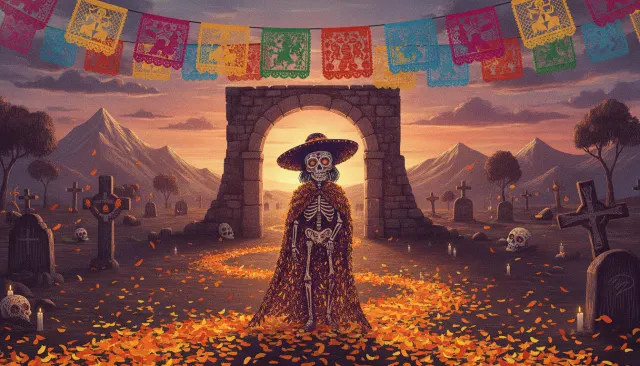 Latin AmericanDay of the Dead Sugar Skull (Mexico)
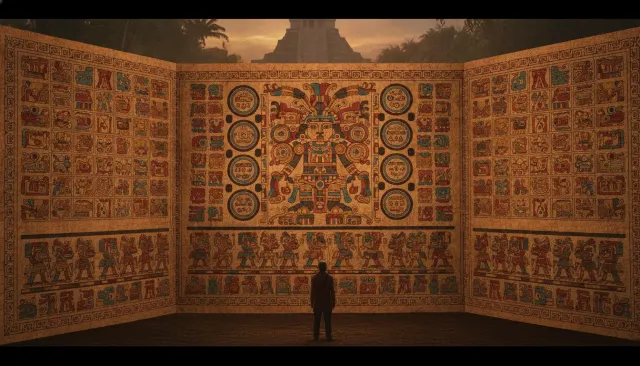 Historical Illuminated ExtendedAztec Mesoamerican Codex Symbol
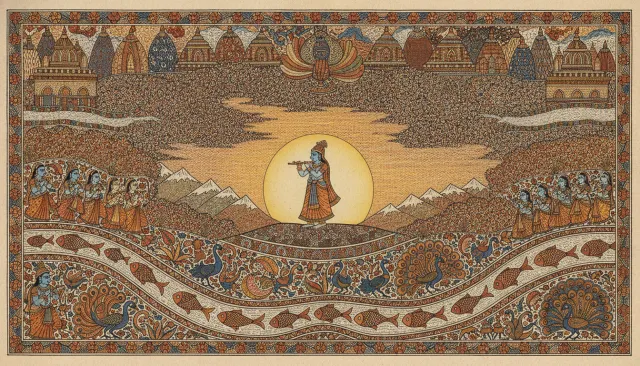 South Southeast AsianMadhubani Mithila Painting (India)
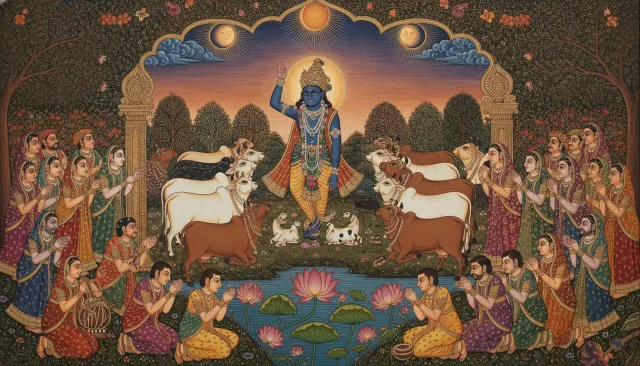 South Southeast AsianPichhwai Krishna Painting (Rajasthan)
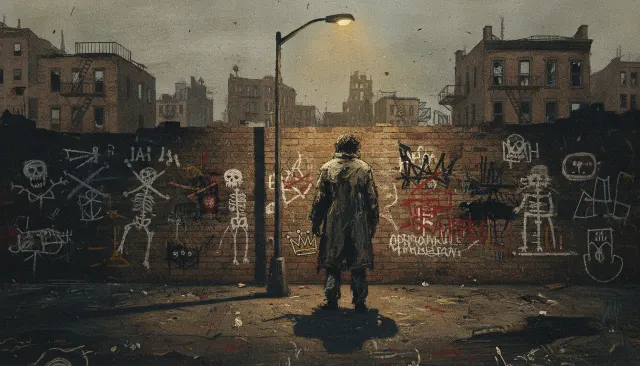 Pop And Street ArtBasquiat Graffiti Neo-Expressionism
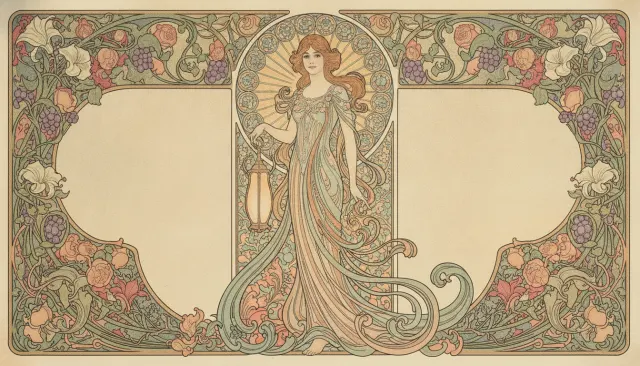 Art Movement ModernArt Nouveau Mucha