AFRICAN EXTENDED · TRADITIONAL · ETHIOPIA
Ethiopian Orthodox Cross Tradition
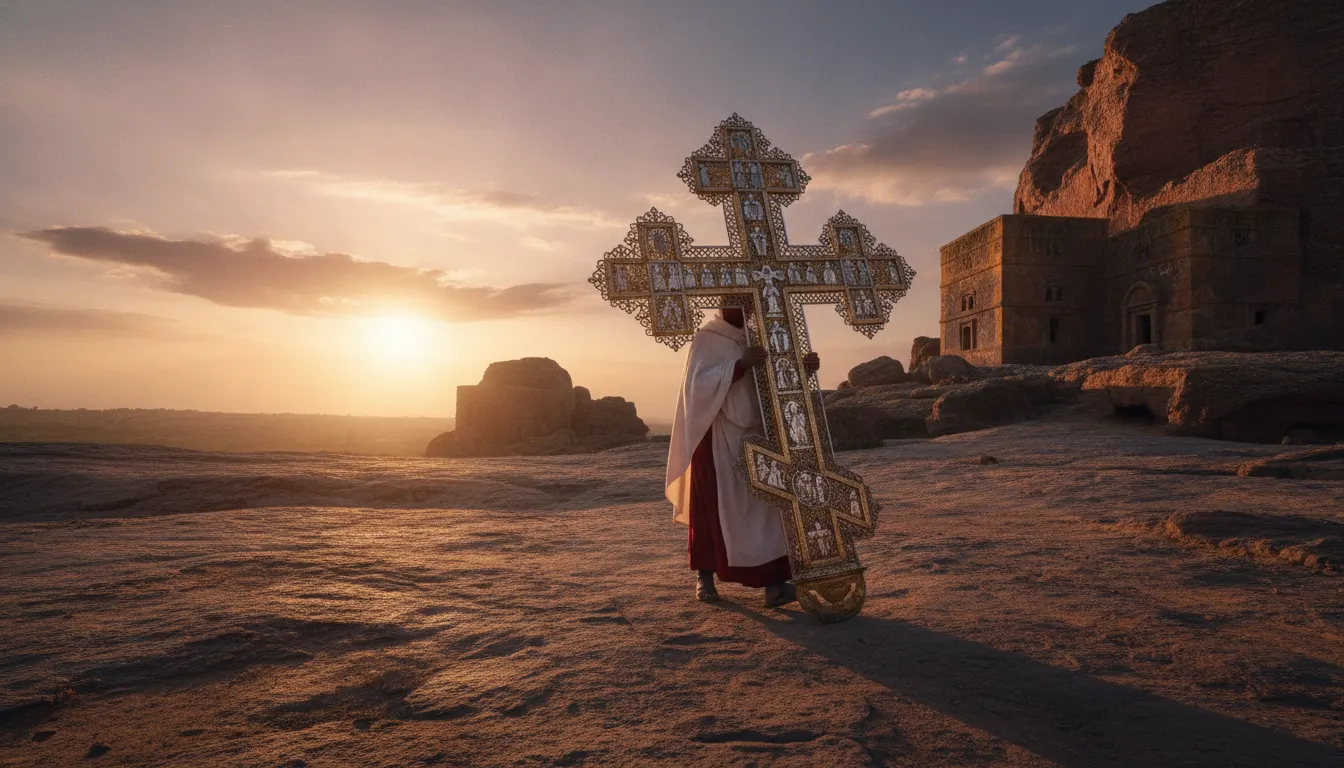
In the tradition of Ethiopian Orthodox lalibela and Aksum metalwork crosses. Intricate filigree silver and gilded brass, interlaced cross-and-square geometry, hand-engraved devotional iconography.
ethiopianorthodoxfiligreedevotional
LUT ethiopian-gilded-cross
WHEN TO USE
- Ethiopian Orthodox cultural events, church celebrations, and the Meskel (Finding of the True Cross) festival
- African heritage and diaspora content honoring Ethiopian cultural and religious identity
- Jewelry, metalwork, and craft brand content referencing ancient African artisanship
- Documentary and educational content about early Christianity, African church history, or Aksumite civilization
- Spiritual and devotional content for Orthodox Christian communities of Ethiopian heritage
- Luxury design content where intricate geometric metalwork signals exceptional craft quality
WHEN NOT TO USE
- Generic 'African' branding that collapses a specific, ancient, regional tradition into a continent-wide visual shorthand
- Secular commercial content with no connection to Ethiopian culture or Christian tradition where the sacred symbolism becomes decoration
- Minimalist design contexts where the dense interlace complexity would be visually overwhelming
- Content that conflates Ethiopian Orthodox Christianity with other African religious traditions -- the specificity matters
SIGNATURE TECHNIQUES
How the look is made.
The moves a human crew would use to get here. Cue applies them for you, and knowing their names is how you ask for a change.
- 01Dense interlaced lattice filling cross arms
- deriving from Aksumite architectural timber-lace patterns
- 02Flared or split arm terminals (patonce/fleury) multiplying cross forms within cross forms
- 03Negative
space secondary crosses embedded in the positive-space lattice
- 04Silver and brass repousse metalwork texture, often with granulation detailing
- 05Earth
pigment palette for mural and manuscript work: ochre, iron red, lamp black, and mineral blue
- 06Frontal, hieratic figure style in manuscript illuminations referencing Byzantine icon conventions
- 07Handled processional form (meskel) with tapered tang, distinguishing Ethiopian crosses from Western pendant forms
HISTORY & CONTEXT
Where it comes from.
Ethiopian Cross Tradition
Ethiopia has one of the world's oldest continuous Christian traditions. The Ethiopian Orthodox Tewahedo Church was founded in the 4th century CE when King Ezana of Aksum converted -- largely through the influence of the monk Frumentius, consecrated as the first Bishop of Aksum by Athanasius of Alexandria around 328 CE. From this early adoption flows a visual tradition of cross design unlike any other in Christendom.
Cross Typology and Design
Ethiopian crosses come in several distinct forms, each with its own history and regional variation. Processional crosses (meskel) are large-handled crosses carried on poles during liturgical processions; the largest can exceed 60 cm in height. The Lalibela cross, carved from a single block of olive wood (c. 12th century CE), is among the most venerated objects in Ethiopian Orthodoxy and is said to have been given by angels. Hand crosses (mateb) are smaller, held by priests during blessings. Metal crosses -- typically cast in brass or silver, or worked in repousse gold -- show an extraordinary interlace geometry that combines two distinct traditions: the lattice-work knotting inherited from pre-Christian Aksumite decorative arts, and the theological symbolism of the Christian cross form.
Visual Geometry
The distinctive feature of Ethiopian crosses is the dense interlaced lattice that fills the arms and center. The pattern is not simply ornamental -- it derives from Aksumite architectural decoration (the distinctive recessed timber-laced stone construction visible at Aksum stelae), and its endless-knot quality symbolizes eternity, the unity of the Trinity, and the binding of the faithful. Negative spaces form secondary cross shapes. The arms typically terminate in flared or split ends (patonce or fleury derivations), further multiplying cross forms within the composition.
Illuminated Manuscripts
Alongside metalwork, Ethiopian illustrated manuscripts are a major carrier of this visual tradition. The Garima Gospels (c. 330-650 CE, Abba Garima Monastery) are among the oldest surviving illustrated Christian manuscripts in the world. The Kebra Nagast (Glory of Kings, 14th-century compilation) and countless church prayer books feature dense marginal decoration in red, yellow, and black, using the same interlace grammar as the metalwork crosses.
Color and Material
Silver and gold metalwork dominates. Polychrome lacquered crosses add red, green, and black. Church murals use an earth-pigment palette -- ochre, iron red, black, and occasional lapis-derived blue -- with the flat, frontal figure style of Byzantine-influenced Orthodox iconography.
NOTABLE WORKS
Where you have seen it.
Garima Gospels (c. 330-650 CE) -- Abba Garima Monastery, among the oldest illustrated Christian manuscripts in existence
Rock-hewn churches of Lalibela (c. 1181-1221 CE) -- 11 monolithic churches carved from basalt, UNESCO World Heritage
Aksum stelae (4th century CE) -- Aksumite obelisks with recessed interlace architectural decoration ancestral to cross design
St. Mary of Zion Church, Aksum -- historical repository of the Ark of the Covenant, center of Ethiopian cross veneration
Kebra Nagast manuscript illuminations (14th century compiled) -- densely decorated scriptural and epic text
THE RECIPE
The exact knobs
the renderer turns.
A Look is not a filter. It is a set of stored decisions the pipeline reads before it makes a single frame, so two videos in the same Look actually match.
SettingValue
GradeColour LUT applied to every frame
ethiopian-gilded-crossTransitionHow one shot becomes the next
soft cuts · 340ms · ease-in-outKen BurnsCamera move applied to stills
Slow push · 0.025 · centerTypographyDisplay / body / mono pairing
Source Serif Pro · Lora · JetBrains MonoMusic moodWhat the bed under the voice sounds like
ethiopian-masenqo · orthodox-chantPrompt suffixAppended to every shot prompt in this Look
inspired by Ethiopian Orthodox Lalibela Aksum processional cross tradition, intricate filigree silver and gilded brass, interlaced cross-and-square geometry, hand-engraved devotional iconographyPALETTE
Primary
#C9A24A
Secondary
#3A2A1A
Accent
#7A1F0A
Text/Light
#1A1208
Text/Dark
#F2DCA8
BG 900
#0F0A05
BG 800
#1F1810
RELATED LOOKS
Next to it on the shelf.
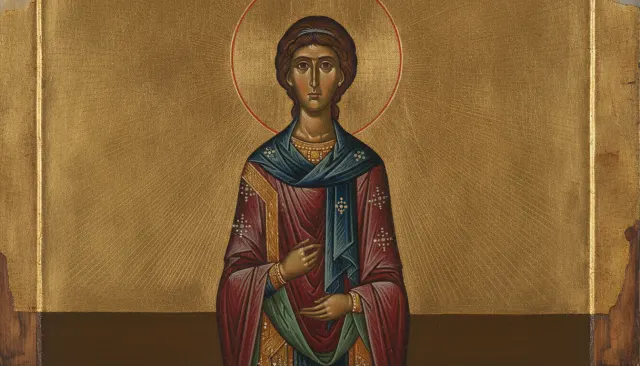 Eastern HistoricalByzantine Icon Gold Leaf
 European ExtendedGreek Orthodox Icon (Gold Leaf)
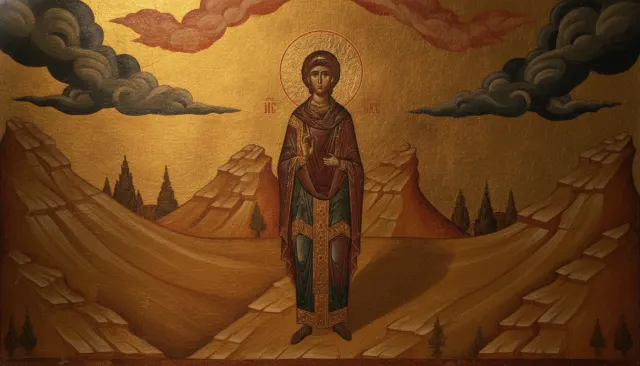 European FolkGreek Orthodox Icon
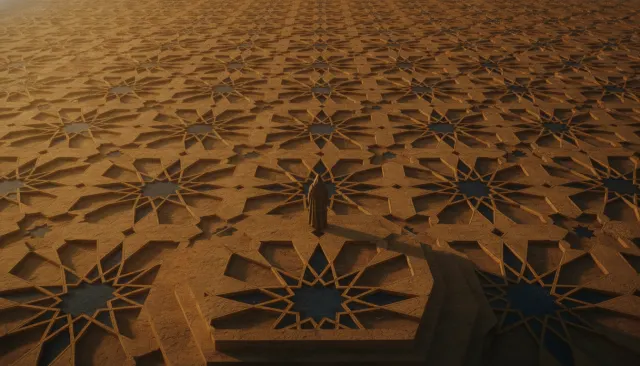 Middle Eastern North AfricanIslamic Geometric Girih Pattern
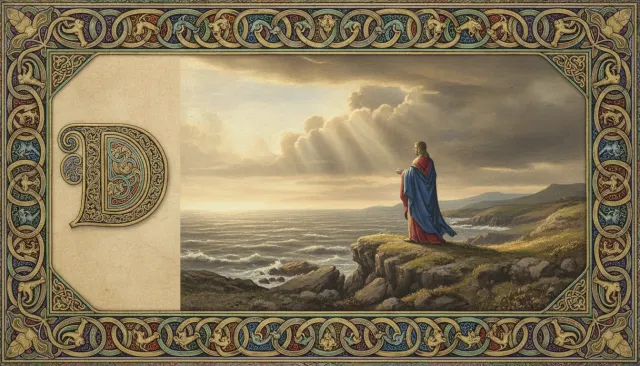 European ExtendedIrish Celtic Knot Illuminated Manuscript
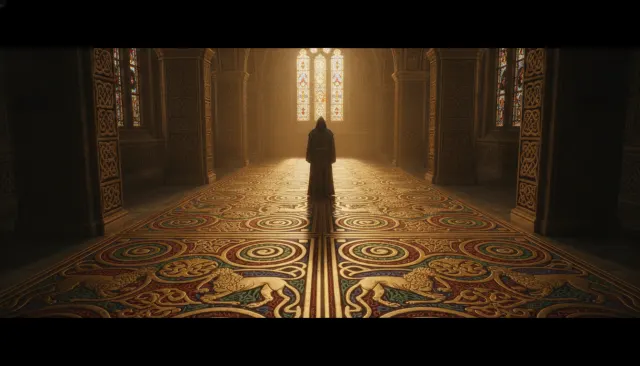 Historical Illuminated ExtendedBook of Kells Celtic Illuminated
Your first cut
is on us.
+ New videoFree plan · no card · 1080p export