Ku Shulan (1920-2004)
2009
Shaanxi paper cuts, subject of documentary *To Cut Is to Know* , international museum collections
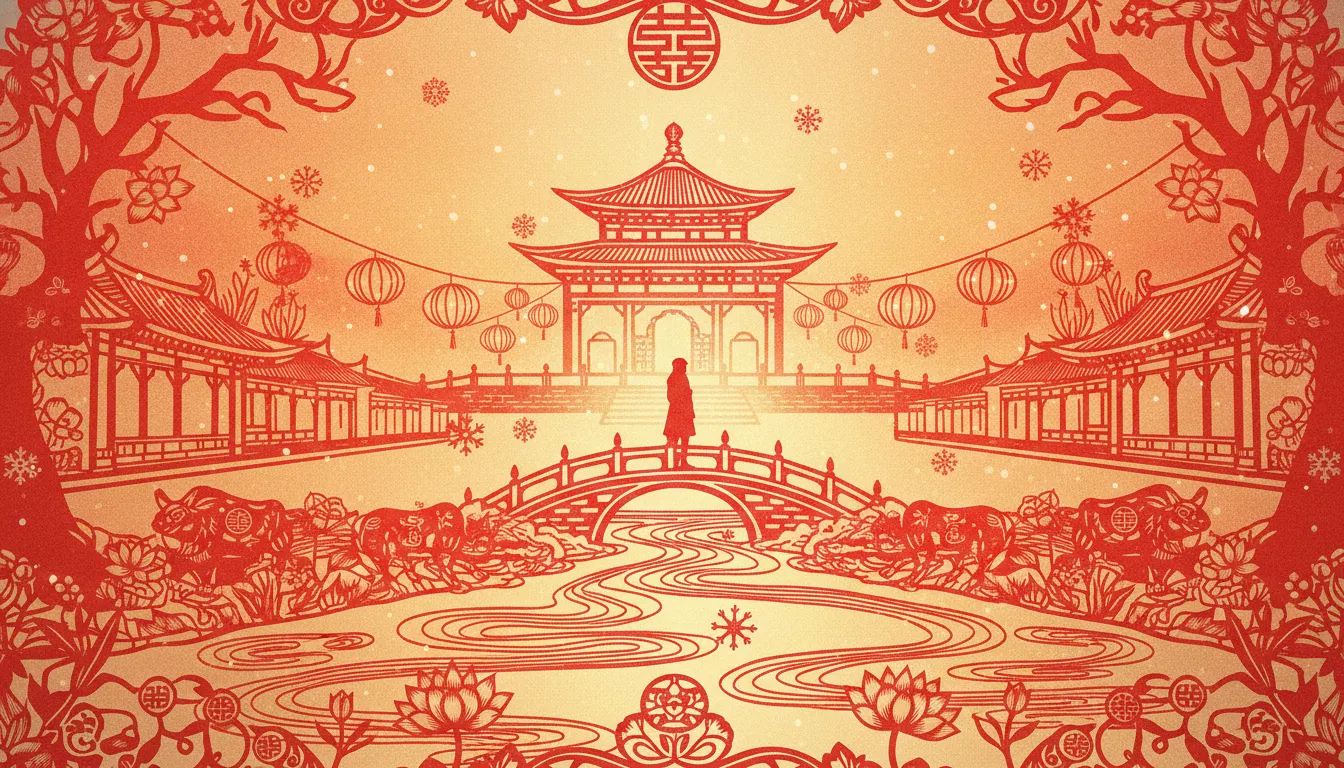
In the tradition of Chinese jianzhi folk paper-cutting. Intricate symmetrical red paper-cut of zodiac animal, lotus, double happiness for new year festival.
The moves a human crew would use to get here. Cue applies them for you, and knowing their names is how you ask for a change.
contrast red paper silhouette on white ground, or white on red – positive-negative balance equally considered
every element connects to every other element to survive the cutting process
*fu* (fortune), *shuangxi* (double happiness), *shou* (longevity)
level work, requiring surgical precision
In the tradition of Chinese jianzhi (literally 'cut paper') – a craft practiced across China for over 1,500 years – this look draws on one of the world's most distinctive and technically demanding paper arts: the transformation of a single sheet of thin paper into a complex interlocking silhouette through scissors, knife, and extraordinary patience.
The earliest surviving paper cuts date to the Northern and Southern Dynasties period (386-589 CE), when they were found in Xinjiang tombs. However, the practical tradition is likely older: paper itself was invented around the 1st century CE, and cutting and folding paper for decorative use probably followed shortly after.
Jianzhi is practiced throughout China but has particularly strong regional identities: Shanxi and Shaanxi provinces in the northwest are known for bold, simple geometric and figurative cuts; Guangdong province in the south for more naturalistic multicolored cuts (caise jianzhi); and Hebei for extremely fine-line work in the imperial court style. Each New Year (Chun Jie) brings a wave of new paper cuts: windows are freshly decorated with auspicious symbols, and the preparations are as much a ritual as the festival itself.
The most iconic subject matter is organized around auspicious meaning: fish (yu) symbolize abundance (a homophone); the double happiness character (shuangxi) adorns wedding paper cuts; the character for fortune (fu), often displayed upside-down (representing fortune 'arriving'), is ubiquitous at New Year; and the twelve animals of the Chinese zodiac cycle through annual production.
Paper-cut master artists have elevated the form to fine art: Cao Xiaomei and Liu Jiming from Hebei, Master Chen Wanhua from Shaanxi, and the late Ku Shulan (1920-2004) from Shaanxi, who was the subject of an award-winning documentary and whose work is held in international museum collections.
Jianzhi operates in high-contrast silhouette: typically red paper on white ground (or the reverse), with occasional multicolored variants. The technical constraint of the medium – every element must remain connected to every other element – forces a distinctive interlocking composition in which positive and negative space are equally designed. Borders, interior cutwork, and fine-line details within forms create the characteristic lacy complexity.
2009
Shaanxi paper cuts, subject of documentary *To Cut Is to Know* , international museum collections
Hebei court-style fine-line jianzhi, National Arts and Crafts Master designation
Shaanxi bold figurative cuts, China Arts and Crafts Museum collection
earliest surviving examples, Xinjiang Archaeological Museum
Chinese paper-cutting registered 2009
historical and contemporary Chinese paper-cut collection
A Look is not a filter. It is a set of stored decisions the pipeline reads before it makes a single frame, so two videos in the same Look actually match.