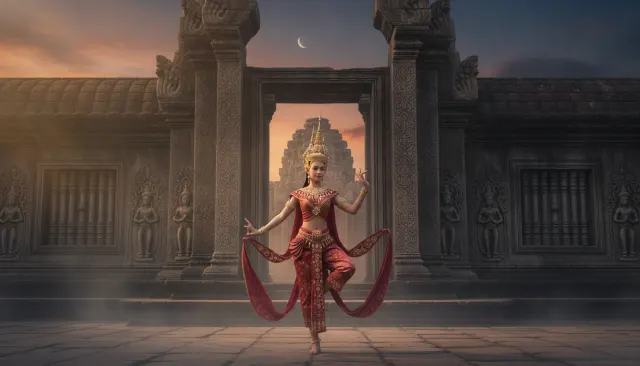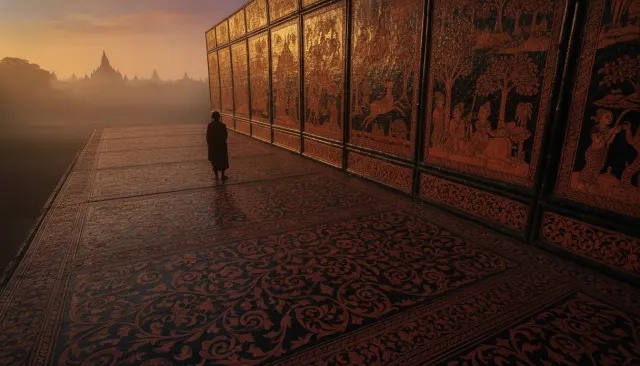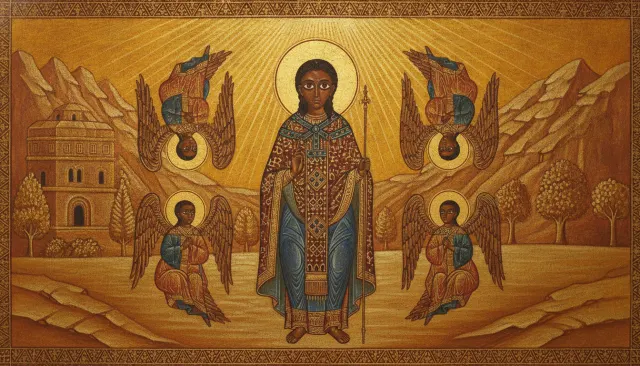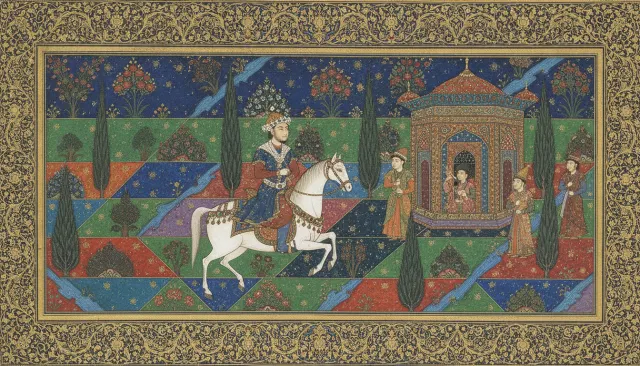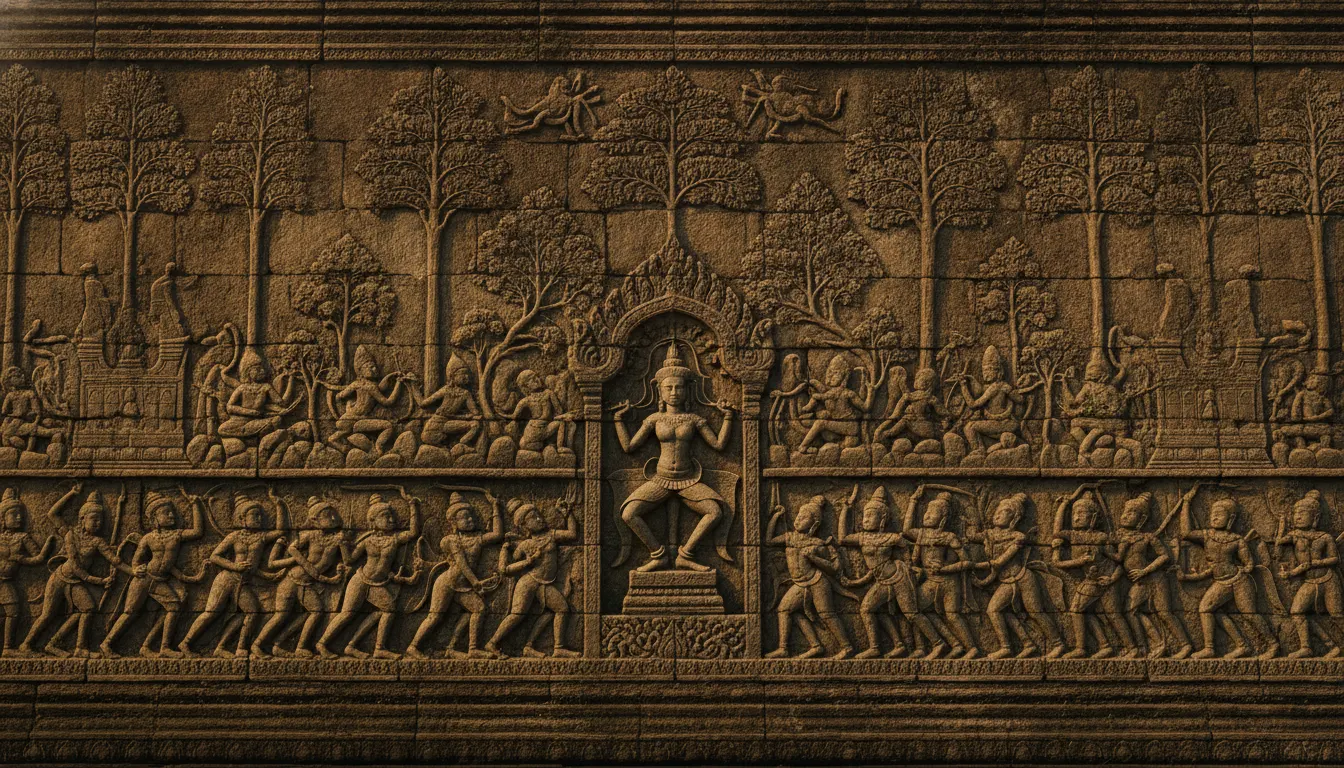
Angkor Wat bas-relief galleries (1113-1150 CE)
Battle of Lanka, Churning of the Ocean of Milk
Inspired by the bas-relief mural tradition of Angkor Wat and the Khmer empire of Cambodia. Densely carved sandstone panels of devata, apsara dancers, and Ramayana battle narrative.
The moves a human crew would use to get here. Cue applies them for you, and knowing their names is how you ask for a change.
quarter figure views with elaborate headdresses and layered costume detail
over figure density – no empty sky, ground, or negative space
halo crowns contrasting with serene divine figures
In the tradition of Khmer temple painting reaching its apex at Angkor Wat under King Suryavarman II (r. 1113-1150 CE), this look draws on the grand pictorial narratives of the Reamker – Cambodia's epic retelling of the Sanskrit Ramayana – and the battle, cosmological, and processional scenes carved and painted across the temple galleries that represent the largest religious monument ever constructed.
Angkor Wat was built as both a funerary temple for Suryavarman II and a representation of Mount Meru, the cosmic mountain at the center of Hindu and Buddhist cosmology. The temple's bas-relief galleries – stretching 800 meters in a continuous narrative – depict the Churning of the Ocean of Milk, the Battle of Lanka (from the Ramayana), the army of Suryavarman II marching to war, and the 37 heavens and 32 hells of Hindu cosmology.
The original stone surfaces were polychromed: archaeologists have identified traces of red ochre, yellow ochre, lapis, and black pigments applied over the bas-relief sculptures and on interior flat surfaces. The surviving painted murals in the galleries (executed at various periods from the 12th to 19th centuries, as the site transitioned from Hindu to Theravada Buddhist use) show warm terracotta, ochre, and deep burgundy dominating, with celestial figures (apsaras, devas) outlined in black and filled with warm pigment.
The broader tradition of Khmer mural painting continues at Cambodian temples and monasteries across the country: the murals at Wat Bo in Siem Reap (19th century), Wat Rajabo, and the Silver Pagoda in Phnom Penh depict Reamker scenes in a style that developed from the Angkorian prototypes through the successive Khmer kingdoms.
Khmer temple murals operate at a monumental scale. Register compositions – stacked horizontal bands of narrative – organize armies, processions, and court scenes. Individual figures are depicted in strict profile or three-quarter view, with elaborate headdresses, layered garments, and detailed jewelry. Demons (yakshas) are depicted with wild eyes and flame-like halos; divine figures (devas) carry lotus flowers and fly in curved postures. Horizon-free compositions fill every inch of the picture surface with figures, leaving no empty sky or ground.
Battle of Lanka, Churning of the Ocean of Milk
surviving polychrome traces in inner galleries
Reamker scenes in post-Angkorian style
1903
complete Reamker mural cycle
Ramayana scenes
finest Khmer decorative carving, predating Angkor Wat
A Look is not a filter. It is a set of stored decisions the pipeline reads before it makes a single frame, so two videos in the same Look actually match.