Guo Xi
*Zaochun tu* (Early Spring, 1072) – National Palace Museum, Taipei
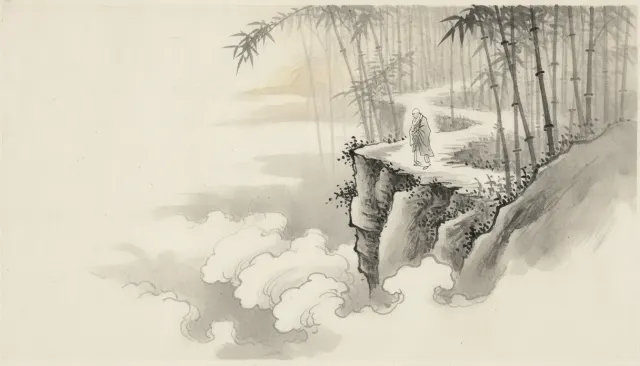
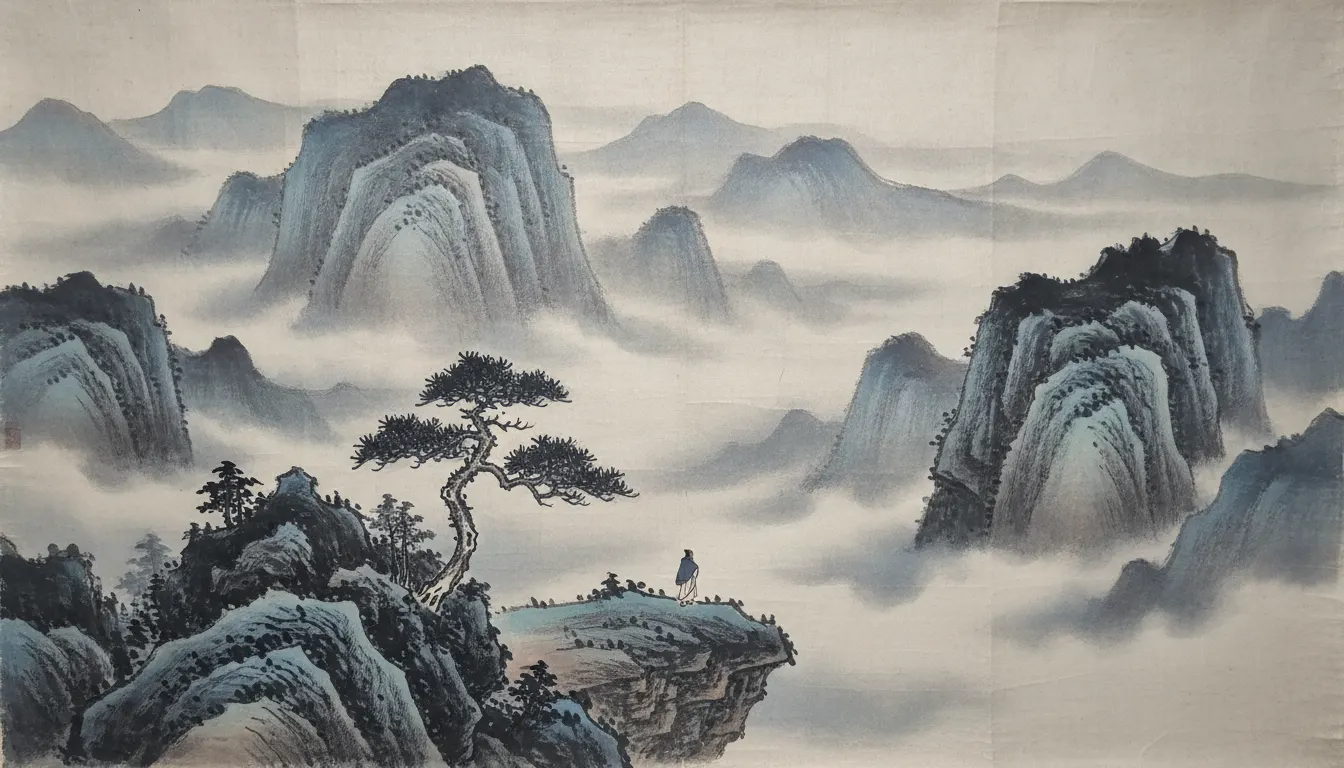
Inspired by Chinese shanshui ink-wash landscape painting tradition. Misty mountains and pine, gradient ink on silk, vast vertical scroll composition.
The moves a human crew would use to get here. Cue applies them for you, and knowing their names is how you ask for a change.
there wash on white or cream paper/silk ground
distance composition: foreground detail, middle-ground atmospheric mist, distant peaks fading to wash
hemp-fiber, axe-cut, and raindrop marks describing geological texture through brushwork
mist, cloud, and water as unpainted ground
on-wet ink bleed at rock and mist edges creating soft transition zones
In the tradition of Chinese shanshui (mountain-water) painting – a genre that has occupied the highest position in Chinese artistic thought for over 1,500 years – this look draws on the accumulated visual philosophy of painters from the Six Dynasties period (3rd-6th centuries CE) through the Song, Yuan, Ming, and Qing dynasties to the present day.
The word shanshui means 'mountain-water' and encapsulates the dual forces that Daoist and Confucian thought identified as structuring the natural world: the yang of mountains (solid, vertical, masculine) in dialogue with the yin of water (fluid, horizontal, feminine). Zong Bing (375-443 CE), in his Preface to Landscape Painting, articulated the first theoretical framework for shanshui: the painter who captures the spirit of mountains allows the viewer to travel through them without leaving their room.
The Northern Song painter Guo Xi (c. 1020-1090 CE) codified the major achievements of the tradition in his treatise Linquan gaozhi (Lofty Record of Forests and Springs), which articulated the 'three distances' compositional system: gaoyuan (high distance – looking up at peaks), pingyuan (level distance – looking across plains), and shenyuan (deep distance – looking into valleys). His masterwork Zaochun tu (Early Spring, 1072), now in the National Palace Museum in Taipei, is considered the summit of Northern Song monumental landscape.
The Yuan dynasty (1271-1368) saw literati painters like Ni Zan and Huang Gongwang shift the emphasis from meticulous depiction to personal expression – using dry brushwork and simplified composition to convey the scholar-painter's inner state rather than describe a specific place. This shift toward xieyi (writing intention) over gongbi (meticulous detail) established the ink painting tradition that flows into contemporary practice.
Shanshui operates through control of ink tonality across the full range from jet black to near-invisible gray washes. The 'cun' (texture stroke) vocabulary – hemp-fiber strokes, axe-cut strokes, raindrop strokes – describes different geological formations through mark-making rather than representation. Empty space (liubai – 'leaving white') functions as mist, water, or sky, creating the atmospheric recession that gives shanshui its characteristic depth.
*Zaochun tu* (Early Spring, 1072) – National Palace Museum, Taipei
*Travelers Among Mountains and Streams* (c. 1000 CE) – National Palace Museum, Taipei
1372
*Rongxi Studio* – National Palace Museum, Taipei
1350
*Dwelling in the Fuchun Mountains* – National Palace Museum, Taipei
'Mi dot' mist-mountain style (11th-12th century)
*Album of Landscape Paintings* (c. 1700) – Princeton University Art Museum
A Look is not a filter. It is a set of stored decisions the pipeline reads before it makes a single frame, so two videos in the same Look actually match.