Tughra of Suleiman the Magnificent (c. 1555-1560)
Brooklyn Museum, New York
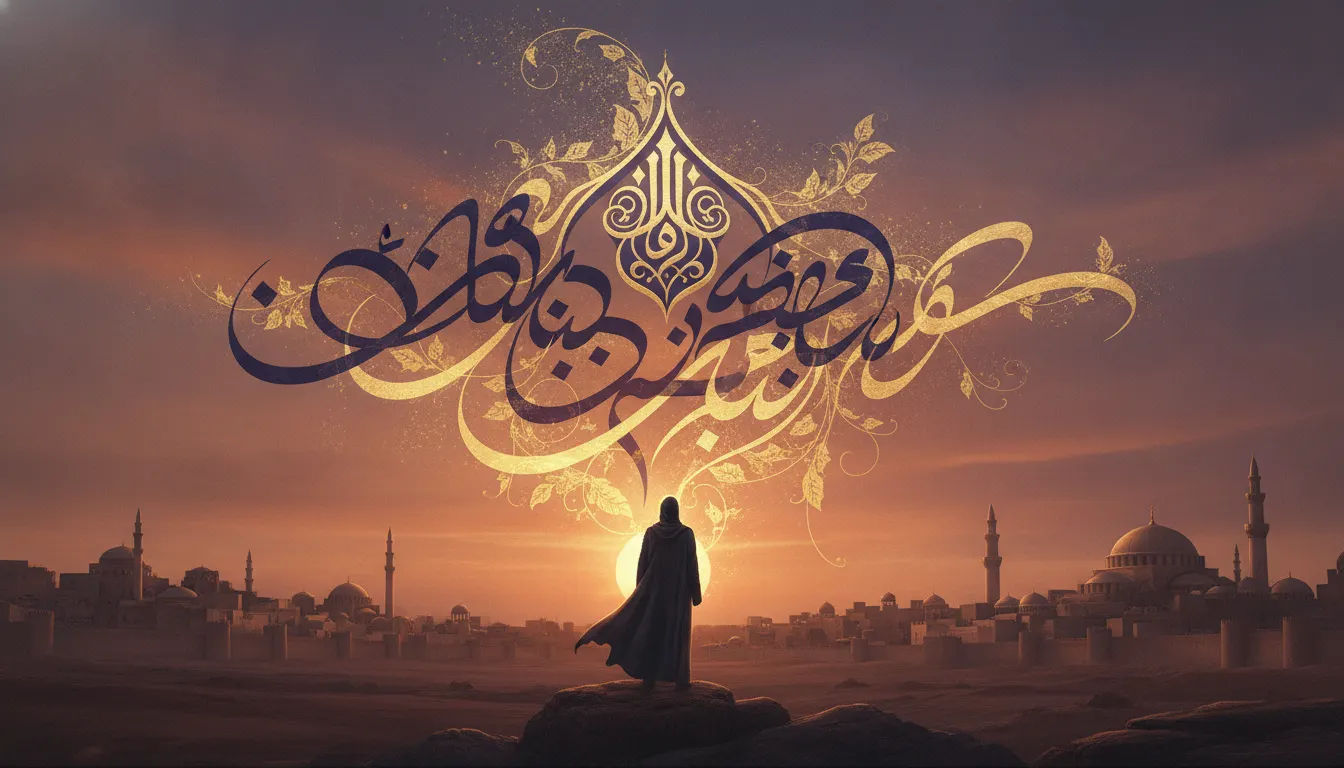
Inspired by the Arabic and Ottoman calligraphic tradition, including the sultanic tughra monogram. Sweeping inked script in thuluth, naskh, and diwani styles.
The moves a human crew would use to get here. Cue applies them for you, and knowing their names is how you ask for a change.
thin hairlines contrasting with broad brushstroke swells following Thuluth proportion rules
In the tradition of the Ottoman imperial chancellery from the 14th century through the dissolution of the Empire in 1922, the tughra (or tuğra) stands as one of the world's most architecturally complex calligraphic forms: a stylized monogram incorporating the reigning sultan's name, his father's name, and the epithet el-muzaffer daima ('always victorious'), woven into a single compositional unit of extraordinary formal sophistication.
The tughra originated as a seal of identification for Ottoman imperial documents beginning under Sultan Orhan I (r. 1326-1360), and every sultan from Orhan onward had a unique tughra designed for their reign. The form became increasingly elaborate during the classical imperial period (15th-17th centuries) under sultans Suleiman the Magnificent (r. 1520-1566), whose tughra is among the most recognizable, and Mehmed II (r. 1444-1481).
A tughra is composed of several structural elements: the sere (three vertical ascenders on the right); the beyze (two oval loops on the left, representing the sultan's bow and sword); the tuğ (a tail of interlacing lines rising from the oval loops); and the main revan (body) containing the calligraphic text itself. The entire form reads as both script and emblem simultaneously.
Tughra were produced by specialized court calligraphers (nişancı) working in the imperial chancellery (divan). The finest examples were illuminated with gold leaf, lapis lazuli blue, and floral arabesque fills by specialist illuminators (müzehhip). The tughra of Suleiman the Magnificent, held by the Brooklyn Museum, is perhaps the most studied example.
The tughra belongs to the broader tradition of Arabic calligraphy as a sacred and high art form practiced across the Islamic world from the 7th century. The six classical scripts (aqlam-i sitta) codified by the calligrapher Ibn Muqla (886-940 CE) – Thuluth, Naskh, Muhaqqaq, Rayhan, Tawqi, Riqa – each carry formal characteristics distinguishing them for different purposes: Thuluth for monumental inscriptions, Naskh for manuscript text, and the cursive Persian-derived Nastaliq for poetry.
Contemporary Arabic calligraphy artists – including Hassan Massoudy (Iraq/France), Mouneer Al-Shaarani (Syria), and Ahmed Moustafa (Egypt/UK) – have extended the tradition into fine art and design practice.
Brooklyn Museum, New York
Metropolitan Museum of Art, New York
imperial archive of tughra documents spanning all 36 Ottoman sultans
contemporary Arabic calligraphy paintings, Editions Flammarion publications
calligraphic fine art, international exhibitions
foundational treatise on Arabic script geometry
A Look is not a filter. It is a set of stored decisions the pipeline reads before it makes a single frame, so two videos in the same Look actually match.