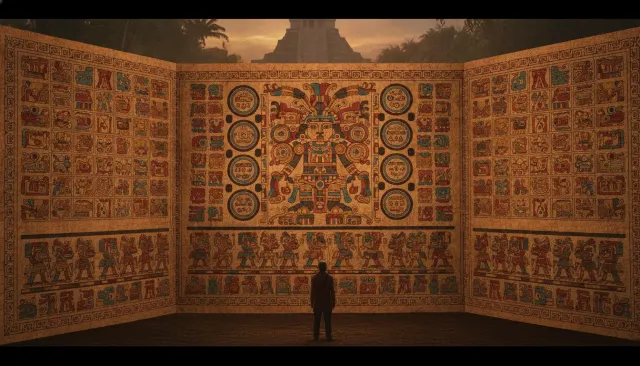
Thomas Bowdich collection
Adinkra cloth, Kumasi 1817 (British Museum)
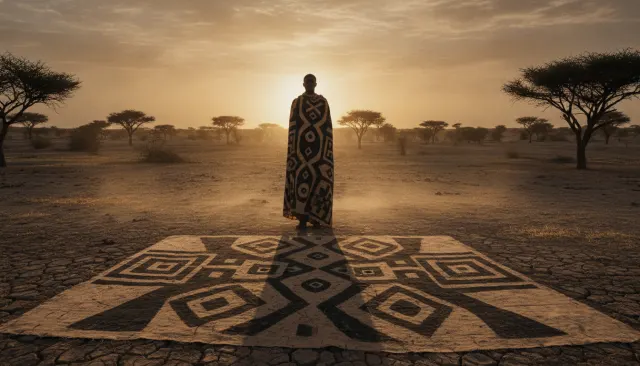
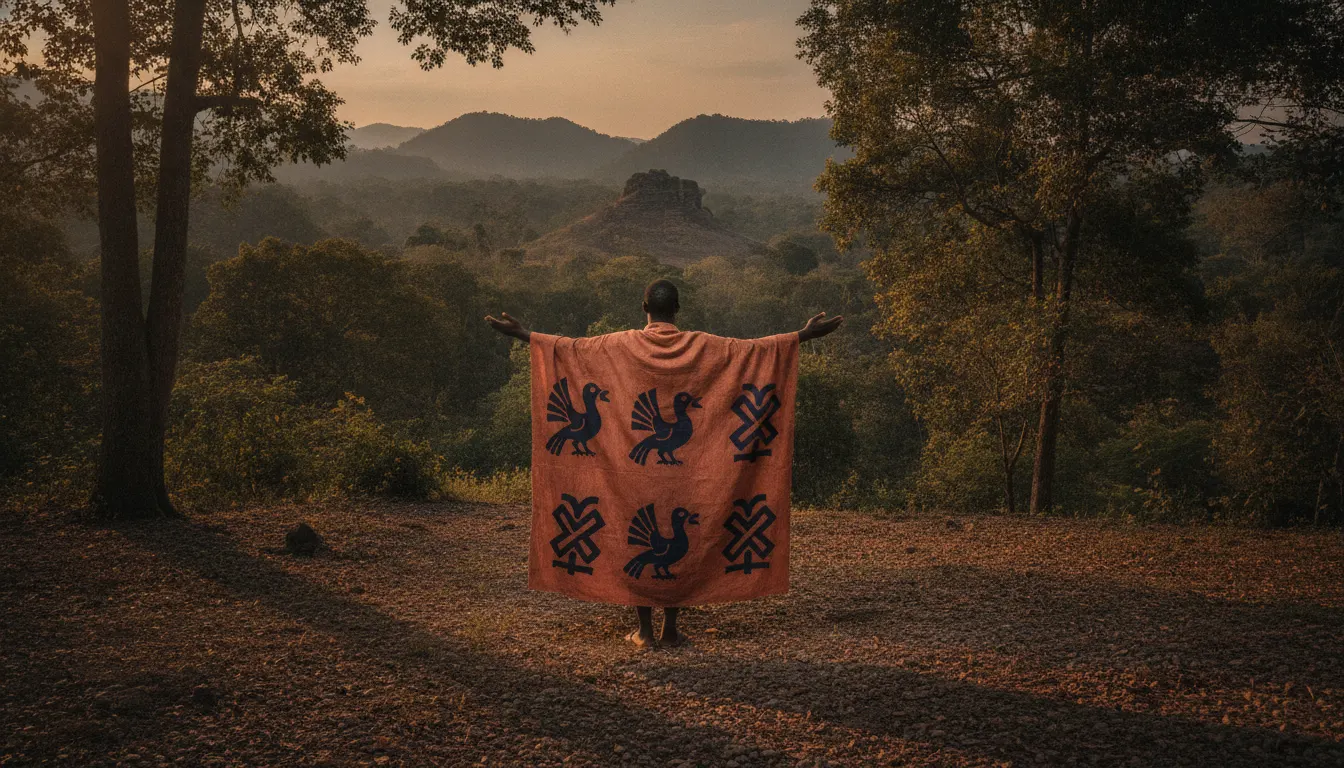
Inspired by the Asante adinkra symbol tradition of Ghana. Stamped symbolic ideograms (sankofa bird, gye nyame) in dark dye on hand-block-printed cloth.
The moves a human crew would use to get here. Cue applies them for you, and knowing their names is how you ask for a change.
divided composition with thick horizontal and vertical band separators between symbol fields
contrast black ink on rust-red, warm brown, or undyed cream ground
form Sankofa used as hero marks in the design hierarchy
stamp texture preserved – ink bleeds slightly at edges, creating soft halos
over repeat patterns punctuated by single large symbols as focal points
In the tradition of the Asante people of Ghana, Adinkra are visual symbols that encode proverbs, philosophical concepts, and spiritual wisdom into compact, repeating graphic forms. Historically printed on cloth using stamps carved from calabash gourds and a black dye derived from the badie tree bark, Adinkra cloth was worn at funerals and significant ceremonies – the name itself is thought to derive from the word for 'farewell' or 'goodbye' in Twi.
The earliest documented Adinkra cloths date to the early 19th century in the Asante Kingdom (present-day central Ghana). The British Museum holds a cloth captured at Kumasi in 1817 by Thomas Bowdich, who recorded the symbols' use. Traditionally, Adinkra were produced by specialist craftsmen in Ntonso village near Kumasi, where the practice continues today. The symbols were also applied to pottery, architecture, and metalwork.
Each symbol carries a named meaning: Gye Nyame (the Supreme Being, omnipotence of God) is perhaps the most widely recognized, a flowing curvilinear form suggesting divine sovereignty. Sankofa (return and retrieve what was lost) depicts a bird looking backward, or alternatively a heart-shaped form with a twisting neck – it encodes the Akan principle that learning from the past is essential to progress. Dwennimmen (ram's horns) represents humility combined with strength; Nyame Biribi Wo Soro (God is in the heavens) expresses hope.
Adinkra compositions are organized as grids divided by thick horizontal and vertical bands of pattern, with each cell containing a repeating stamp impression. The ground cloth is typically rust-red, dark brown, or undyed cream cotton; the stamp ink is dense black. The individual symbols range from highly geometric (square grids, interlocking diamonds) to organically curvilinear (the serpentine loops of Gye Nyame).
For contemporary visual work, the look translates into: high-contrast black-on-warm-ground repeating patterns; symbol grids as background textures or title cards; individual symbols as logo marks or motion-graphic punctuation.
Source authentic symbol libraries from published catalogues or work directly with Ghanaian designers. Construct grids with deliberate band dividers. Stamped irregularity – slight misalignment, ink variation – is intrinsic to the aesthetic and should be preserved rather than mechanically perfected.
Adinkra cloth, Kumasi 1817 (British Museum)
contemporary hand-stamped cloth, ongoing production
1998
scholarly symbol catalogue
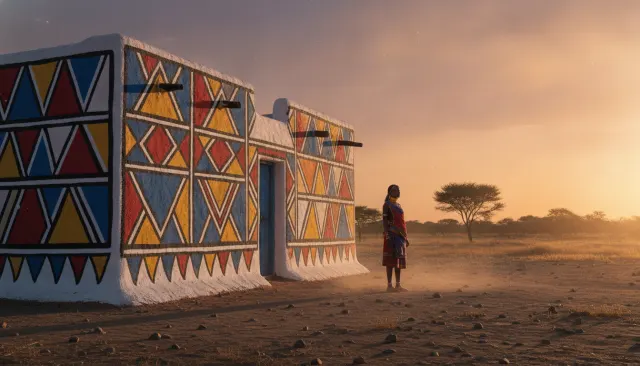
Adinkra motifs in architectural detailing
historical Adinkra cloth collection
A Look is not a filter. It is a set of stored decisions the pipeline reads before it makes a single frame, so two videos in the same Look actually match.