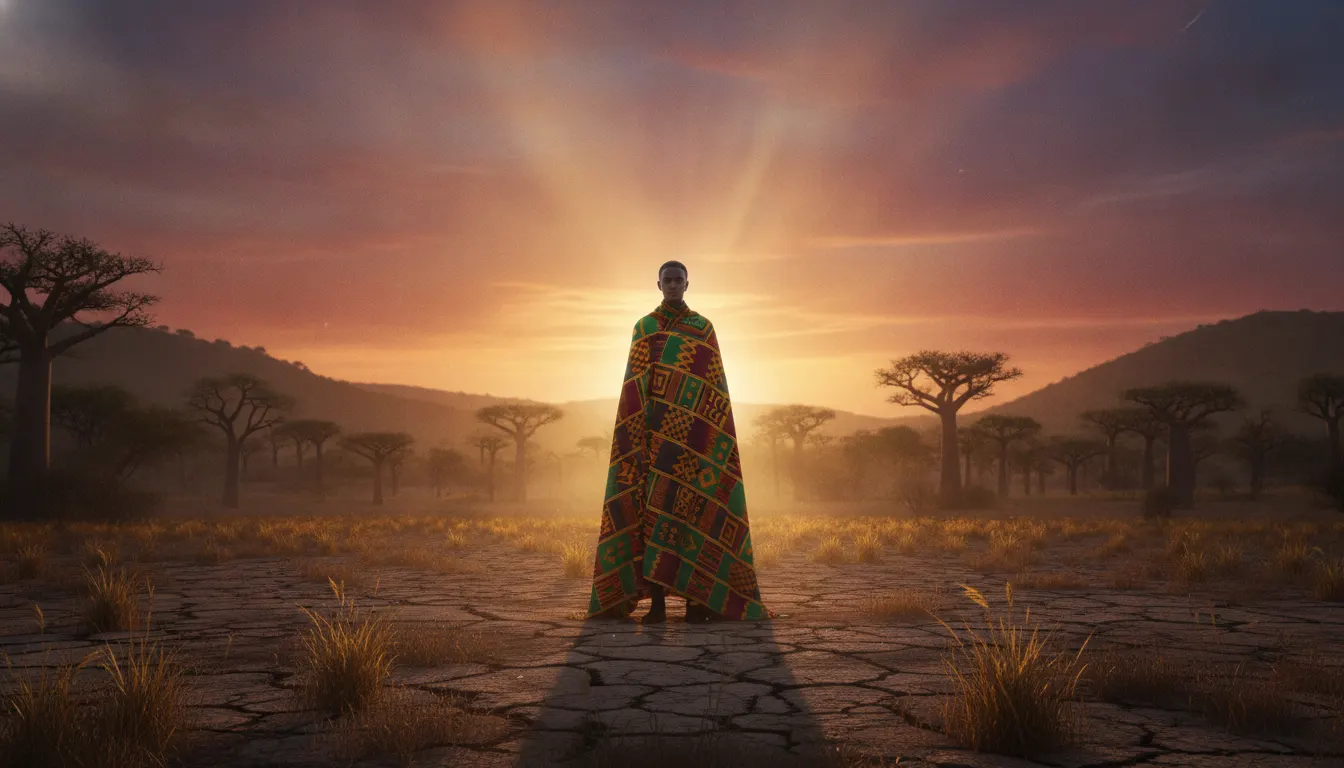
AFRICAN · TRADITIONAL · GHANA
Kente Cloth Weaving (Ghana)
In the tradition of Asante and Ewe kente cloth weaving from Ghana. Narrow strips of strip-loom cloth in symbolic gold, green, red, and black geometric pattern.
kentewovenghanaianroyal
LUT kente-royal-gold
WHEN TO USE
- Content celebrating Ghanaian independence, Pan-African identity, or West African royalty
- Black History Month programming, Juneteenth content, or African cultural festival coverage
- Documentary or editorial work featuring the Asante Kingdom, Ghanaian fashion, or African textile traditions
- Brand identities and packaging for businesses with authentic Ghanaian or West African connections
- Motion-graphic transitions and frame treatments for content about African diaspora culture
- Educational content about strip-weaving, the history of Bonwire, or the symbolism of color in Akan culture
WHEN NOT TO USE
- Surface-level 'African pattern' decoration without cultural grounding or creative partnership with Ghanaian makers
- Muted or pastel reinterpretations that drain the palette of its specific chromatic significance
- Corporate greenwashing or cause-marketing where kente's deep political symbolism would be trivialized
- Framing that reduces a living royal tradition to costume or carnival decoration
SIGNATURE TECHNIQUES
How the look is made.
The moves a human crew would use to get here. Cue applies them for you, and knowing their names is how you ask for a change.
- 01Vertical strip
seam structure creating repeating horizontal band rhythm across the full composition
- 02Saturated primary palette
gold, green, red, and black as dominant colors with white and blue accents
- 03Interlocking geometric fills within bands
checkerboards, triangular sawtooth, stepped diamonds
- 04Named pattern fields alternating between plain weft and complex supplementary-weft sections
- 05Ewe
style figurative insets – birds, stools, combs – within supplementary weft bands
- 06High color contrast between adjacent strips creating optical vibration
- 07Fringe ends preserved as a finishing element in cloth representations
HISTORY & CONTEXT
Where it comes from.
Kente Cloth – Ghana
In the tradition of the Asante and Ewe weavers of Ghana, kente cloth is one of West Africa's most celebrated textile arts: a strip-woven fabric of extraordinary chromatic complexity, with each color and pattern combination encoding social rank, occasion, and philosophical meaning.
Origins and Cultural Context
Asante oral tradition traces kente weaving to the 17th century, when two friends – Ota Karaban and Kwaku Ameyaw – observed a spider spinning its web near the village of Bonwire and replicated the interlacing structure on a loom. Bonwire, near Kumasi, remains the royal weaving village and a UNESCO-recognized craft center. The Asante royal court reserved specific kente patterns for the Asantehene (king) alone; wearing them without permission was punishable by death.
The Ewe people of the Volta Region and southern Togo developed their own distinct kente tradition with more representational figurative elements – animals, tools, everyday objects woven into the supplementary weft – distinguishing it from the more strictly geometric Asante style.
Kente entered global visual culture in the 20th century when Kwame Nkrumah, Ghana's first president, wore it at independence ceremonies in 1957, and it subsequently became a symbol of Pan-African pride worldwide.
Visual Language
Kente is constructed from narrow strips (typically 4 inches wide) woven separately on horizontal treadle looms, then sewn edge-to-edge to form the full cloth. The resulting composition is inherently striped, with horizontal bands of pattern alternating along the vertical strip seams.
The color vocabulary carries meaning: gold (sika) represents royalty and wealth; green (akokobaatan) symbolizes growth and renewal; red (ohia) evokes sacrifice and political passion; black (funebre) acknowledges maturation and ancestral connection; white (fitaa) denotes purity. Complex patterns are named – Oyokoman (royal Oyoko clan pattern), Sika Futuro (gold dust), Emaa Da (unprecedented design).
Contemporary Application
In video and motion work, kente-inspired textures serve as background fields, wipe transitions, or frame overlays. The strip-weave structure naturally lends itself to animated reveals – strips sliding or weaving into frame. Use the authentic color palette (saturated primary and secondary colors on black ground) rather than pastel reinterpretations.
NOTABLE WORKS
Where you have seen it.
Kwame Nkrumah's independence kente, Ghana independence ceremony 1957 (widely photographed)
Bonwire master weavers' *Oyokoman* cloth
permanent collections at the British Museum
Ewe kente from Ho
Volta Region Museum collection
Barack Obama wearing kente stole, NAACP address 2007
widely circulated image
Christie Brown and other contemporary Ghanaian designers integrating kente into couture
THE RECIPE
The exact knobs
the renderer turns.
A Look is not a filter. It is a set of stored decisions the pipeline reads before it makes a single frame, so two videos in the same Look actually match.
SettingValue
GradeColour LUT applied to every frame
kente-royal-goldTransitionHow one shot becomes the next
soft cuts · 280ms · ease-in-outKen BurnsCamera move applied to stills
Slow push · 0.025 · centerTypographyDisplay / body / mono pairing
Source Serif Pro · Inter · JetBrains MonoMusic moodWhat the bed under the voice sounds like
highlife-guitar · djembe-talking-drumPrompt suffixAppended to every shot prompt in this Look
inspired by Asante kente cloth weaving tradition Ghana, narrow strip-loom panels stitched, symbolic gold green red black geometric pattern, royal clothPALETTE
Primary
#F5C144
Secondary
#C8101A
Accent
#0E7A3A
Text/Light
#1A140A
Text/Dark
#FFFFFF
BG 900
#1A140A
BG 800
#2A2010
RELATED LOOKS
Next to it on the shelf.


Your first cut
is on us.
+ New videoFree plan · no card · 1080p export