NORTH AMERICAN FOLK · TRADITIONAL · USA
Appalachian Mountain Quilt
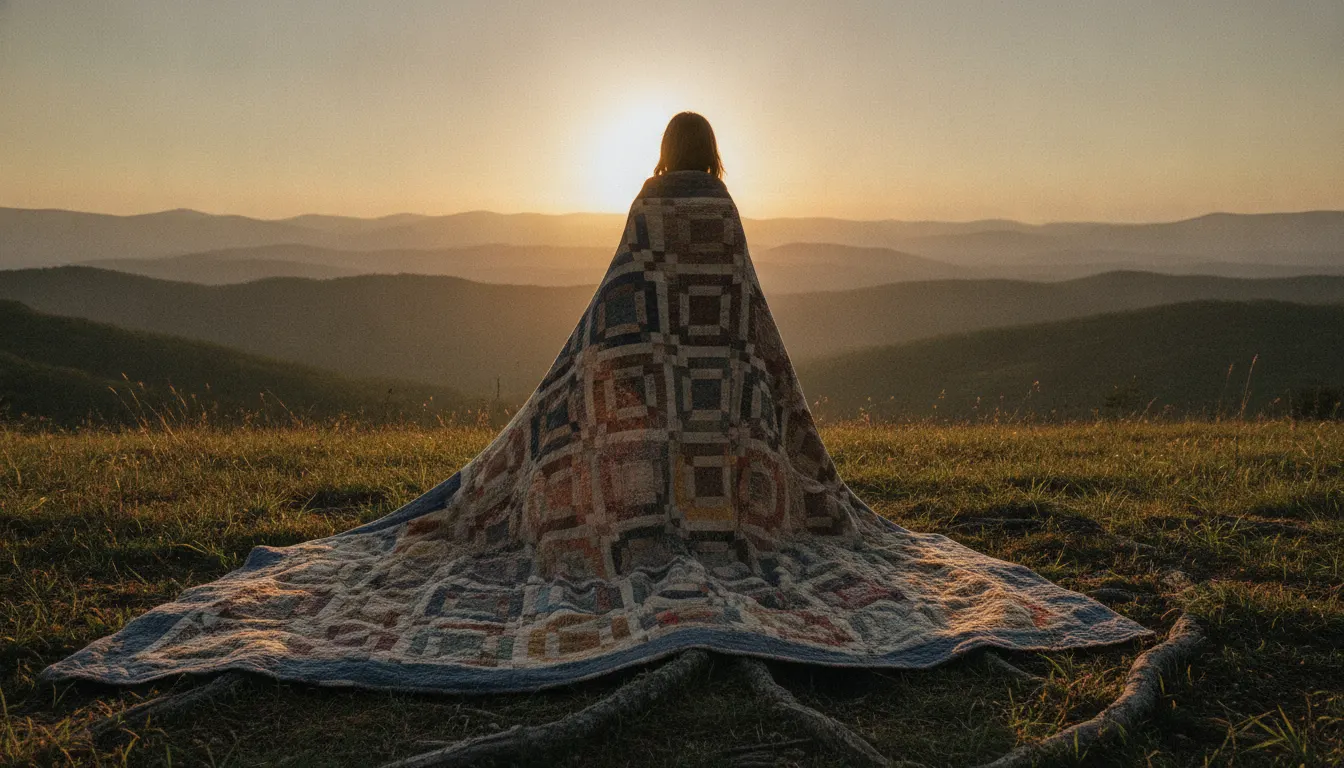
Honoring the craft of Appalachian quilting tradition from Kentucky and West Virginia. Hand-pieced log-cabin and double-wedding-ring patterns in faded cotton scrap and indigo.
quiltappalachianpatchworkcotton
LUT appalachian-quilt-faded
WHEN TO USE
- Content celebrating Appalachian or rural American culture, Southern heritage, or mountain communities
- Autumn harvest, country living, or folk craft content where warmth and hand-made character are the goal
- Documentary or editorial work about Appalachian history, quilting bees, or American folk art
- Brand storytelling emphasizing artisan production, heritage craft, or honest materials
- Background textures for content about family, memory, community gathering, or intergenerational knowledge
- Educational content about American quilt history, Log Cabin block variations, or feed-sack era textiles
WHEN NOT TO USE
- Urban, modernist, or minimalist contexts where the warm, country-craft palette would feel forced
- Projects that use 'Appalachian' as shorthand for poverty or backwardness rather than celebrating the tradition
- Content requiring the strict geometric austerity of Amish quilts – these traditions are distinct
- High-fashion or luxury contexts where the improvisational, repurposed-material ethos would be at odds with the brand
SIGNATURE TECHNIQUES
How the look is made.
The moves a human crew would use to get here. Cue applies them for you, and knowing their names is how you ask for a change.
- 01Log Cabin block construction
central red square surrounded by alternating light and dark fabric strips
- 02Small
scale calico and floral print fabrics in warm earth tones, combined with solid-color sashing
- 03Bear's Paw block
large central square with corner triangle 'claws' in contrasting fabric
- 04Double Wedding Ring
interlocking oval rings built from curved pieced arcs, no straight seams
- 05Feed
sack print fabrics – cheerful small-print florals, paisleys, and geometric repeats in soft cotton
- 06Improvisational 'string quilting' using narrow strips sewn diagonally onto a muslin foundation
- 07Dense hand or treadle
machine quilting in fan, shell, or diagonal-grid patterns
HISTORY & CONTEXT
Where it comes from.
Appalachian Quilt – Mountain Folk Tradition
In the tradition of quilters across the Appalachian Mountain range – stretching from southern Pennsylvania through Virginia, West Virginia, North Carolina, Tennessee, and into northern Georgia and Alabama – mountain quilting represents a distinctive American folk art defined by resourcefulness, pattern improvisation, and community gathering.
Origins and Cultural Context
Appalachian quiltmaking developed from the late 18th century onward as isolated mountain communities adapted piecing traditions brought from England, Scotland, and Ireland by Scots-Irish settlers, combining them with West African textile techniques transmitted through enslaved workers in the piedmont and valley communities below. The result was a regional aesthetic that emphasized pattern names rooted in the natural environment (Bear's Paw, Flying Geese, Grandmother's Flower Garden, Double Wedding Ring) and practical use of available materials: flour sacks, feed bags, worn clothing, and factory-print cotton remnants.
The quilt bee – a community gathering where women assembled to quilt together – was a central social institution, and patterns traveled between communities through these networks. Regional variations developed: eastern Kentucky favored bold dark-ground designs reminiscent of Amish aesthetics; North Carolina mountain communities preferred lighter calico prints; Virginia quilters maintained stronger connection to English applique traditions.
During the 1930s Depression era, feed-sack fabrics – print cotton sacks from flour, cornmeal, and animal feed – became a primary source of quilt material, and manufacturers responded by printing increasingly attractive patterns specifically to attract quilters. The feed-sack aesthetic is inseparable from Depression-era Appalachian quilts.
Visual Language
Appalachian quilts occupy a warmer, more improvisational register than Amish quilts. Print fabrics in small-scale calico, floral, and geometric patterns are combined with solid fabric sashing. The Log Cabin block – a central square (traditionally red, representing the hearth fire) surrounded by alternating light and dark strips – is perhaps the most ubiquitous pattern and enables infinite composition variations depending on how blocks are arranged (Barn Raising, Straight Furrow, Pinwheel).
Bear's Paw, Bear Track, and Ohio Star blocks reflect the mountain environment. The Double Wedding Ring – interlocking curved rings assembled from small arched pieces – is the most technically demanding and the most widely cherished.
NOTABLE WORKS
Where you have seen it.
Berea College Appalachian quilts collection
Berea, Kentucky
Foxfire Book series (1972-)
documented Appalachian quilting techniques from Georgia mountain communities
Gee's Bend quilt community
while technically Alabama, their improvisational aesthetic is closely related to Appalachian traditions
American Folk Art Museum
Depression-era feed-sack quilt collection
Smithsonian American Art Museum
documented Appalachian textile holdings
THE RECIPE
The exact knobs
the renderer turns.
A Look is not a filter. It is a set of stored decisions the pipeline reads before it makes a single frame, so two videos in the same Look actually match.
SettingValue
GradeColour LUT applied to every frame
appalachian-quilt-fadedTransitionHow one shot becomes the next
soft cuts · 300ms · ease-in-outKen BurnsCamera move applied to stills
Slow push · 0.02 · centerTypographyDisplay / body / mono pairing
Lora · Inter · JetBrains MonoMusic moodWhat the bed under the voice sounds like
appalachian-dulcimer · mountain-folk-vocalPrompt suffixAppended to every shot prompt in this Look
inspired by Appalachian mountain quilting tradition Kentucky West Virginia, hand-pieced log cabin and double wedding ring pattern, faded cotton scrap and indigo, hand-stitchedPALETTE
Primary
#1A4A6E
Secondary
#7A2030
Accent
#C9956A
Text/Light
#1A140A
Text/Dark
#F2DCC0
BG 900
#1A140A
BG 800
#2A2018
RELATED LOOKS
Next to it on the shelf.

Your first cut
is on us.
+ New videoFree plan · no card · 1080p export