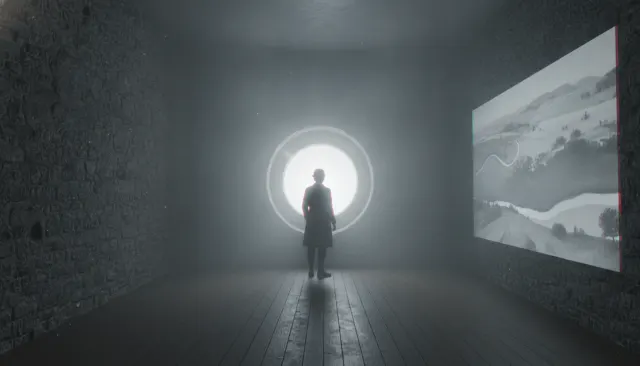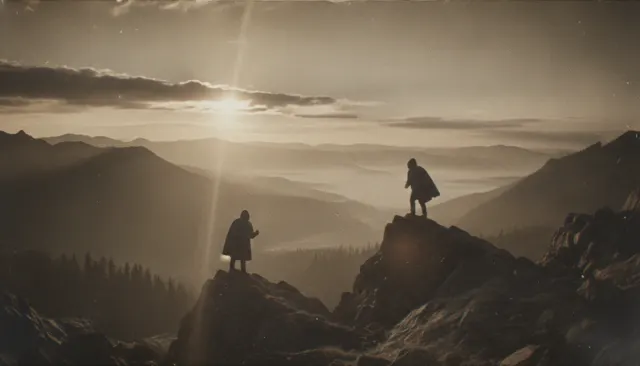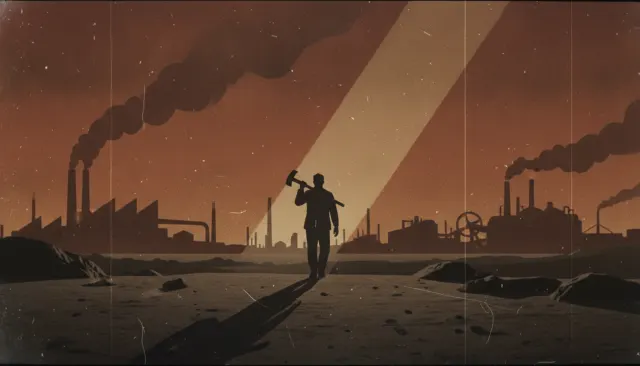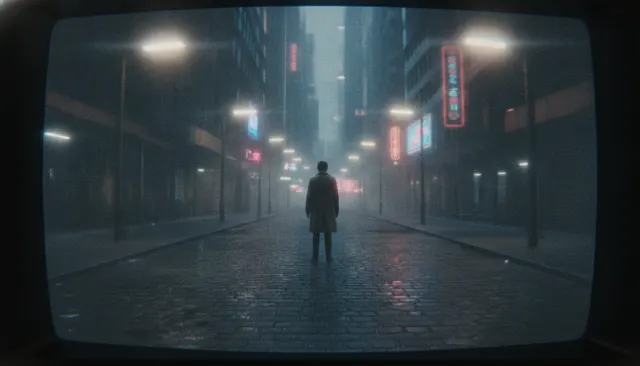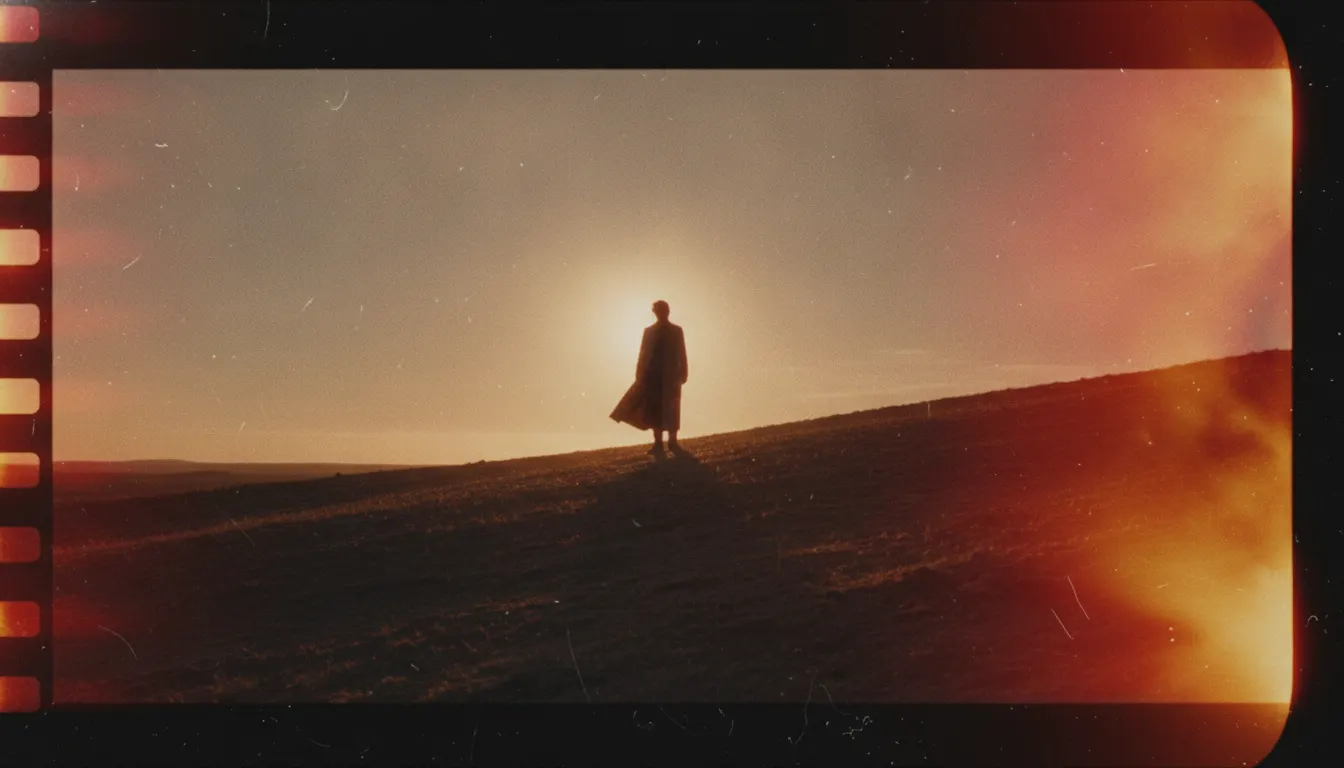
Terrence Malick 'The Tree of Life' (2011, dp Emmanuel Lubezki)
defining Super 8 and 16mm aesthetic in contemporary cinema
Film-burn light leaks on celluloid. Orange-red emulsion damage bleeding in from frame edge, end-of-reel light leak, sprocket-edge bleed.
The moves a human crew would use to get here. Cue applies them for you, and knowing their names is how you ask for a change.
warm amber (#FF8C00 to #FF4500) gradient at one or two frame edges, fading inward 10-30% of frame width
a directional warm light streak across the frame from corner to opposite corner, simulating a pinhole body leak
darkened, reddened border with irregular burn texture simulating projector gate heat damage
real 16mm light-leak footage over video at 40-80% opacity on Screen blend mode
slight orange-yellow push in the highlights and shadows to harmonize with the leak colors
of-reel fade: brightness decrease and color shift to orange-red at a scene's end, suggesting projector run-out
by-frame flicker: 2-4% random opacity variation on the leak overlay to simulate physical film irregularity
Film burn and light leaks are physical phenomena arising from flaws in analog film handling, camera construction, and exposure. A light leak occurs when light enters a camera body or film canister through an imperfect light seal - typically at the door hinge, loading bay, or roll leader - exposing the edges of film frames to unwanted light before or after the intended exposure. The result is fogging: warm amber, orange, red, or magenta streaks and washes at the film frame edge that bleed into the image. Film burn refers to distinct phenomena: the actual thermal degradation of film stock held too long in a hot projector gate, producing characteristic edge burns, color shifts toward red-orange, and sometimes complete melting of the frame.
For most of photography history, light leaks were considered defects to be corrected. The Lomographic Society International (Vienna, 1992), building on the Soviet Lomo LC-A's optical idiosyncrasies, reframed camera flaws as aesthetic assets. Their 'Ten Golden Rules of Lomography' explicitly embraced imperfection: 'Don't worry about the rules.' Holga (produced from 1981) light leaks became particularly celebrated - the Holga's plastic body has no light-tight door seal, making edge fogging structurally inherent to nearly every roll. By the early 2000s, intentional light-leak aesthetics were central to the lo-fi photography community and widely documented on Flickr's Lomography groups.
In moving image contexts, light leaks and film burns are most associated with 16mm and Super 8 film formats - the formats of home movies, experimental film, and low-budget indie production from the 1960s-1990s. Standard 8mm home movie reels from the 1950s-70s show characteristic end-of-reel fade, edge burn from repeated projection, and occasional magazine light leak. Experimental filmmakers including Stan Brakhage and Jonas Mekas worked with damaged, hand-processed, and light-exposed film as intentional artistic material throughout their careers.
Digital light leak overlays became commercially dominant through products like Film Riot's 'Triune Film Collection,' FCPX plugin packs, and the Lens Distortions library (2013-present). The overlays are typically real 16mm light-leak elements shot on a black field and distributed as .mov files with Lighten or Screen blend modes. The look peaked in mainstream use in indie music video production between 2010 and 2016, influenced by the visual language of films by Terrence Malick (particularly 'The Tree of Life,' 2011, shot by Emmanuel Lubezki) and the Sundance aesthetic of the early 2010s.
defining Super 8 and 16mm aesthetic in contemporary cinema
foundational analog source material
institutional framing of light leak as art
experimental film burn and physical manipulation precedent
1969
diary film aesthetic with exposure and processing artifacts
defining digital light leak resource for video production
2011
Super 8 film look and light leak aesthetic at indie music moment
film burn and light leak in folk-rock branding
A Look is not a filter. It is a set of stored decisions the pipeline reads before it makes a single frame, so two videos in the same Look actually match.