
Idris Khan 'Every... Bernd and Hilla Becher Typology...' series
2004
defining fine art multiple exposure
In-camera double exposure. Two negatives overlaid on the same frame, ghosted silhouette filled with second image, organic film blending.
The moves a human crew would use to get here. Cue applies them for you, and knowing their names is how you ask for a change.
subject silhouette filled with a second scene using a luminance key or clipping mask
first and second exposures combined so highlights from either exposure add together
1.5 stops to prevent blown highlights in composite
leak edge fogging: warm amber or orange edge vignette on top layer simulating plastic body light bleed
rewind film technique cues: horizontal registration shift between layers (0-10px) from film not rewinding perfectly
both layers should share the same film grain texture to feel like a single physical frame
portrait + landscape; face + architecture; figure + foliage - the pairing carries meaning
Double exposure is the technique of exposing the same frame of film twice - or more - before advancing, creating a composite image in which two (or more) scenes occupy the same physical silver halide layer. The technique is as old as photography itself: Lewis Carroll experimented with double exposure portraits in the 1860s, and Edwardian ghost photographers used deliberate double exposure to fake spirit apparitions. Its intentional aesthetic use as a fine art technique solidified in the 20th century, particularly through Surrealist photographers like Man Ray and Raoul Ubac.
The Lomographic Society International (founded Vienna, 1992) and the wider toy camera movement gave double exposure new currency in the 1990s. The Holga - a Chinese medium-format plastic camera produced from 1981 - and the Lomo LC-A (Soviet-designed, 1983) both enable multiple exposures through their film-winding mechanisms. Lomography rules ('shoot from the hip,' 'don't think, shoot') encouraged intentional overlapping exposures. The cross-processing aesthetic and double exposure became linked in the early 2000s analog revival; roll-rewinding to shoot a 35mm roll twice became common practice, and the light-leak edge fogging typical of Holga cameras added additional texture to the exposures.
London-based artist Idris Khan developed a distinct approach to composite photography: digitally layering every page of a book, every photograph from a series, or every musical score into a single composite image. His 'Every... Bernd and Hilla Becher' series (2004) stacked all photographs from the Bechers' typological studies into single images, creating an averaging effect that produced ghostly, nearly abstract composites. This work - technically digital but conceptually aligned with double exposure - became highly influential in fine art photography and was acquired by major institutions.
London-based artist Idris Khan (b. 1978) developed a distinct approach to composite photography: digitally layering every page of a book, every photograph from a series, or every musical score into a single composite image. His 'Every... Bernd and Hilla Becher Typology...' series (2004) stacked all photographs from the Bechers' typological studies of industrial water towers and blast furnaces into single images, creating ghostly, nearly abstract composites that captured the statistical average of each building type. Acquired by MoMA and Tate, this work - technically digital but conceptually aligned with double exposure - became highly influential in fine art photography. His subsequent 'Every... Beethoven' and 'Every... Page of the Holy Quran' series applied the same logic to music scores and sacred text.
In video, double exposure is typically achieved through Screen, Multiply, or Overlay blend modes between two footage tracks in a compositing application. The first exposure provides the primary subject (often a portrait silhouette); the second provides the infill (landscape, foliage, abstraction). Careful luminance matching - ensuring the composite exposures are each slightly underexposed to leave headroom for combination - preserves detail in both layers. Nikon, Canon, and Fujifilm all offer in-camera multiple exposure modes in their mirrorless and DSLR bodies; the Nikon Z9's live-composite view allows real-time preview of the double exposure before committing.
2004
defining fine art multiple exposure
historical fine art precedent
analog photography community benchmark
community aesthetic standard
2009
double exposure nature-portrait aesthetic in music video
widely circulated contemporary fine art examples
digital double-exposure style at commercial scale
celebrity double-exposure portraiture
A Look is not a filter. It is a set of stored decisions the pipeline reads before it makes a single frame, so two videos in the same Look actually match.
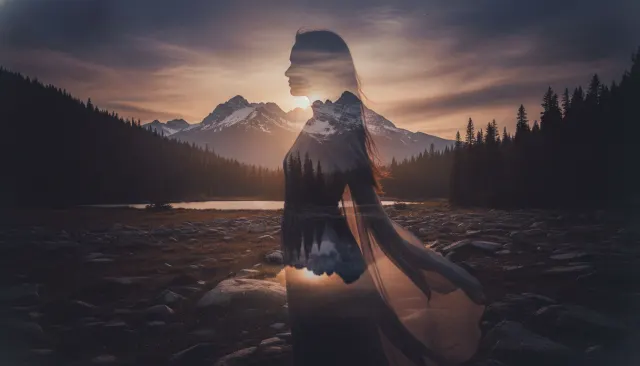 Media Decay PhysicalDouble Exposure Portrait Nature
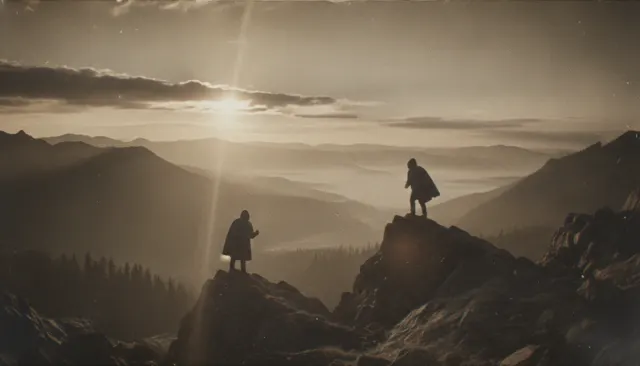 Analog Camera ExtendedDouble Pinhole Experimental
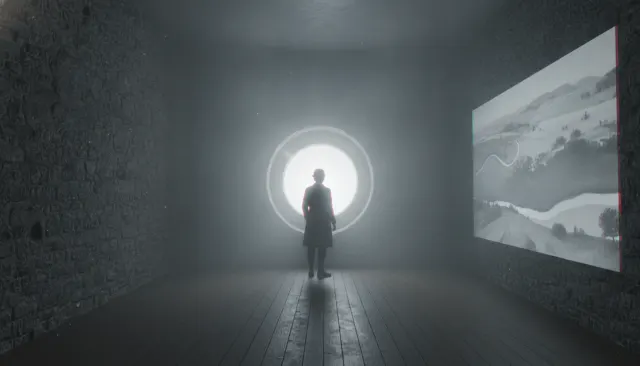 Analog Camera ExtendedCamera Obscura Pinhole Historical Aesthetic
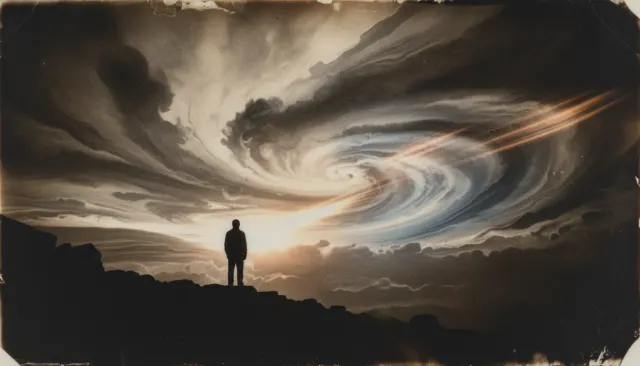 Physical ProcessChemigram Acidic Darkroom
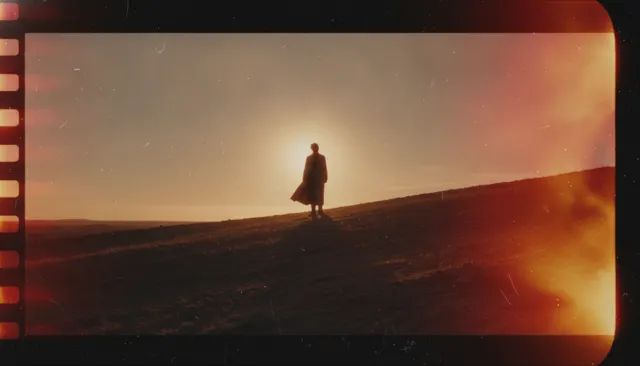 Media Decay PhysicalFilm Burn Edge Light Leak
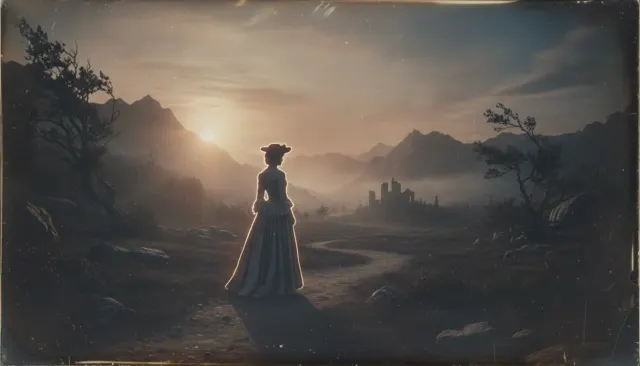 Analog Process ExtendedDaguerreotype Modern Recreation