McDonald's Golden Arches identity
standardized 1960s, Jim Schindler architect
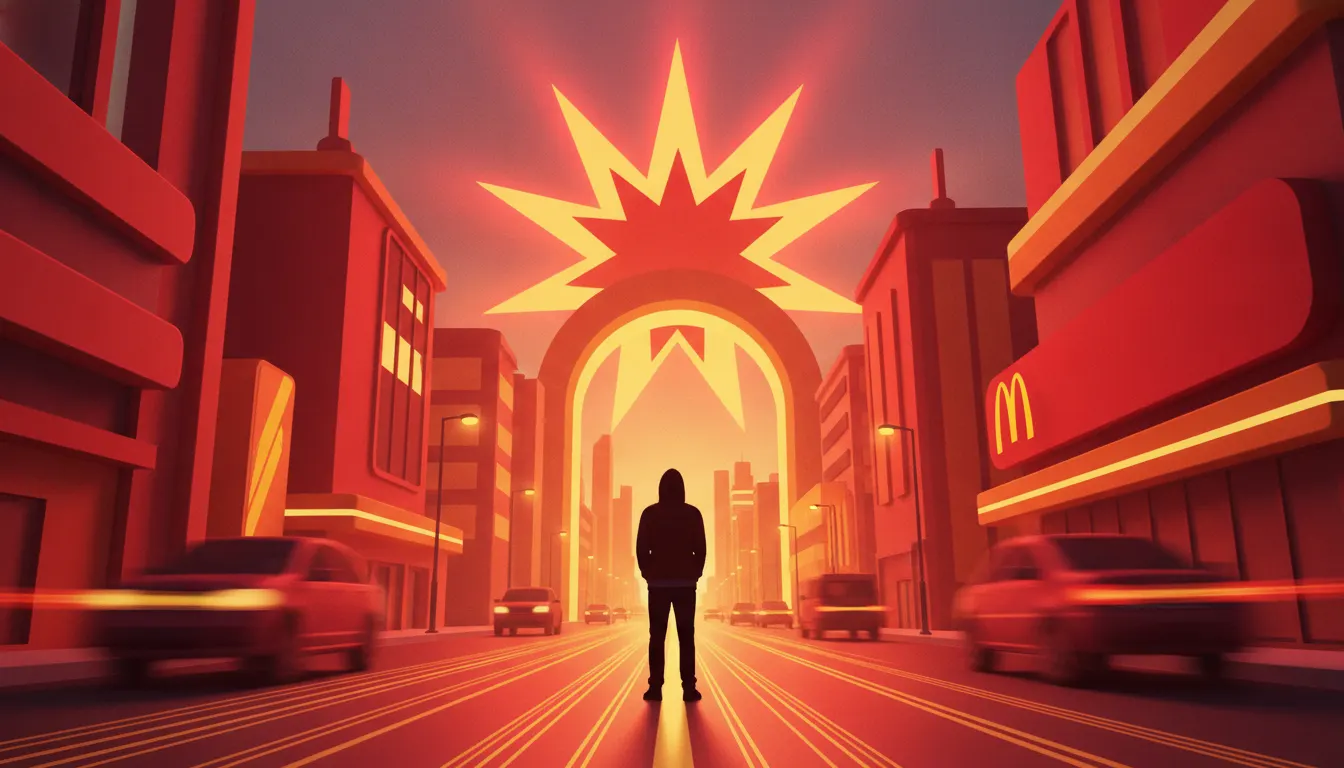
Fast-food vibrant brand. Wendys and McDonalds energy, saturated red and yellow, bold rounded sans, comic-style food photography, callout starbursts.
The moves a human crew would use to get here. Cue applies them for you, and knowing their names is how you ask for a change.
red, yellow, orange on white or cream backgrounds
serif typography with rounded terminals
stacked, cross-section, or floating ingredient compositions
Day dot patterns or halftone textures as backgrounds or illustration elements
style motion indicators
1970s browns, oranges, and creams for nostalgia register
The fast food vibrant comic aesthetic is the visual language of quick-service restaurants (QSRs) at their most energetic: primary colors, cartoonish mascots, oversized illustrated food, and a graphic energy designed to communicate appetite, value, and speed to an audience that will make a purchase decision in seconds. It is one of the most pervasive design traditions in American commercial culture.
The color choices of major QSR brands are not arbitrary - they reflect decades of consumer research about appetite and attention. Red stimulates appetite and urgency; yellow communicates happiness and draws the eye. McDonald's Golden Arches (standardized through the 1960s) and Burger King's red-and-yellow palette both leverage this psychology. The colors work at highway scale, on small packaging, and in digital thumbnails because they are maximally saturated and high-contrast.
The graphic tradition draws from Roy Lichtenstein and Pop Art's engagement with commercial art - both used Ben-Day dots, primary colors, and simplified bold forms. But the fast food aesthetic predates Pop Art's influence: the Googie architecture of 1950s drive-ins (the Zig-Zag moderne of space-age optimism) and the cartoonish mascots of the 1950s-1960s (McDonald's Speedee, 1948; Ronald McDonald's debut, 1963) established the vocabulary before it became culturally self-aware.
The most significant recent event in QSR visual design was Burger King's rebrand by Jones Knowles Ritchie (2021), which deliberately revived the visual language of the chain's 1969-1999 design system. The new identity used a warm retro palette (browns, oranges, reds, and creams derived from actual food colors), a custom lettering typeface called Flame and Flame Sans with the rounded cheerfulness of 1970s commercial type, and illustration that drew on vintage fast food advertising. The rebrand demonstrated that the 'vibrant comic' language has a nostalgic register as well as a contemporary one.
The photographic side of the fast food aesthetic has its own conventions: high-key lighting that renders every sesame seed and pickle in sharp focus, stacked burgers 'built' to show all components in an impossible cross-section, glistening sauces, steam rising from fries. The food is always better-looking than the actual product because the aesthetic purpose is desire, not documentation.
standardized 1960s, Jim Schindler architect
1963
2021
Jones Knowles Ritchie
red, white, and yellow palm tree system (maintained since 1948)
square burger and retro inspiration
Philippines-based QSR with vibrant comic visual system
Roy Lichtenstein influence on commercial food illustration
A Look is not a filter. It is a set of stored decisions the pipeline reads before it makes a single frame, so two videos in the same Look actually match.