Valentine typewriter
1969
Ettore Sottsass and Perry King for Olivetti
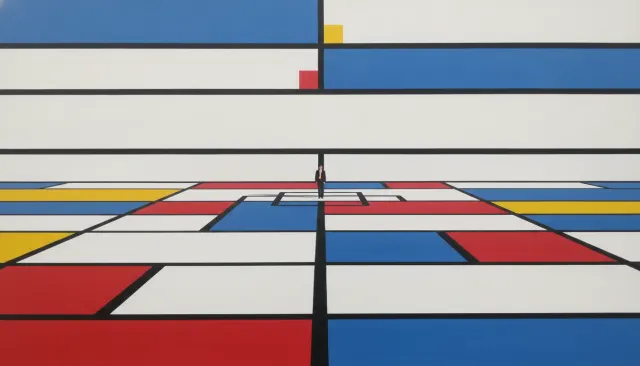
Ettore Sottsass-era graphic modernism. Olivetti corporate communications, asymmetric grid, Helvetica plus accent color, Italian industrial pride.
The moves a human crew would use to get here. Cue applies them for you, and knowing their names is how you ask for a change.
saturation primary and secondary colors
checks, zigzags, terrazzo-like speckling
balance but formally resolved
flat color with hard edges, no depth or gloss
serif typography: Helvetica, Univers, or Italian grotesques
color backgrounds with precision lighting
Ettore Sottsass Jr. (1917-2007) was the central figure of Italian design's postwar engagement with modernism and its most eloquent critic of that modernism's limitations. His career at Olivetti as chief design consultant (from 1958), his collaboration with Studio Alchimia in the late 1970s, and his founding of the Memphis Group in 1981 represent three distinct moments in Italian design's negotiation between rational industrial production and human sensibility.
Sottsass's Elea 9003 mainframe computer for Olivetti (1959) won the Compasso d'Oro award and established him as a practitioner of what might be called rational humanism in design: machines that functioned with precision but were designed with attention to the human context of their use. The Valentine portable typewriter (1969), designed with Perry King, was Sottsass's most famous Olivetti product - a red ABS plastic object that looked more like a toy than an office tool, packaged in a red bag and positioned as a design object rather than equipment.
Olivetti's design program under Sottsass and with designers including Marcello Nizzoli (Lexikon 80 typewriter, 1948) created a model of corporate design identity grounded in material quality, formal clarity, and cultural ambition. The company's graphic materials - posters, packaging, and advertising by designers including Walter Ballmer and Giovanni Pintori - extended this language into print.
The Memphis Group's first collection, shown in Milan in September 1981, was a deliberate provocation to the earnestness of 1970s design rationalism. The furniture and objects used garish plastic laminates in patterns borrowed from 1950s Americana, kitsch, and popular culture - patterns that design orthodoxy had explicitly excluded as 'bad taste.' Sottsass's own Carlton bookcase (1981) is the canonical Memphis object: colorful, asymmetric, playful, and deliberately uncomfortable.
The graphic language of Memphis was equally vibrant: patterns derived from television test cards, kitchen floor tiles, and comic strips appeared on surfaces that functionalist design would have left plain. The palette was primary but hot - not Mondrian's primaries but the saturated electric colors of cheap printed matter.
In graphic design, 'Ettore modernism' describes a sensibility that balances geometric structure with warmth and material pleasure - not the austerity of Swiss modernism but the Italian tradition of 'good design for everyone' that ran from Olivetti through to the Memphis period.
1969
Ettore Sottsass and Perry King for Olivetti
1959
Ettore Sottsass for Olivetti
1981
Ettore Sottsass, Memphis Group
Milan (September 1981)
1948
Marcello Nizzoli for Olivetti
Giovanni Pintori (1949-1967)
A Look is not a filter. It is a set of stored decisions the pipeline reads before it makes a single frame, so two videos in the same Look actually match.