Edge of Tomorrow
2014
dir. Doug Liman, VFX ILM / Framestore / MPC, prod. design Oliver Scholl
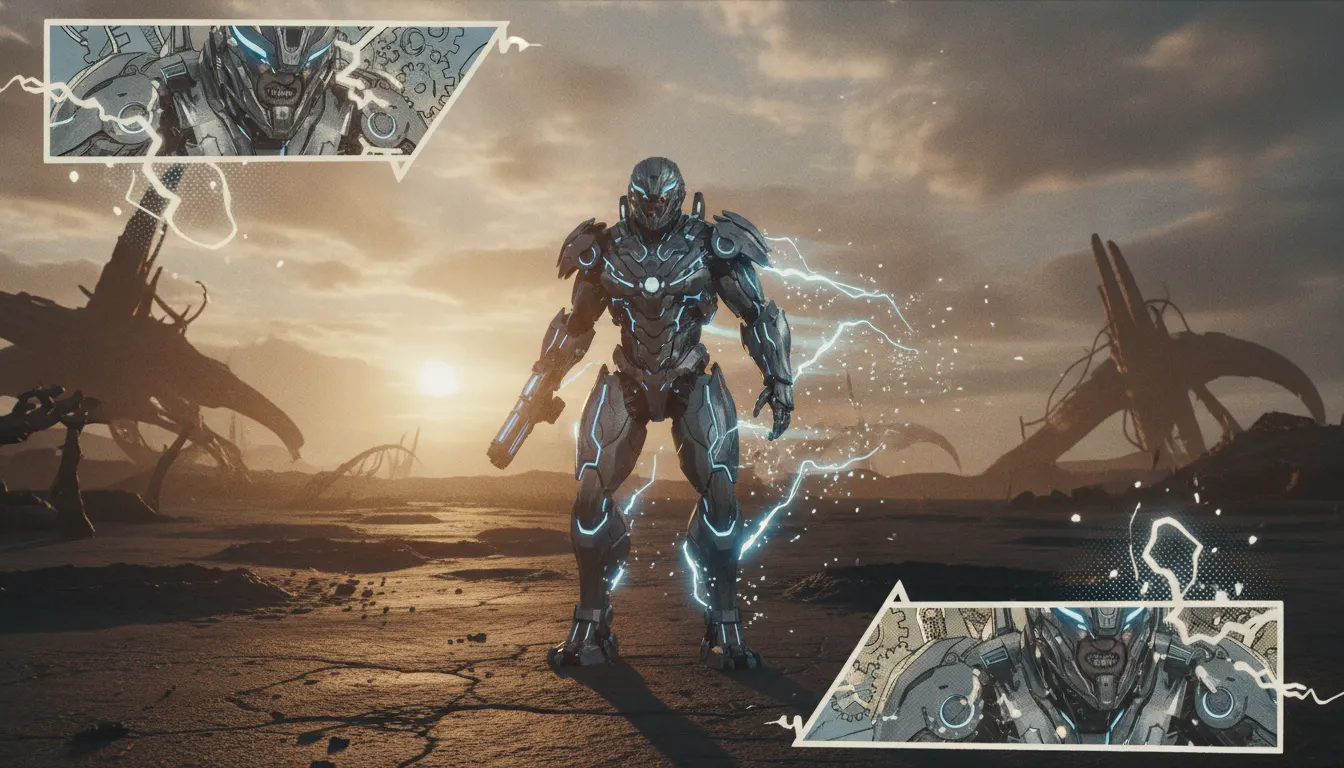
Edge of Tomorrow comic-stylized VFX. Live-action grounded with comic-page graphic inserts, exo-suit mech kinetics.
The moves a human crew would use to get here. Cue applies them for you, and knowing their names is how you ask for a change.
level interaction on sand and water surfaces
orange explosion palette against cool blue-grey ocean/sky referencing manga contrast printing
Day compositional grammar transposed onto alien invasion context
loop editing rhythm: match cuts between death and restart creating disorientation as narrative information
Edge of Tomorrow (Warner Bros., 2014) directed by Doug Liman, with visual effects by ILM, Framestore, and Moving Picture Company (MPC), represents a distinctive strand of science fiction VFX filmmaking: the grounded military sci-fi aesthetic where futuristic technology is designed to look like it could plausibly be manufactured today, and VFX integration prioritizes weight and physical credibility over spectacle.
The film is adapted from Hiroshi Sakurazaka's 2004 light novel All You Need Is Kill (Shueisha, manga adaptation illustrated by Takeshi Obata of Death Note fame), which was itself an explicit homage to the combat mechanics of the Starship Troopers (1997, dir. Paul Verhoeven) exosuit aesthetic. Director Doug Liman and production designer Oliver Scholl preserved the source material's Japanese manga action aesthetic within a World War II Normandy landing visual grammar-the film's beach landing sequence is explicitly referencing Saving Private Ryan (1998, dir. Steven Spielberg) while substituting alien creatures and exosuits for the historical original.
The United Defense Force exosuits were designed by Oliver Scholl and built practically-Tom Cruise and Emily Blunt wore actual powered exosuit frames weighing approximately 35 kilograms each during filming. This practical-first approach was a Liman mandate: the suits had to feel mechanical and weighty, not aerodynamic and elegant. VFX then enhanced the suits' combat capabilities (boosters, weapon systems) and produced the full stunt-replacement versions for high-speed action, but the base visual grammar came from photographed practical suits under natural lighting.
The Mimics-the film's alien enemies-were designed by the ILM team as organic-mechanical hybrids: octopoid forms with writhing tendrils that locomote by flinging themselves through space rather than running. This unusual locomotion was key to making them feel genuinely alien. VFX supervisor Nick Davis (Framestore) developed fluid simulation rigs for the tentacle interaction with sand, mud, and water-the Normandy beach sequences required grain-simulation at a scale not previously attempted in a feature production.
The film's visual palette references its manga origins in a specific way: it uses high contrast between warm amber-orange explosions and cool blue-grey ocean and sky, which maps directly to the high-contrast printing palette of action manga. Color grading by production colorist Steve Bowen emphasized this warm/cool split throughout.
2014
dir. Doug Liman, VFX ILM / Framestore / MPC, prod. design Oliver Scholl
Hiroshi Sakurazaka, Shueisha - source material
art by Takeshi Obata - manga visual adaptation reference
1998
dir. Steven Spielberg - beach landing visual grammar reference
1997
dir. Paul Verhoeven - exosuit combat VFX predecessor
2008
Marvel / ILM - practical-first suit design philosophy parallel
A Look is not a filter. It is a set of stored decisions the pipeline reads before it makes a single frame, so two videos in the same Look actually match.