Puss in Boots: The Last Wish
2022
DreamWorks Animation, dir. Joel Crawford
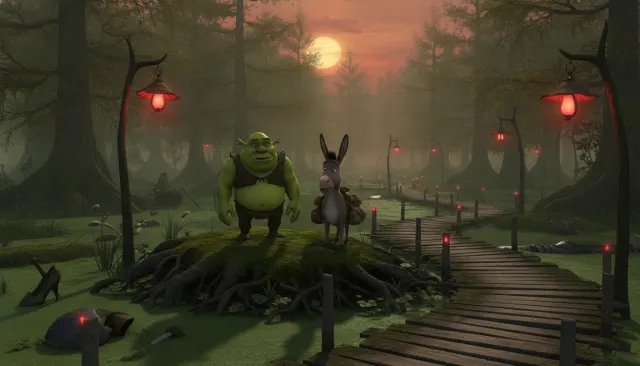
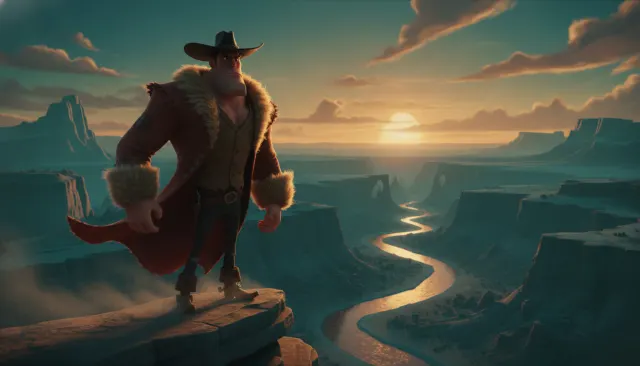
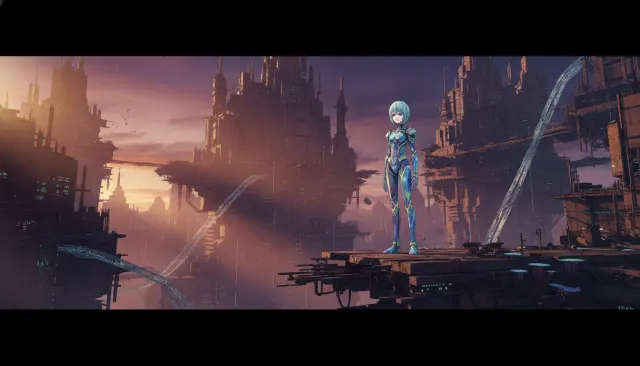
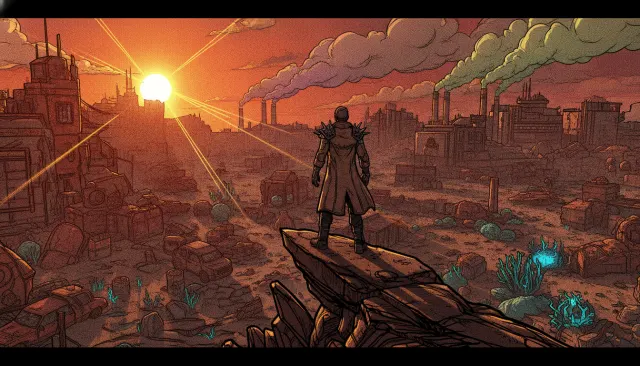
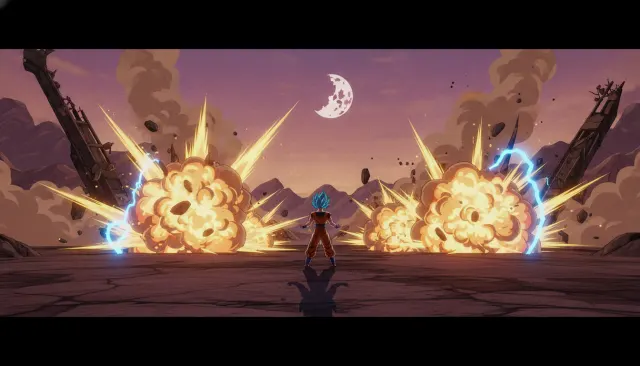
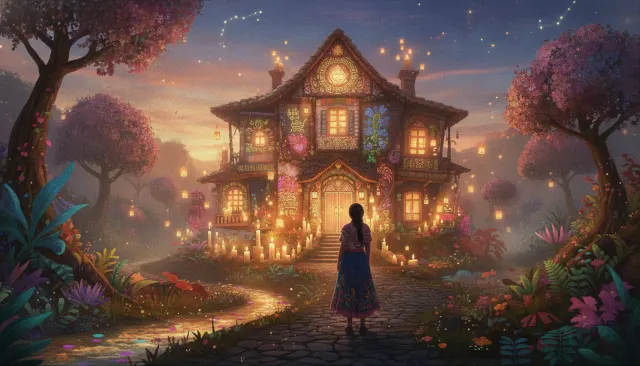
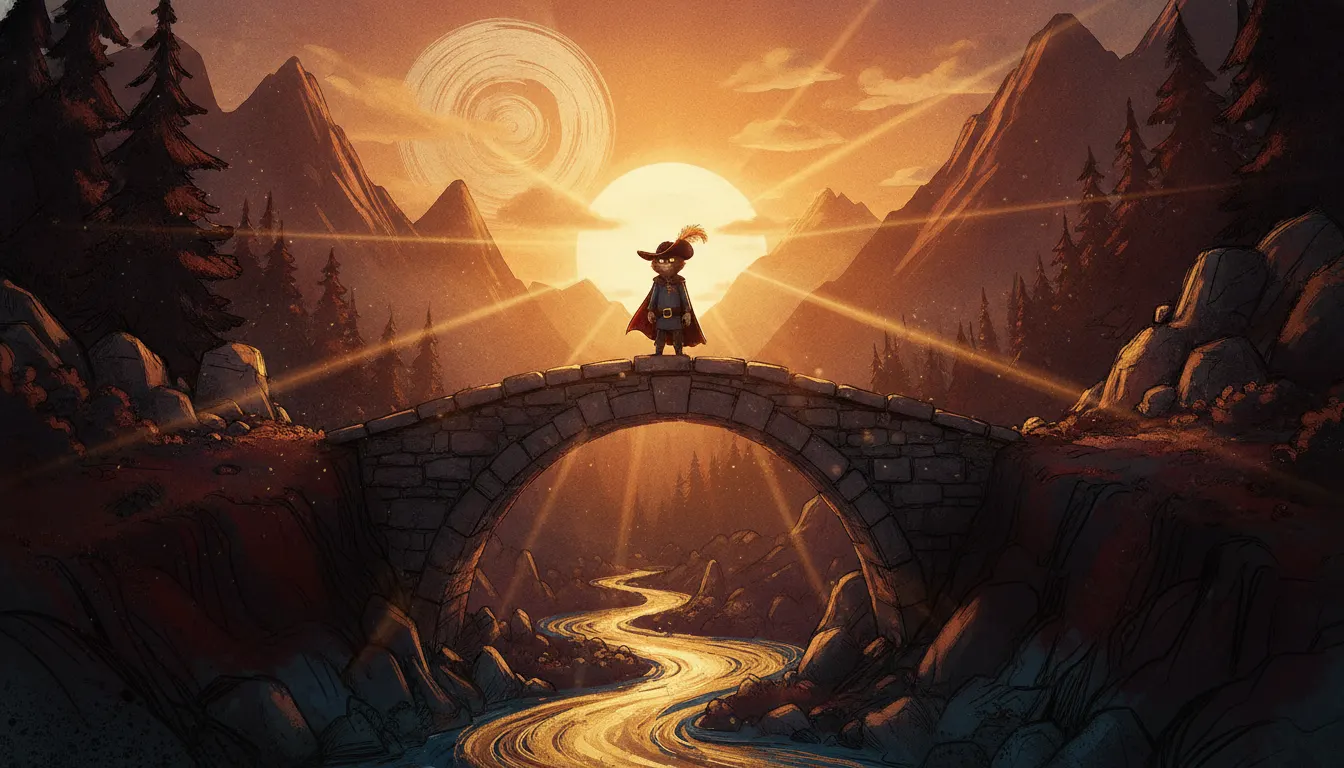
Puss in Boots Last Wish hybrid. Painted ink-storybook over 3D models, lower frame rate, illustration-driven action.
The moves a human crew would use to get here. Cue applies them for you, and knowing their names is how you ask for a change.
painted ink-line shader on geometry outlines with weight variation and angular breaks suggesting brush strokes
rate modulation in action sequences (8fps with extreme smear drawings on peak frames)
character shader deviation: Death rendered in hard black-and-red ink with no intermediate values
moving limbs and projectiles, referencing hand-animated action principles
cut pose changes on antagonist characters rather than interpolated motion curves
Puss in Boots: The Last Wish (DreamWorks Animation, 2022) directed by Joel Crawford (co-director Januel Mercado) was universally praised by animation critics and peers as the most significant visual evolution in Western feature CGI animation since Spider-Man: Into the Spider-Verse (2018). The film introduced a distinctive ink-3D hybrid rendering approach that combined the spatial depth and performance capture advantages of 3D with the expressive graphic flatness and hand-animated energy of 2D.
After Sony's Spider-Verse (2018) demonstrated that hand-animated texture and motion-design principles could be layered over 3D geometry to create something perceptually new, DreamWorks' animation leadership encouraged directors to explore analogous approaches. Crawford and production designer Nate Wragg identified the graphic novel and illustrated fairy tale as their reference-specifically the hand-inked quality of Brian Froud's fantasy illustration, the stark ink contrasts of Gustave Doré's 19th-century fairy tale engravings, and the gestural energy of artist Eduardo Risso's 100 Bullets comic.
DreamWorks' custom rendering pipeline for The Last Wish introduced several key techniques. Characters use 3D geometry and performance capture but are rendered with a hand-painted ink-line shader on outlines-the lines have deliberate variation in weight and slight angular breaks suggesting a quickly-drawn brush stroke rather than a computer-extruded edge. Background environments shift between full 3D geometry and 2D hand-painted illustration planes depending on scene dramatic needs-distant elements are often rendered as ink-wash illustrations rather than 3D geometry, creating depth through tonal recession rather than parallax.
The film's most radical motion choice is the use of stepped 2s and modified 8fps sections for action sequences-rather than the smooth 24fps or 12fps-on-twos that dominate feature CGI, the action climaxes use frame-rate modulation that creates a kinetic stutter suggesting powerful, weighty movement. This technique, borrowed from the Spider-Verse playbook, had never been applied this aggressively in a non-Sony theatrical CGI feature.
The film's antagonist, Death (a wolf), uses a deliberately restricted design vocabulary: black-and-red ink with no intermediate values, scythe-blade scar eyes, and movement that uses hard-cut pose changes rather than interpolation. This extreme graphic approach was possible because the ink-3D pipeline allows individual character shaders to deviate radically from the surrounding world's visual rules-something conventional CGI pipelines resist.
2022
DreamWorks Animation, dir. Joel Crawford
2018
Sony Pictures Animation - technical predecessor
2011
DreamWorks Animation - original conventional CGI precursor
2022
DreamWorks Animation - concurrent stylized CGI experiment at the studio
2023
Sony - continued Spider-Verse technique evolution
A Look is not a filter. It is a set of stored decisions the pipeline reads before it makes a single frame, so two videos in the same Look actually match.