Shrek
2001
DreamWorks Animation / PDI, dir. Andrew Adamson, Vicky Jenson
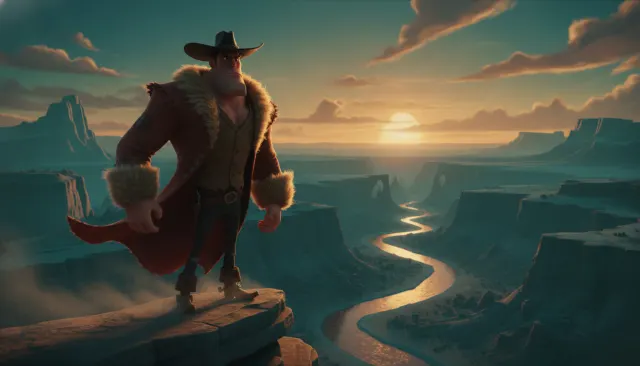
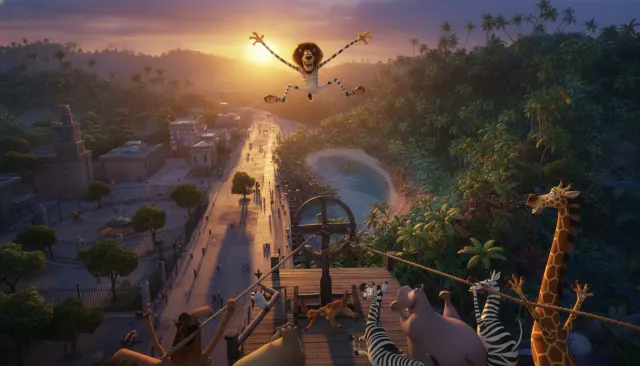
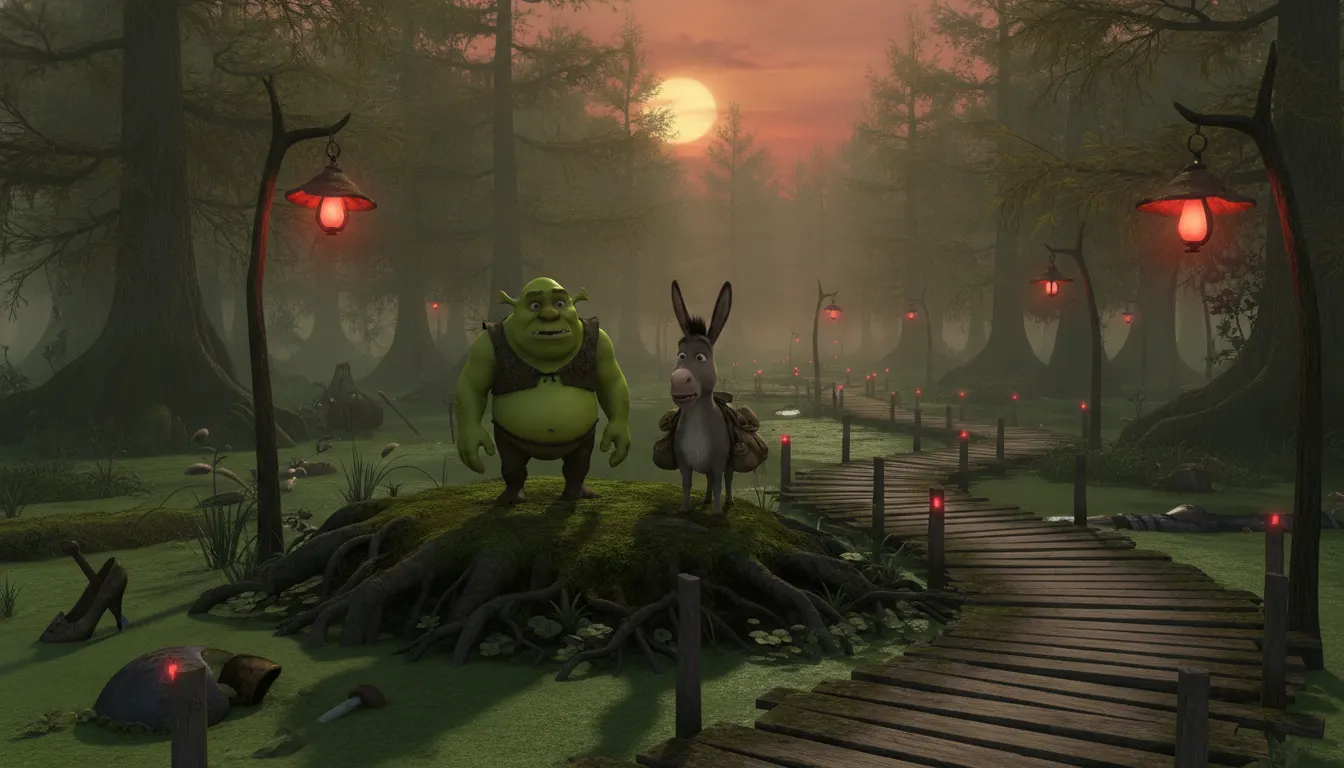
DreamWorks Shrek fairy-tale-subversion CGI. Swampy ogre-green palette, fractured-tale humor, early-2000s subdivision-surface character design, pop-culture soundtrack ready.
The moves a human crew would use to get here. Cue applies them for you, and knowing their names is how you ask for a change.
tracing with characteristic warm, slightly grainy output quality
earthy, wart-detailed protagonist rendered with equal care to lush environment
hyper-symmetrical, high-key grid city as visual parody of sanitized theme-park aesthetics
northern-European environment design: mud, thatched roofs, candlelit interiors
one of the earliest convincing SSS in feature CGI
Shrek (DreamWorks Animation / PDI, 2001) directed by Andrew Adamson and Vicky Jenson was a deliberate aesthetic provocation aimed at Disney's fairy-tale hegemony-both narratively (the film parodies Disney princess tropes throughout) and visually (its production design choices systematically invert Disney's clean, aspirational aesthetic). The result was the most commercially successful non-Pixar CGI film to that date, grossing $484 million worldwide and winning the first Academy Award for Best Animated Feature.
PDI (Pacific Data Images), acquired by DreamWorks in 1996, was the technical engine behind Shrek. Their rendering system at the time was a proprietary path tracer that produced a characteristic warm, slightly grainy quality distinct from Pixar's Renderman output. Shrek's grass-one of the film's most technically demanding elements-was produced using PDI's proprietary 'cloth' simulation system repurposed for organic vegetation, with hundreds of thousands of individual grass blades simulated per scene.
Art director Guillaume Aretos and production designer Guillaume Aretos (with character designer Mike Myers providing voice reference) developed Shrek as an intentionally ugly lead character-green, enormous, earwax-digging-surrounded by a fairy-tale world that remains visually lush and detailed. This paradox is the film's visual strategy: the world is beautiful by conventional CGI standards, but the camera's affection for the ugly, earthy protagonist subverts it. Donkey (Eddie Murphy), Dragon, and later Fiona in human form all exist on a spectrum between cartoon caricature and functional photorealism.
The film's most visually specific sequence is Lord Farquaad's kingdom of Duloc-a planned, sterile, grid-perfect Disney-inspired theme park that the film renders as exactly the visual language it is parodying: clean, symmetrical, high-key lit, with a character design (Farquaad himself) modeled after a specific type of aggressive corporate-entertainment masculinity. The CGI rendering deliberately makes Duloc look 'too perfect' to underscore its villainy.
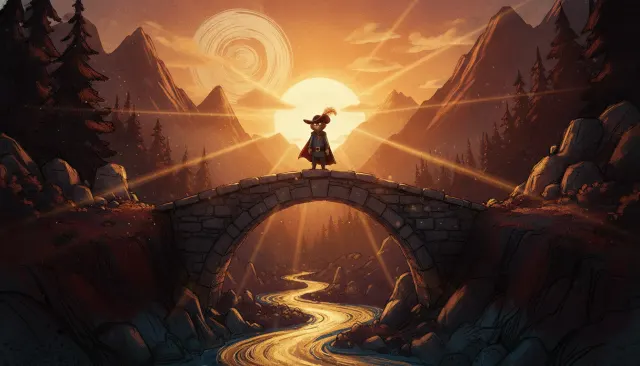
Directors Andrew Adamson and Kelly Asbury's Shrek 2 (2004) represented a major PDI technical advancement: fur and hair systems for Puss in Boots (voiced by Antonio Banderas), crowd simulation for the Far Far Away stadium sequences, and a more sophisticated human character rendering for the Fairy Godmother.
2001
DreamWorks Animation / PDI, dir. Andrew Adamson, Vicky Jenson
2004
dir. Andrew Adamson, Kelly Asbury, Conrad Vernon
2007
dir. Chris Miller, Raman Hui
2010
dir. Mike Mitchell
2011
dir. Chris Miller - character spinoff
1998
pre-Shrek DreamWorks CGI reference
A Look is not a filter. It is a set of stored decisions the pipeline reads before it makes a single frame, so two videos in the same Look actually match.