Madagascar
2005
DreamWorks Animation, dir. Eric Darnell, Tom McGrath
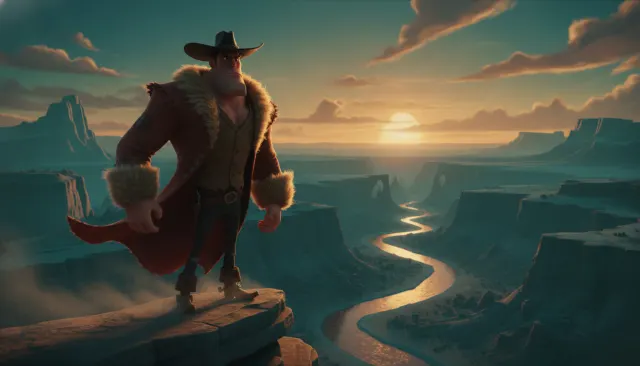
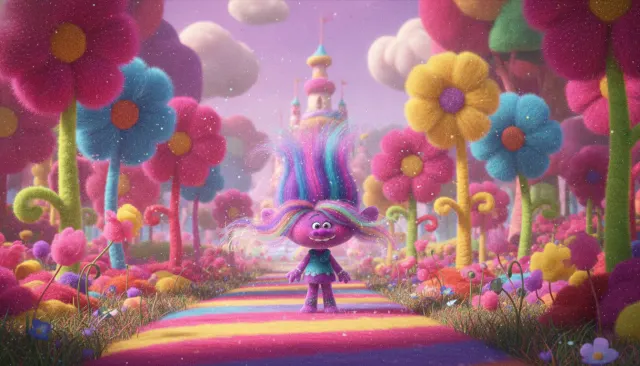
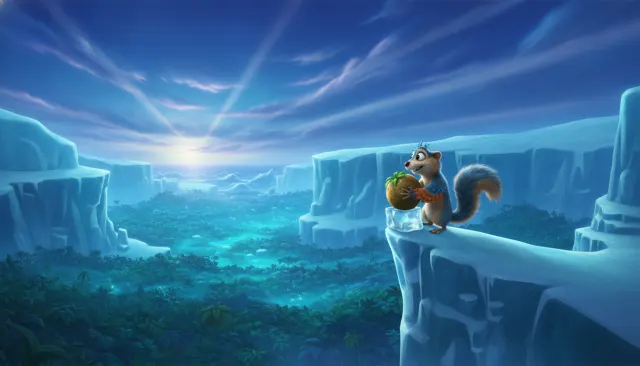
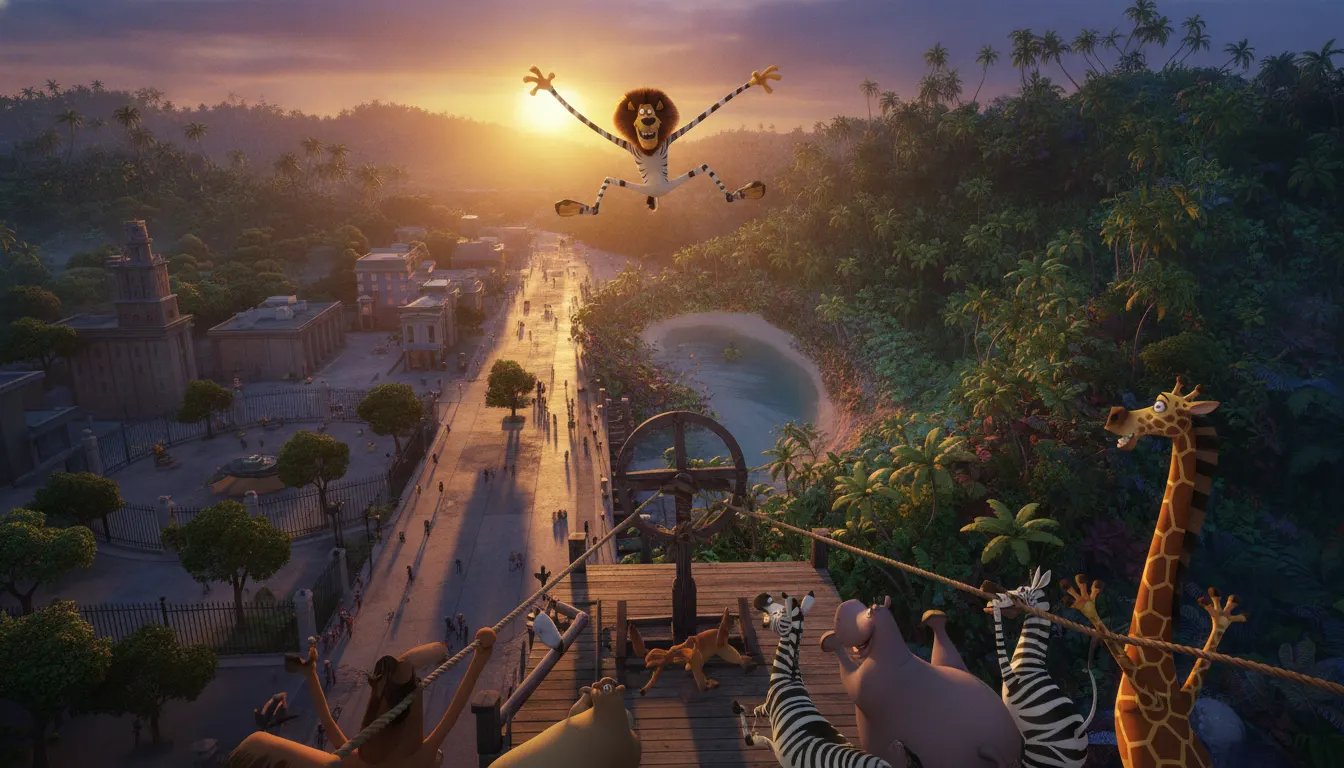
DreamWorks Madagascar broad-cartoon CGI. NYC-zoo-to-island plot, exaggerated rubber-hose limb cartoon physics, saturated jungle palette, ensemble slapstick.
The moves a human crew would use to get here. Cue applies them for you, and knowing their names is how you ask for a change.
anatomical skeleton deformation systems allowing comedy-impossible body squash and stretch
primary greens, blues, and browns without naturalistic variation
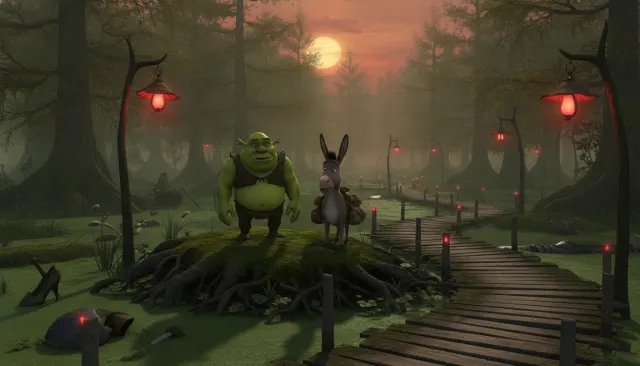
Madagascar (DreamWorks Animation, 2005) directed by Eric Darnell and Tom McGrath established one of DreamWorks' most durable franchise aesthetics-a broad comedy CGI style defined by extreme character proportion caricature, bold graphic color blocks, theatrical performance timing, and a deliberate rejection of the photorealism that dominated early-2000s feature CGI competition (primarily from Pixar and Blue Sky). Madagascar's visual language is closer to Chuck Jones theatrical cartoons than to Shrek's (2001) fantasy photorealism.
Character designers for Madagascar (supervised by Craig Kellman) used extreme vertical compression and expansion for comedic effect. Alex the lion is all head and mane with disproportionately small legs-his silhouette reads as a logo before it reads as an animal. Melman the giraffe is almost entirely neck. Gloria the hippo is a solid sphere of grey mass. Marty the zebra is the most anatomically 'normal' character, functioning as the audience-identification lens. These extreme proportions came directly from Kellman's sketchbook caricature style and were implemented in CGI through technical workarounds that allowed non-anatomical skeleton deformations.
Madagascar's palette avoids the naturalistic environmental colors of wildlife documentary. The environment (Central Park Zoo, then the jungle) uses highly graphic color blocks: vivid green jungle, saturated blue sky, broad brown earth planes. This non-naturalistic approach keeps the comedy context active-we are never allowed to forget this is a theatrical world, not a nature documentary.
The breakout characters of the franchise are the Penguins of Madagascar (also their own spin-off film in 2014 and TV series 2008-2015). Their comedy relies on precise physical timing-their stubby, non-anatomical forms perform military precision maneuvers that are funny precisely because the bodies cannot anatomically execute what the choreography demands. This Tex Avery-esque impossible physics became the franchise's comedic signature.
Madagascar: Escape 2 Africa (2008) and Europe's Most Wanted (2012), both directed by Darnell and McGrath, expanded the world to include African savannah and European city environments. The decision to maintain the cartoonishly bold color blocking in genuine African and European settings demonstrated the style's ability to function as an interpretive frame rather than just a jungle-comedy device.
2005
DreamWorks Animation, dir. Eric Darnell, Tom McGrath
2008
dir. Eric Darnell, Tom McGrath
2012
dir. Eric Darnell, Tom McGrath, Conrad Vernon
2014
dir. Eric Darnell, Simon J. Smith
Nickelodeon / DreamWorks Animation TV
A Look is not a filter. It is a set of stored decisions the pipeline reads before it makes a single frame, so two videos in the same Look actually match.